We are a global platform connecting institutions, employers, students, job seekers, and recruitment partners.
Join Us Today:
Bosnia and Herzegovina is becoming an increasingly attractive destination for foreign workers seeking stable employment in Europe. With ongoing development in construction, manufacturing, logistics, hospitality, and healthcare, the country faces a growing labour shortage and actively hires non-EU workers.
For applicants looking for affordable living costs, legal European work experience, and long-term residence opportunities, a Bosnia and Herzegovina work visa offers a realistic and secure pathway.
This guide explains everything you need to know in a clear, simple, and human tone—based on official procedures and real employment practices.
Bosnia and Herzegovina allows foreign nationals to work legally through employer-sponsored work permits. The country offers lower competition, straightforward procedures, and a growing demand for skilled and semi-skilled workers.
Step 1: Secure a job offer from a registered employer in Bosnia and Herzegovina
Only legally registered employers can hire foreign nationals. The job offer must be genuine and approved by local authorities.
Step 2: Employer applies for your work permit
The employer submits the work permit application to the Employment Service of the relevant entity (Federation of Bosnia and Herzegovina or Republika Srpska).
Step 3: Receive the approved work permit
Once approved, the employer sends you the original work permit document.
Step 4: Book an appointment at the Bosnian Embassy or Consulate
You must schedule a visa appointment in your home country or country of residence.
Step 5: Submit documents and biometrics
Please submit all required documents accurately and completely.
Step 6: Attend the visa interview
The consular officer may ask about your employer, job role, accommodation, and intent to work in Bosnia and Herzegovina.
Step 7: Receive visa approval and travel
After approval, the long-stay work visa is stamped in your passport.
A Bosnia and Herzegovina work visa allows non-EU nationals to enter and work legally for an approved employer.
Most applicants apply from abroad through a Bosnian embassy or consulate.
The process always starts with the employer, who must obtain the work permit before you apply for the visa.
Bosnia and Herzegovina issues work permits based on employment type and duration:
1. Standard Work Permit
Issued for foreigners employed under a local employment contract.
This is the most common permit type.
2. Seasonal Work Permit
For short-term employment in agriculture, tourism, and hospitality.
3. Highly Skilled Worker Permit
For professionals with specialised qualifications and experience.
4. Posted Worker / Transfer Permit
For workers temporarily assigned by foreign companies.
5. Long-Stay D Visa (Work Purpose)
This is the visa stamped in your passport after work permit approval.
To qualify, applicants must meet the following requirements:
Applicants are usually required to submit:
The embassy may request additional documents.
Step 1: Find a genuine employer
Please make sure the employer is registered and authorised to hire foreign workers.
Step 2: Employer applies for a work permit
The application is submitted to the relevant Employment Service authority.
Step 3: Receive approved work permit
The employer sends you the original document.
Step 4: Book an embassy or consulate appointment
You can apply in your home country or in the country where you are legally resident.
Step 5: Submit documents and biometrics
Submit accurate and complete documents.
Step 6: Attend a visa interview
Could you explain your job role and employer details?
Step 7: Visa approval and travel
Once approved, you can travel and begin employment.
|
Occupation |
Monthly Salary (EUR) |
Requirements |
Suitable For |
|---|---|---|---|
|
Factory Worker |
€600 – €1,000 |
No experience required |
Entry-level |
|
Warehouse Worker |
€650 – €1,050 |
Physical fitness |
Beginners |
|
Construction Labourer |
€700 – €1,200 |
Physical ability |
Labour workers |
|
Welder |
€1,000 – €1,600 |
Certification |
Skilled workers |
|
Electrician |
€1,000 – €1,700 |
Technical qualification |
Professionals |
|
Plumber |
€900 – €1,500 |
Trade experience |
Skilled trades |
|
Machine Operator |
€900 – €1,400 |
Technical skills |
Semi-skilled |
|
Truck Driver |
€1,200 – €2,000 |
Valid licence |
Drivers |
|
Hotel Staff |
€600 – €1,000 |
Basic English |
Hospitality |
|
Cook / Chef |
€900 – €1,600 |
Kitchen experience |
Culinary staff |
|
Cleaner |
€550 – €900 |
No experience |
Entry-level |
|
Caregiver |
€700 – €1,200 |
Basic training |
Support workers |
|
Nurse |
€1,100 – €1,800 |
Nursing qualification |
Healthcare |
|
IT Support |
€1,300 – €2,300 |
IT background |
IT workers |
1. Manufacturing & Industrial Production
Metal processing, wood manufacturing, and food processing factories actively recruit foreign workers.
2. Construction & Infrastructure
Roads, housing, and commercial projects drive demand for skilled and unskilled labour.
3. Logistics & Transport
Truck drivers and warehouse staff are in constant demand.
4. Hospitality & Tourism
Hotels, restaurants, and resorts hire seasonal and full-time workers.
5. Healthcare
Caregivers and nurses are required due to workforce shortages.
Processing times depend on the authority workload and document accuracy.
Typical expenses include:
Using official sources ensures legal, verified employment and protection against fraud.
Website: https://www.arbeitsagentur.ba
Provides:
Website: https://eures.ec.europa.eu
Provides:
Website: https://sps.gov.ba
Provides:
Official Visa Information
Website: https://www.mvp.gov.ba
Provides:
M2S Group Sp. z o.o. is a trusted European immigration support company providing transparent and personalised assistance.
Our services include:
Whether you plan to work in Bosnia and Herzegovina or explore broader European opportunities, our team ensures accurate, ethical, and reliable guidance at every stage.
1. What is a Bosnia and Herzegovina work visa?
A Bosnia and Herzegovina work visa is a long-stay Type D visa that allows non-visa-exempt foreign nationals to enter the country for employment after obtaining a valid work permit and residence approval.
2. Who needs a work visa to work legally in Bosnia and Herzegovina?
Citizens of non-EU, non-EEA, and non-visa-exempt countries must obtain a work visa and residence permit before starting employment.
3. Is Bosnia and Herzegovina part of the European Union?
No. Bosnia and Herzegovina is not an EU member state, but it is a candidate country and follows many EU-aligned labour and immigration standards.
4. What is the central work permit system in Bosnia and Herzegovina?
Bosnia and Herzegovina issues Entity-level Work Permits, followed by Temporary Residence Permits for Work.
5. Is a job offer mandatory for a Bosnia and Herzegovina work visa?
Yes. A confirmed job offer or employment contract from a registered employer is mandatory.
6. Who applies for the work permit—the employer or the employee?
The employer applies for the work permit, while the employee applies for the visa and residence permit.
7. Which authorities issue work permits in Bosnia and Herzegovina?
The Employment Services of the entities issue work permits:
8. What types of work permits are available?
Main categories include:
9. What documents are required for a Bosnia and Herzegovina work visa?
Applicants generally need:
10. How long does work permit processing take?
Work permit processing usually takes 15–45 days, depending on the entity and sector.
11. How long does visa processing take at the embassy?
Visa processing typically takes 10–30 days after work permit approval.
12. How long is a Bosnia and Herzegovina work visa valid?
The initial work visa is usually issued for up to 6 months, allowing entry to apply for residence.
13. Can I extend my stay in Bosnia and Herzegovina?
Yes. You must apply for a Temporary Residence Permit after arrival; it is usually valid for 1 year and is renewable.
14. Can I change employers in Bosnia and Herzegovina?
Yes, but a new work permit must be approved before changing employers.
15. What is the temporary residence permit for employment?
It is a biometric residence card allowing legal residence and employment in Bosnia and Herzegovina.
16. Is biometric registration required?
Yes. Biometrics are collected during residence permit issuance.
17. Is a criminal background certificate required?
Yes. A clean police clearance certificate from the applicant’s home country is mandatory.
18. Is health insurance mandatory for work visa holders?
Yes. Health insurance is mandatory for the entire stay period.
19. Are medical tests required?
Yes. A medical fitness certificate is generally required for work visa applications.
20. Do I need to speak Bosnian, Croatian, or Serbian to work?
Language skills are helpful but not mandatory for many jobs, especially in construction, manufacturing, and logistics.
21. Which industries hire the most foreign workers?
High-demand sectors include:
22. Is Bosnia and Herzegovina a good destination for foreign workers?
Yes. It offers low living costs, increasing labour demand, and growing foreign investment.
23. Can I bring my family to Bosnia and Herzegovina?
Yes. Family reunification is allowed after the worker obtains a valid residence permit.
24. Can my spouse work in Bosnia and Herzegovina?
Spouses may work after obtaining a separate work permit.
25. Can I work in other European countries with this visa?
No. Employment rights are limited to Bosnia and Herzegovina only.
26. Can I travel within Schengen with this visa?
No. Bosnia and Herzegovina is not part of the Schengen Area.
27. What is the minimum wage in Bosnia and Herzegovina?
Minimum wages vary by entity but average approximately €350–€450 gross per month.
28. Does Bosnia and Herzegovina pay overtime?
Yes. Overtime and night work are compensated in accordance with the entity's labour laws.
29. Do employers provide accommodation?
Many employers, especially in construction and agriculture, offer free or subsidised accommodation.
30. Are meals or food allowances provided?
Some employers provide meals or food allowances depending on the job sector.
31. What happens if my employer cancels the job offer?
Your residence permit may be cancelled unless a new employer secures approval.
32. Do authorities verify job offers?
Yes. Employment contracts and employer legitimacy are strictly verified.
33. Are bank statements required?
Some embassies may request proof of financial means.
34. Can I apply without an agent?
Yes. Applications can be submitted directly through official procedures.
35. What are standard working hours?
The standard workweek is 40 hours, with regulated overtime.
36. Are fixed-term contracts allowed?
Yes. Fixed-term contracts are standard, especially in project-based work.
37. Can I apply for permanent residence?
Yes. After 5 years of continuous legal residence, permanent residence may be granted.
38. Can students switch to work permits?
Yes, provided they secure employment and meet permit requirements.
39. Is there an age limit for work visas?
There is no official age limit; employment suitability is the key factor.
40. Can I work part-time?
Only if your work permit explicitly allows part-time employment.
41. Which authority issues residence permits?
Residence permits are issued by the Service for Foreigners’ Affairs.
42. Can I start working immediately after arrival?
Yes, once your residence permit application is submitted and registered.
43. Do I need to register my address?
Yes. Address registration is mandatory within 48 hours of arrival.
44. Are seasonal work permits available?
Yes. Seasonal permits are standard in agriculture and tourism.
45. Can I start a business on a work visa?
No. Business activities require a self-employment residence permit.
46. Who pays the work permit fees?
Employers typically pay work permit fees; applicants pay visa fees.
47. How long does the whole process take?
The complete process usually takes 1.5–3 months.
48. Do documents need to be translated?
Yes. Documents must be translated into Bosnian, Croatian, or Serbian.
49. Can I convert my work permit to permanent residence?
Yes, after meeting residence duration and compliance requirements.
50. Is Bosnia and Herzegovina suitable for long-term settlement?
Yes. The country offers affordable living, stable employment opportunities, family reunification, and gradual integration into the European labour framework.
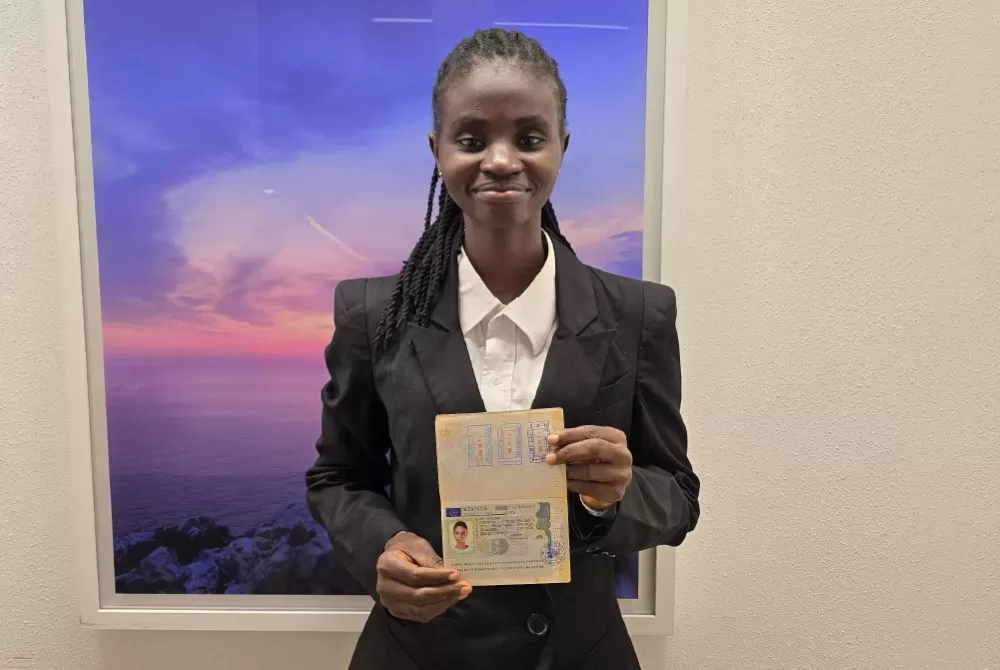
Global clients share how M2S Group helped them secure careers, work permits, and visas in Europe...
At M2S Group, we aim to help you become a true global citizen by providing exceptional support in your international career and immigration journey.
Read MoreWe connect institutions, employers, students, job seekers, and recruitment partners worldwide.


Are you recruiting skilled workers from the CIS, African, Asian regions, or other EU countries to work in Poland, Hungary, Lithuania, Slovakia, Estonia, Germany, and other EU nations? Partner with Moving2Europe.eu for efficient and reliable recruitment solutions.

Are you looking to work in Poland, Hungary, Lithuania, Slovakia, Estonia, Germany, or other EU countries? Could you let Moving2Europe. Can you connect with top employers and help with recruitment?

Do you recruit prospective students and workers eager to study or work in Poland, Hungary, Lithuania, Slovakia, Estonia, Germany, or other EU countries? Join Moving2Europe.eu as a trusted Recruitment Partner and grow your network globally.
We are here to help you explore opportunities to work and live in Europe. Our experts are ready to assist you with questions about job searching, obtaining a visa, recognising qualifications, and learning a European language. To learn more about contacting us, please click on one of the icons in the bar below.

No products in the cart.