Get Started with M2S Group!
We are a global platform connecting institutions, employers, students, job seekers, and recruitment partners.
Join Us Today:
Why Apply for a Netherlands Work Visa?
- The Highly Skilled Migrant route — a fast, salary-based permit
- Decisions in just 2–4 weeks via IND recognised sponsors
- No labour-market test and no degree requirement for the main route
- The 30% tax ruling for eligible skilled migrants from abroad
- A booming tech, engineering, and finance economy
- English very widely spoken across workplaces and daily life
- EU, Schengen membership and a clear path to permanent residence
The Netherlands is one of Europe’s most attractive destinations for skilled professionals, with a booming economy in tech, high-tech engineering, finance, and logistics. Its flagship Highly Skilled Migrant route (kennismigrant) is among the fastest work permits in Europe — decided in just two to four weeks, with no labour-market test and no degree requirement, based purely on a salary threshold and employment with an IND recognised sponsor. Add the valuable 30% tax ruling, widespread English, and EU and Schengen membership, and the Netherlands is a premier choice for international talent.


Netherlands Work Visa for Foreigners
The Netherlands is one of Europe’s most prosperous, international, and innovative countries — a global hub for technology, high-tech engineering, finance, logistics, and life sciences. It is also famously welcoming to skilled professionals, with one of the fastest and most predictable work-visa systems in Europe and a population that speaks English to an exceptionally high standard. For non-EU nationals, the flagship route is the Highly Skilled Migrant permit, complemented by the EU Blue Card and the Intra-Corporate Transferee permit. With a fast, salary-based system, the 30% tax ruling, and widespread English, the Netherlands is one of the easiest major EU economies for international talent to enter. This guide explains everything you need to know — the permit types and which one suits you, the 2026 salary thresholds and eligibility, the documents to prepare, the processing times, realistic salaries, the sectors that actually hire foreigners, the route to permanent residence, and recent changes.
Why Apply for a Netherlands Work Visa?
The Netherlands combines opportunity, efficiency, and quality of life. Its economy is powered by Amsterdam’s technology and finance scene and the Eindhoven Brainport region’s high-tech and semiconductor industry, alongside world-leading logistics around Rotterdam and Schiphol. The Highly Skilled Migrant route is salary-based with no labour-market test and no degree requirement, and recognised-sponsor applications are decided in just two to four weeks — among the fastest in Europe. For a skilled professional, that speed and predictability are a major advantage.
For eligible professionals recruited from abroad, the 30% tax ruling can make a substantial difference to take-home pay, effectively allowing a portion of salary to be paid tax-free for a period. Add the EU Blue Card for those seeking EU-wide mobility, widespread English in workplaces and daily life, EU and Schengen membership, and a clear path to permanent residence, and the Netherlands becomes one of the continent’s most rewarding destinations for international talent — combining the strength of a major EU economy with an unusually efficient and welcoming immigration system.
There is a distinctive international and high-tech character to working life here. The Eindhoven Brainport region is one of the world’s leading high-tech and semiconductor clusters; Amsterdam is a major technology and finance centre; and Rotterdam and Schiphol anchor global logistics. The Dutch speak English to an exceptionally high standard, so most skilled roles are accessible without Dutch, and the culture is open, direct, and welcoming to newcomers. Combined with excellent infrastructure, a high quality of life, and a central European location, this makes the Netherlands an outstanding base for ambitious professionals, particularly in technology, engineering, and finance.
Benefits of Working in the Netherlands
Here is what makes the Netherlands appealing for foreign workers:
- The Highly Skilled Migrant route — fast and salary-based
- Decisions in just 2–4 weeks via IND-recognised sponsors
- No labour-market test and no degree requirement for the main route
- The 30% tax ruling for eligible skilled migrants from abroad
- A booming tech, engineering, finance, and logistics economy
- English is widely spoken across workplaces and daily life
- Family reunification with spouse's work rights
- A high quality of life and excellent infrastructure
- EU and Schengen membership and a clear path to permanent residence
The Netherlands offers the professional advantages of a major EU economy with one of the most efficient immigration systems in Europe. The combination of the fast, salary-based Highly Skilled Migrant route, the 30% tax ruling, widespread English proficiency, and strong family rights makes it exceptionally accessible to international talent — particularly in the technology, engineering, and finance sectors where demand is greatest and salaries comfortably exceed the thresholds.
Types of Netherlands Work Permits
Work and residence are administered by the Immigration and Naturalisation Service (IND). Choosing the right route from the outset shapes the threshold, the speed, and the rights you receive.
Highly Skilled Migrant Permit (Kennismigrant)
The flagship route for skilled professionals. The employer must be an IND-recognised sponsor, and the test is purely a salary threshold — no labour-market test, no degree requirement. For 2026, the minimum gross monthly salary (excluding 8% holiday allowance) is €5,942 for those aged 30 and over, €4,357 for those under 30, and €3,122 for recent graduates. Decisions take just two to four weeks, making it the fastest and most popular route.
EU Blue Card
For highly qualified professionals with a recognised higher education degree (or five years’ relevant experience). The 2026 salary threshold is around €6,245 per month. The employer need not be a recognised sponsor, and the card offers strong EU-wide mobility and a longer search period if employment ends — making it ideal for those who may want to move within the EU later.
Intra-Corporate Transferee (ICT) Permit
For managers, specialists, and trainees transferred within a multinational group to a Dutch entity, using the same age-based salary thresholds as the Highly Skilled Migrant route. It enables the many multinationals based in the Netherlands to move experienced staff into their Dutch operations.
Single Permit (GVVA) and Orientation Year
The GVVA combines work and residence for other roles that fall outside the skilled routes. At the same time, the orientation year (zoekjaar) allows recent graduates from eligible universities to spend a year job-hunting in the Netherlands with full work rights. These broaden access for other workers and for talented graduates seeking to establish themselves.
Netherlands Work Visa Eligibility Criteria
To be approved for a Netherlands work permit, you generally need to satisfy the following, each checked against your route:
- A job offer from an IND-recognised sponsor (for the Highly Skilled Migrant route)
- A salary meeting the relevant threshold, paid to your personal bank account
- For the EU Blue Card, a recognised higher education degree or five years’ experience
- A valid passport and no public-order concerns
- An MVV provisional residence visa for nationals who require one
- Health insurance after arrival
- Registration with your municipality and a citizen service number (BSN)
The salary threshold is a hard floor for the Highly Skilled Migrant route — there is no discretion or waiver, and falling below it can lead the IND to revoke the permit. Crucially, only fixed, guaranteed salary counts toward the threshold; variable pay such as bonuses or allowances cannot be used to reach it. The requirement that the employer be an IIND-recognised sponsor is also central to the main route. Confirming recognised-sponsor status and a fixed salary that clears the exact age-based threshold at the outset is the foundation of a successful application.
Documents Required for a Netherlands Work Visa
The core documents you should prepare in advance include:
- Valid passport
- A signed employment contract meeting the salary threshold
- For the EU Blue Card, an evaluated higher education diploma
- The recognised sponsor’s details (for the Highly Skilled Migrant route)
- A birth certificate and, if applicable, marriage certificate for the family
- Proof of health insurance after arrival
- Passport photographs meeting Dutch requirements
Foreign documents may need to be legalised or apostilled and translated to be accepted, and EU Blue Card diplomas are evaluated for recognition by the Dutch authorities. For the Highly Skilled Migrant route, the process is streamlined because the recognised sponsor handles much of the application, so the documentary burden on the applicant is comparatively light. A complete file — with the contract meeting the threshold, any required diploma evaluation, and legalised civil documents for family — is what allows the IND to decide within its fast two-to-four-week window.
How to Apply for a Netherlands Work Visa: Step-by-Step Process
The process is employer-driven and largely online, and following the sequence keeps it fast.
Step 1: Secure a job offer. Obtain an offer from an IND-recognised sponsor (for the Highly Skilled Migrant route) meeting the salary threshold.
Step 2: Employer applies. The recognised sponsor submits the application via the IND portal and, if needed, applies for an MVV provisional residence visa simultaneously.
Step 3: Decision. The IND decides recognised-sponsor applications in about two to four weeks.
Step 4: Collect MVV and travel. If required, collect your MVV at a Dutch embassy and travel to the Netherlands.
Step 5: Register and collect your permit. Register with your municipality for a BSN, arrange health insurance, and collect your residence permit from the IND, then begin work.
Netherlands Work Visa Processing Time
Processing is among the fastest in Europe:
- Highly Skilled Migrant and ICT (recognised sponsor): about 2 to 4 weeks
- EU Blue Card: a maximum of 30 days (longer for non-sponsors)
- The MVV is applied simultaneously where needed
- Incomplete files or document requests can cause delays
Using a recognised sponsor and submitting a complete application are the biggest factors in the fast turnaround. The two-to-four-week decision for Highly Skilled Migrant and ICT applications through recognised sponsors is among the quickest anywhere in Europe, and the simultaneous MVV application streamlines entry for those who need a provisional residence visa. The main risk to the timeline is an incomplete file or a request for additional documents. Hence, accuracy on the first submission — correct threshold, fixed salary, and complete documentation — is what keeps the process fast.
Netherlands Work Visa Fees & Costs
Dutch fees are set by the IND and revised periodically:
- Highly Skilled Migrant residence permit: an IND application fee
- EU Blue Card and ICT permit: an IND application fee
- Diploma evaluation, legalisation, and translation: variable by document and country
- Health insurance: mandatory after arrival
Employers typically cover the application fees as part of recruiting international staff, while personal costs such as legalisation, diploma evaluation, and insurance fall to the applicant. The highest ongoing cost for most people is the cost of living, particularly housing in Amsterdam and Utrecht, which is expensive and in high demand. The 30% tax ruling, where it applies, significantly improves net pay and helps offset these costs. Carefully budgeting for housing and the first months of living costs — especially in major cities — is an important part of planning a move.
Job Market in the Netherlands for Foreign Workers
The Netherlands’ demand is led by technology, high-tech engineering, finance, and logistics, with healthcare and life sciences close behind. Amsterdam and Utrecht lead in technology and finance, Eindhoven in high-tech and semiconductors, and Rotterdam and Schiphol in logistics. Here is where the opportunities are:
| Sector | In-Demand Roles | Main Hiring Cities | Demand Level |
|---|---|---|---|
| Information Technology | Software Developers, Data, AI, Cloud | Amsterdam, Utrecht | Very High |
| High-Tech & Semiconductors | Hardware, Electrical, Systems Engineers | Eindhoven (Brainport) | Very High |
| Finance & Fintech | Analysts, Risk, Compliance, Fintech | Amsterdam | High |
| Engineering | Mechanical, Electrical, Process Engineers | Nationwide | High |
| Logistics & Supply Chain | Logistics, Supply Chain Specialists | Rotterdam, Schiphol | High |
| Healthcare | Doctors, Nurses, Specialists | Nationwide | High |
| Life Sciences | Scientists, Researchers, Specialists | Amsterdam, Leiden | Medium-High |
Amsterdam and Utrecht dominate in technology, finance, and fintech, hosting the European offices of many global firms, while the Eindhoven Brainport region is one of the world’s leading high-tech and semiconductor clusters, generating very strong demand for hardware, electrical, and systems engineers. Rotterdam and Schiphol anchor world-leading logistics and supply-chain operations, and healthcare and life sciences add further opportunities. Because senior technology and engineering roles comfortably exceed the Highly Skilled Migrant thresholds, matching your profile to these strength sectors typically means qualifying for the fast main route. Matching your skills to one of these areas gives you both strong demand and an efficient process.
Top In-Demand Jobs in the Netherlands for Foreigners
If you fit one of these roles, your chances of getting a Netherlands work permit go up significantly:
- Software Developer and Data Engineer
- AI, Cloud, and Cybersecurity Specialist
- Semiconductor and Hardware Engineer
- Mechanical and Electrical Engineer
- Financial Analyst and Fintech Specialist
- Logistics and Supply Chain Specialist
- Doctor and Registered Nurse
- Life Sciences Researcher and Specialist
Technology and high-tech engineering drive the most demand, and senior roles comfortably exceed the Highly Skilled Migrant salary thresholds — meaning qualified professionals typically access the fast main route. If you combine in-demand skills in software, semiconductors, engineering, or finance with a salary that clears the relevant threshold, you are exceptionally well placed, because these are precisely the areas where the Dutch economy creates the strongest, best-paid demand for international talent, and where recognised sponsors are most active.
Average Salary of Skilled Workers in the Netherlands
Salaries are high and paid in euros, with strong premiums in technology and engineering. Here is a realistic snapshot of monthly and annual gross salaries:
| Job Role | Monthly Salary (EUR) | Approx. Annual Salary (EUR) | Experience Level |
|---|---|---|---|
| Software Developer | 4,500 – 8,000 | 54,000 – 96,000 | Mid to Senior |
| Senior Developer / Architect | 6,500 – 10,000 | 78,000 – 120,000 | Senior |
| Data Scientist / AI Engineer | 5,000 – 9,000 | 60,000 – 108,000 | Mid to Senior |
| DevOps / Cloud / Cybersecurity | 5,500 – 9,500 | 66,000 – 114,000 | Mid to Senior |
| Semiconductor / Hardware Engineer | 5,000 – 8,500 | 60,000 – 102,000 | Mid to Senior |
| Mechanical / Electrical Engineer | 4,000 – 7,000 | 48,000 – 84,000 | Mid Level |
| Finance / Fintech Specialist | 4,500 – 8,500 | 54,000 – 102,000 | Mid to Senior |
| Doctor | 6,000 – 11,000 | 72,000 – 132,000 | All Levels |
| Nurse | 3,000 – 4,800 | 36,000 – 57,600 | All Levels |
| Logistics / Supply Chain Specialist | 3,500 – 6,500 | 42,000 – 78,000 | Mid to Senior |
| Life Sciences Specialist | 4,000 – 7,500 | 48,000 – 90,000 | Mid to Senior |
Note: The Netherlands uses the euro. For 2026, the Highly Skilled Migrant threshold (excluding 8% holiday allowance) is €5,942 per month for those aged 30 and over, €4,357 for under 30s, and €3,122 for recent graduates, while the EU Blue Card threshold is around €6,245. Eligible migrants recruited from abroad may benefit from the 30% tax ruling, which can significantly boost net pay.
Taxes and Cost of Living in the Netherlands
The Netherlands has a progressive personal income tax with a small number of bands, alongside social security contributions. Headline rates are significant, but the standout feature for international talent is the 30% tax ruling (recently adjusted): eligible employees recruited from abroad can receive up to 30% of their salary tax-free for a defined period, substantially boosting net pay and making it a major draw for skilled migrants. Because eligibility for the 30% ruling is rule-bound and the percentage and duration have been adjusted over time, it is worth confirming whether you qualify, as it can transform your take-home position.
The cost of living is moderate to high, with housing the dominant factor — rents in Amsterdam and Utrecht in particular are high and the market competitive, so securing accommodation should be planned early. Outside the largest cities, housing is more affordable while quality of life remains excellent. Groceries, dining, and the country’s superb cycling-based transport are reasonable, and public services are strong. For a well-paid technology, engineering, or finance professional — especially one benefiting from the 30% ruling — the combination of high salaries and that tax advantage delivers high net income. However, housing costs in the major cities are the key variable. Always confirm current tax rates, the 30% ruling conditions, and thresholds before relying on them.
Dependent Visa Benefits for Netherlands Work Permit Holders
The Netherlands offers strong family benefits:
- Residence permits for partners and children
- Partners of Highly Skilled Migrants and Blue Card holders can work freely
- Access to excellent healthcare and international schooling
- A shared pathway to permanent residence
- Family applications are submittable alongside the main applicant
Family applications are typically submitted alongside the main applicant’s, with partners gaining free access to the Dutch labour market — meaning a spouse or partner can work without a separate permit, making the Netherlands genuinely dual-career friendly. Combined with access to excellent healthcare, international schooling, and the widespread use of English, the family provisions make relocating an entire household straightforward. The ability to submit family applications together with the main applicant also keeps the process fast and coordinated, consistent with the efficiency of the Dutch system.
Pathway to Permanent Residency (PR) in the Netherlands
The Netherlands offers a clear route to long-term settlement:
- Work and EU Blue Card permits are renewed in line with continued employment
- After five years of continuous legal residence, you can apply for permanent residence
- A civic integration exam, including the Dutch language, is required
- EU Blue Card holders benefit from cumulated time across EU countries
- Continuous, valid residence throughout is essential to qualifying
Maintaining continuous residence, valid status, and progress in Dutch all support your path to permanent residence and eventually citizenship. The main additional requirement is the civic integration exam, which includes Dutch, so it is worth starting to learn Dutch early, even though most workplaces operate in English. For EU Blue Card holders, time spent in other EU countries can be accumulated toward the five-year requirement, and steady renewal alongside continued employment naturally leads to permanent residence and the lasting security it provides within the EU.
Latest Netherlands Work Permit Rule Changes
The Netherlands has updated its rules for 2026, so using current figures matters. The key points:
- The 2026 Highly Skilled Migrant thresholds rose to €5,942 (age 30+), €4,357 (under 30), and €3,122 (recent graduates), excluding holiday allowance.
- From January 2026, recognised sponsors must keep bank statements proving actual salary payment, as payslips alone are no longer sufficient.
- The IND introduced unannounced spot audits, with fines up to €20,000 and possible loss of sponsor status for non-compliance.
- The EU Blue Card has become more accessible following the implementation of the latest EU directive.
- Thresholds are indexed and updated every January.
- Only fixed salary counts toward the thresholds; variable pay cannot be used.
The IND administers these rules. Because the thresholds are indexed and updated every January and the compliance regime is tightened for 2026 — with bank-statement evidence now required and spot audits introduced — always confirm the current thresholds before applying, and ensure the contract cites a fixed salary that clears the correct, current age-based figure.
Common Reasons for a Netherlands Work Visa Rejection
Most rejections happen for a recognisable set of reasons:
- A salary below the relevant threshold — a hard floor with no waiver
- The employer is not an IND-recognised sponsor (for the Highly Skilled Migrant route)
- Variable pay counted toward the threshold, which is not allowed
- For the EU Blue Card, a diploma not recognised by the Dutch authorities
- Public-order concerns or an invalid passport
- Incomplete documentation
A good immigration consultant confirms recognised-sponsor status, checks the exact threshold, and ensures a complete application before submission, which is where most problems are caught. In the Netherlands, the most common avoidable errors are a fixed salary that falls just below the age-based threshold and attempting to count variable pay toward it, which is not allowed. Confirming recognised-sponsor status, ensuring a fixed salary that clears the exact threshold, and arranging any required diploma evaluation are the surest ways to a clean, fast approval.
How moving2europe.EU Can Help You
The Netherlands’ system is fast but precise, and the salary thresholds and sponsor rules leave no room for error. At moving2europe.eu, we help foreign nationals navigate the process from start to finish. Here is what we bring to the table:
- End-to-end guidance, from route selection to landing in the Netherlands
- The right route identified — Highly Skilled Migrant, EU Blue Card, or ICT
- Recognised sponsor and salary threshold verification
- Diploma evaluation and full document preparation
- Liaison with Dutch employers in technology, engineering, finance, and logistics
- MVV, residence permit, and family reunification managed end to end
- Guidance on the 30% tax ruling and the 2026 compliance rules
- Transparent fees and real human support throughout
Whether you are heading for an Amsterdam tech firm, an Eindhoven semiconductor company, or a Rotterdam logistics role, we can help you make the move to the Netherlands smoothly — with a recognised sponsor, a compliant fixed salary, and a complete application ready for the IND’s fast decision.
Start Your Journey to the Netherlands Today
Wherever you are in the process, moving2europe.eu is ready to help you take the next step toward working in the Netherlands. Choose the path that fits you:
- Job seekers — browse opportunities and begin your application on our Work in Europe page.
- Employers — hiring international talent for the Netherlands? Register as an employer to connect with skilled, pre-screened candidates.
- Recruitment partners — run a recruitment agency? Register as a recruitment partner to join our growing network.
Take the first step toward your new career in the Netherlands — get in touch with moving2europe.Eu today.
Netherlands
Moving2Europe helps job seekers find rewarding employment opportunities across the Netherlands. We connect skilled and highly qualified workers with trusted Dutch employers in IT, high-tech engineering, finance, logistics, healthcare, and life sciences, supporting candidates from South Asia, East Asia, Sub-Saharan Africa, the Middle East, Latin America, Europe, and North America.
Our work placement services extend across the Netherlands, including Amsterdam, Rotterdam, The Hague, Eindhoven, and Utrecht.
We guide candidates through every stage of the journey — from the Highly Skilled Migrant route, EU Blue Card, or ICT permit and recognised-sponsor verification to diploma evaluation, the MVV, residence permit, and onboarding. Whether you’re a software developer, a semiconductor engineer, or a finance professional, we help you secure stable, well-matched work that meets Dutch standards and supports your long-term goals.
Ready to Work in the Netherlands?
Please tell us your situation. Our team will identify the right route — Highly Skilled Migrant, EU Blue Card, or ICT — verify recognised-sponsor status and the salary threshold, prepare your documents, and coordinate the application from start to finish — so you arrive in the Netherlands ready to start.
Conclusion
The Netherlands is one of Europe’s most rewarding and efficient destinations for skilled professionals — an EU and Schengen member with a booming tech, high-tech engineering, finance, and logistics economy, widespread English, and the valuable 30% tax ruling. Its flagship Highly Skilled Migrant route is fast and salary-based, with no labour-market test or degree requirement, and decisions are made in just two to four weeks via recognised sponsors. Line up an offer that meets the threshold, confirm sponsor status, and the Netherlands becomes very achievable. And if you want a hand along the way, moving2europe.eu is here to help.
Looking for inspiration
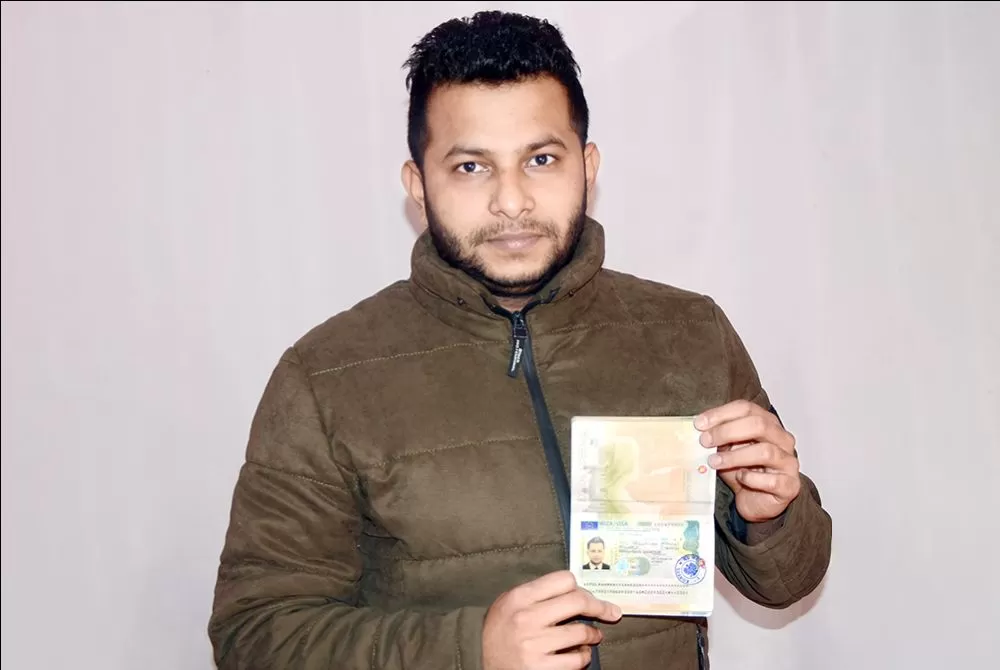
Global clients share how M2S Group helped them secure careers, work permits, and visas in Europe...


Why Choose M2S Group?
At M2S Group, we aim to help you become a true global citizen by providing exceptional support in your international career and immigration journey.
Read More



Get Started with M2S Group!
Our Platform
We connect institutions, employers, students, job seekers, and recruitment partners worldwide.

Employer
Are you recruiting skilled workers from the CIS, African, Asian regions, or other EU countries to work in Poland, Hungary, Lithuania, Slovakia, Estonia, Germany, and other EU nations? Partner with Moving2Europe.eu for efficient and reliable recruitment solutions.

Job seekers
Are you looking to work in Poland, Hungary, Lithuania, Slovakia, Estonia, Germany, or other EU countries? Could you let Moving2Europe. Can you connect with top employers and help with recruitment?

Recruitment Agency
Do you recruit prospective students and workers eager to study or work in Poland, Hungary, Lithuania, Slovakia, Estonia, Germany, or other EU countries? Join Moving2Europe.eu as a trusted Recruitment Partner and grow your network globally.
Do you have any questions?
We are here to help you explore opportunities to work and live in Europe. Our experts are ready to assist you with questions about job searching, obtaining a visa, recognising qualifications, and learning a European language. To learn more about contacting us, please click on one of the icons in the bar below.