Get Started with M2S Group!
We are a global platform connecting institutions, employers, students, job seekers, and recruitment partners.
Join Us Today:
Why Apply for a Bosnia and Herzegovina Work Visa?
- An EU candidate country with a low cost of living
- One of Europe’s simplest tax systems — flat 10%
- A growing IT scene in Sarajevo, Banja Luka, and Mostar
- Work permit plus temporary residence for foreign workers
- Strong demand in IT, healthcare, construction, and tourism
- Beautiful landscapes and rich, layered culture
- Permanent residence after five years
Bosnia and Herzegovina is a developing Southeast European country and EU candidate with a low cost of living, a flat 10% income tax, and a growing technology sector. Foreign workers need a work permit, issued at entity level, plus a temporary residence permit from the Service for Foreigners’ Affairs. Work permits are subject to an annual quota, so the route is most realistic for in-demand roles — particularly in IT, healthcare, construction, and tourism — and for entrepreneurs who set up a local company.


Bosnia and Herzegovina Work Visa for Foreigners
Bosnia and Herzegovina, in the heart of the Balkans, is a developing economy and EU candidate with a low cost of living, simple taxes, and a fast-growing IT sector in cities like Sarajevo, Banja Luka, and Mostar. Its unique constitutional structure — two entities (the Federation of Bosnia and Herzegovina and Republika Srpska) plus the self-governing Brčko District — means that immigration and residence are handled at the state level. At the same time, work permits are issued at the entity level, a two-tier arrangement that shapes the entire process. This guide explains everything you need to know — the permit types and how they fit together, the eligibility rules, the documents to prepare, the fees, the processing times, realistic salaries, the sectors that actually hire foreigners, the route to permanent residence, and the recent rule changes — so you can approach a move with a clear and accurate picture of how this distinctive system works in practice.
Why Work in Bosnia and Herzegovina?
Bosnia and Herzegovina offers a compelling mix of affordability and opportunity. The cost of living is among the lowest in Europe, personal income tax is a flat 10% across the country, dividends are tax-free, and the technology sector is expanding quickly, with international firms recruiting developers and IT specialists in Sarajevo and Banja Luka. Beyond technology, healthcare, construction, tourism, and manufacturing all generate steady and growing demand for foreign workers, driven in part by labour shortages as skilled locals move abroad.
It is also a country of striking landscapes and richly layered culture, where Ottoman, Austro-Hungarian, and Mediterranean influences meet in cities, mountains, and river valleys. As an EU candidate, it is gradually aligning its rules with European standards, making the system more predictable and transparent. For IT professionals, healthcare workers, entrepreneurs, and anyone seeking an affordable European base with a low tax burden, Bosnia and Herzegovina is a genuine option — provided you work within its annual quota system, which is the defining constraint on most employment routes.
There is a practical appeal for businesses and the self-employed too. Company registration is comparatively simple, the flat tax keeps accounting straightforward, and operating costs are low, which makes the country attractive to entrepreneurs and small technology firms. Highly qualified specialists and certain key roles can sometimes be approved outside the annual quota, and the path to permanent residence after five years offers a route to a stable, long-term base in a country at the crossroads of the Balkans. The key is to match your profile to where genuine demand and quota space exist.
Benefits of Working in Bosnia and Herzegovina
Here is what makes Bosnia and Herzegovina appealing for foreign workers:
- A flat 10% personal income tax and 0% tax on dividends
- A very low cost of living, even by regional standards
- A growing IT and outsourcing sector with international clients
- A clear, if two-tier, work and residence process
- Simple company registration for entrepreneurs and small firms
- Permanent residence after five years of continuous residence
- Beautiful nature and a rich, welcoming, multi-layered culture
- EU-candidate status, with rules gradually aligning to European norms
Highly skilled professionals, company founders, university professors, and certain other categories can sometimes work outside the annual quota or without a standard work permit, which makes the country more accessible to specialists than the quota alone might suggest. Understanding whether your role qualifies for one of these exceptions is one of the most valuable things to establish early, because it can transform a quota-constrained application into a much more straightforward one.
Types of Work and Residence Permits in Bosnia and Herzegovina
Working in Bosnia and Herzegovina is fundamentally a two-step process: a work permit issued at the entity level, followed by a temporary residence permit issued at the state level. Understanding how these two documents connect — and which entity’s rules apply to you — is essential to navigating the system.
Work Permit (Entity Level)
Issued by the competent Employment Service or Institute in the Federation of Bosnia and Herzegovina, in Republika Srpska, or in the Brčko District, depending on where you will work. It is job-specific and employer-specific, cannot be issued for longer than one year at a time, and is renewable. Changing employers normally requires a fresh approval because the permit is tied to the specific role and company for which it was granted, so it anchors your right to work to that position.
Temporary Residence Permit (State Level)
Issued by the Service for Foreigners’ Affairs under the Ministry of Security, based on the approved work permit. It is usually valid for up to one year and is renewable, and it is the document that legally allows you to live in the country for the duration of your employment. The two-tier structure means the entity grants the right to work, while the state grants the right to reside, and both must be in place and aligned.
Long-Stay Visa D
If your nationality requires a visa, you can apply for a Type D long-stay visa at a Bosnian embassy or consulate, using your approved work permit, to enter the country and complete the residency process. A short-stay Visa C and visa-free entry do not allow work, so the Type D route is the correct one for employment, and entering on the wrong basis is a common and avoidable error.
Highly Qualified (Blue Card) and Other Routes
Bosnia and Herzegovina offers a domestic Blue Card for highly qualified workers, requiring a university degree of at least three years’ duration and a salary of at least 1.5 times the national average. There are also routes for company founders, for intra-corporate transfers of staff from a foreign parent company, and for categories that can work without a standard permit, such as university professors and certain key personnel. These specialised routes recognise that not all valuable talent fits the standard quota-bound employment model.
Eligibility Criteria for a Bosnia and Herzegovina Work Permit
To be approved for a work permit and residence, you generally need to satisfy the following, and each element is examined:
- A job offer from a registered employer, within the annual quota for the relevant entity
- A written justification from the employer explaining why a foreign worker was hired over a local one
- A successful labour-market check confirming no suitable local candidate was available
- Qualifications, with diplomas translated into an official language
- A valid passport, a criminal record certificate, and proof of accommodation
- Proof of health insurance and sufficient means of subsistence
Two features stand out. First, the quota: work permits are capped annually and split across the entities, so a place must be available in the relevant entity and sector before an application can succeed. Second, the justification and labour-market check: the employer must show why a foreigner is being hired rather than a local candidate, which makes the strongest applications those for genuinely scarce skills — above all in IT. Priority for quota places goes to foreigners who already hold temporary residence for family reunification, while some highly qualified and key roles can be approved outside the quota altogether.
Documents Required for a Bosnia and Herzegovina Work Permit
The core documents you should prepare in advance include:
- Valid passport
- Employment contract or job offer setting out the job type and conditions
- The employer’s written justification for hiring a foreign worker
- Company registration, tax ID, and proof of solvency of the employer
- Graduation certificate translated into an official language
- Criminal record certificate
- Proof of accommodation and health insurance
- Proof of payment of the administrative fees
Documents not issued in Bosnian, Croatian, or Serbian generally need certified translations, and foreign documents may require an apostille or legalisation to be accepted. As with the eligibility test, the employer’s written justification is not a formality but a central element of the application, so it should be drafted carefully to make a persuasive case for the foreign hire. Preparing translations and legalisations early, before the employer files, prevents the most common source of delay, since assembling and certifying foreign documents is the slowest stage.
How to Apply for a Bosnia and Herzegovina Work Permit: Step-by-Step Process
The process is employer-driven and split between the entity and state authorities, so following the order matters.
Step 1: Secure a job and check the quota. The employer confirms a genuine job offer and that a quota place is available in the relevant entity, and completes the labour-market check showing no suitable local candidate is available.
Step 2: The employer applies for the work permit. The employer applies to the competent Employment Service or Institute, submitting the corporate documents and the written justification for the foreign hire.
Step 3: Apply for a Type D visa. With an approved work permit, and if you are subject to a visa requirement, apply for a Type D long-stay visa at a Bosnian embassy or consulate to enter the country.
Step 4: Enter and register your address. After arriving, register your address within 48 hours if you are in private accommodation; hotels register their guests automatically. This deadline is strictly enforced.
Step 5: Apply for temporary residence. Submit the temporary residence permit application based on employment to the Service for Foreigners’ Affairs, providing your biometrics and original documents.
Step 6: Receive your residence card. Once approved, you receive a residence card and may work in the specific role and for the specific employer named in the permit, renewing both work permit and residence in good time before they expire.
Bosnia and Herzegovina Work Permit Processing Time
Processing depends on the entity and the completeness of your file:
- Work permit: typically around 30 to 60 days
- Temporary residence permit: usually issued for up to one year
- Combined process: generally one to three months end-to-end
- Quota bottlenecks can extend timelines when shortages are most acute
- Incomplete files: additional time is required while missing items are requested
Submitting a complete file with a strong justification and confirming quota availability first are the biggest factors for a smooth process. Because the entity-level work permit must be approved before the state-level residence permit can proceed, anything that lets the Employment Service approve the permit without follow-up — a persuasive justification, recognised qualifications, and a compliant employer — shortens the overall timeline. Checking the quota before committing is the single most important early step, since an application cannot succeed if no place is available.
Bosnia and Herzegovina Work Permit Fees & Costs
Fees are modest by European standards:
- Work permit administrative fees: set at the entity level, generally low
- Temporary residence permit and residence card fees: payable to the Service for Foreigners’ Affairs
- Type D visa: varies by nationality and consular post
- Translation, apostille, and notarisation: variable by document and country
- Health insurance and proof of funds: variable
Overall, the cost of obtaining work and residence authorisation in Bosnia and Herzegovina is lower than in the EU, and official fees are rarely the main expense. For most applicants, the higher costs are the translation, apostille, and legalisation of foreign documents, so it is sensible to budget for these and have them done correctly the first time. Combined with the low cost of living and the flat tax, the modest fees make the country one of the more affordable European bases for establishing a presence, once a quota place and a compliant employer are secured.
Job Market in Bosnia and Herzegovina for Foreign Workers
The strongest opportunities are in IT, healthcare, construction, and tourism, with manufacturing and agriculture adding seasonal and regional demand. Technology is the most internationally connected sector and the clearest entry point for skilled foreigners, while construction and manufacturing account for the largest share of the annual quota. Here is where the demand lies:
| Sector | In-Demand Roles | Main Hiring Cities | Demand Level |
|---|---|---|---|
| Information Technology | Software Developers, IT Specialists, Digital Professionals | Sarajevo, Banja Luka, Mostar | Very High |
| Healthcare | Doctors, Nurses, Pharmacists, Care Specialists | Nationwide | High |
| Construction | Civil Engineers, Site Workers, Project Managers | Sarajevo, Banja Luka | High |
| Tourism & Hospitality | Hotel Staff, Chefs, Tour Guides | Sarajevo, Mostar, Herzegovina | High (Seasonal) |
| Manufacturing | Production Workers, Technicians, Engineers | Tuzla, Zenica | Medium-High |
| Agriculture & Food Processing | Seasonal Workers, Food Technologists | Nationwide | Medium (Seasonal) |
| Finance & Accounting | Accountants, Analysts | Sarajevo, Banja Luka | Medium |
Sarajevo and Banja Luka are the main hubs for technology, finance, and corporate rol. At the same time,le demand for construction and manufacturing is concentrated in industrial cities such as Tuzla and Zenica, and tourism peaks seasonally in Mostar and the Herzegovina region. Because the quota allocates the largest shares to construction and manufacturing, those sectors offer the most places, while IT offers the best pay and the strongest case for hiring a foreigner. Matching your profile to both the sector and the entity where demand and quota space exist is the key to a realistic application.
Top In-Demand Jobs in Bosnia and Herzegovina for Foreigners
If you fit one of these roles, your chances of finding work improve significantly:
- Software Developer and IT Specialist
- QA and Test Engineer
- Civil Engineer and Site Manager
- Doctor, Nurse, and Pharmacist
- Hotel and Restaurant Manager
- Chef and Hospitality Professional
- Production Engineer and Technician
- Accountant and Financial Analyst
- English Teacher
- Entrepreneur and Company Founder
IT is the most internationally connected sector, and highly qualified roles can sometimes be approved outside the annual quota, which is a significant advantage for specialists. If you combine recognised qualifications with skills that are genuinely scarce locally — particularly in software development — you are well positioned, because that is exactly where the justification for hiring a foreigner is easiest to make and most readily accepted by the authorities.
Average Salary of Workers in Bosnia and Herzegovina
Salaries are modest, but the cost of living and taxes are low, so net pay goes a long way locally. Here is a realistic snapshot of monthly and annual gross salaries, in convertible marks (BAM):
| Job Role | Monthly Salary (BAM) | Approx. Annual Salary (BAM) | Experience Level |
|---|---|---|---|
| Software Developer | 2,500 – 6,000 | 30,000 – 72,000 | Mid to Senior |
| QA / IT Support | 1,500 – 3,000 | 18,000 – 36,000 | Entry to Mid |
| Civil Engineer | 1,500 – 3,000 | 18,000 – 36,000 | Mid Level |
| Project Manager | 2,000 – 4,000 | 24,000 – 48,000 | Senior |
| Doctor | 1,800 – 3,500 | 21,600 – 42,000 | All Levels |
| Nurse | 900 – 1,600 | 10,800 – 19,200 | All Levels |
| Hotel / Restaurant Manager | 1,200 – 2,500 | 14,400 – 30,000 | Mid to Senior |
| Chef | 1,000 – 2,000 | 12,000 – 24,000 | All Levels |
| Accountant | 1,200 – 2,500 | 14,400 – 30,000 | Mid Level |
| English Teacher | 1,200 – 2,200 | 14,400 – 26,400 | All Levels |
| Production Worker | 900 – 1,800 | 10,800 – 21,600 | Skilled Trade |
Note: The convertible mark (BAM) is pegged to the euro at roughly 1.96 BAM to 1 EUR, so a 2,000 BAM salary is about EUR 1,020 per month. IT roles pay well above the national average. With a flat 10% income tax and a very low cost of living, even modest salaries provide a comfortable local lifestyle, and IT specialists in particular enjoy strong purchasing power relative to local prices.
Taxes and Cost of Living in Bosnia and Herzegovina
The tax system is one of the country’s genuine attractions. Personal income is taxed at a flat 10% across both entities, which keeps the calculation simple and the burden low, and dividends are not taxed, which is appealing to business owners and investors. Social security contributions apply to employment income in the usual way, shared between employer and employee. The flat rate and straightforward rules make Bosnia and Herzegovina easy to plan for financially, particularly for entrepreneurs and the self-employed running small businesses.
The cost of living is among the lowest in Europe, a key part of its appeal. Rent, even for modern apartments in Sarajevo or Banja Luka, is inexpensive by Western standards and is even lower in smaller towns; groceries, dining, transport, and utilities are all cheap; and a comfortable lifestyle costs a fraction of what it would in the EU. For IT professionals earning above-average salaries, paying only 10% tax, and facing low living costs, the gap between earnings and expenses is highly favourable. Always confirm current tax rates and thresholds before relying on them, as rules can be adjusted at the entity level.
Dependent and Family Benefits for Bosnia and Herzegovina Permit Holders
Foreign workers can bring close family members through family reunification:
- Temporary residence for spouses and dependent children
- Access to schooling and a very low cost of living
- Priority access to work-permit quota places for family-reunification residents
- A safe, affordable environment for families
- Renewal of family residence in step with the main applicant
Family members apply based on their relationship to the permit holder, supported by translated and legalised civil documents such as marriage and birth certificates. A notable advantage of the Bosnian system is that family-reunification residents receive priority access to work-permit quota places, which can make it easier for an accompanying spouse to take up employment than for a new arrival. Combined with the low cost of living and safe, welcoming environment, this makes relocating a family genuinely workable once your own permit and residence are in place.
Pathway to Permanent Residency in Bosnia and Herzegovina
Bosnia and Herzegovina offers a route to permanent settlement that rewards continuity:
- Temporary residence permits are issued for up to one year and are renewable
- After five years of continuous lawful temporary residence, you can apply for permanent residence
- Interruptions or long unexplained absences can reset the qualifying period
- Permanent residence offers indefinite status and much easier renewals
- Prompt address registration and unbroken status support the application
Maintaining continuous residence, promptly registering your address, and avoiding gaps in your status are essential for qualifying. The five-year clock rewards people who establish a genuine, ongoing life in the country, and because long or unexplained absences can reset it, maintaining continuous residence is the practical key. Permanent residence then provides an indefinite, stable status with far fewer renewal obligations, making it a worthwhile long-term goal for those who intend to settle.
Latest Bosnia and Herzegovina Work Permit Rule Changes
Bosnia and Herzegovina has been modernising its system, generally tightening procedures while adding digital tools. Points worth knowing:
- For 2026, the Council of Ministers set a national work-permit quota of 7,427, split across the Federation, Republika Srpska, and the Brčko District, with the largest allocations for construction and manufacturing.
- In 2026, an online intake for residence filings was introduced, with appointment scheduling and status tracking.
- May 2026 amendments to the Federation’s Law on Employment of Foreigners tightened procedures and emphasised complete documentation.
- Address registration within 48 hours of entry or any move is strictly enforced.
- The number of work permits issued has been rising year on year as labour shortages grow.
- EU-candidate alignment is gradually shaping reforms toward European standards.
These rules are administered by the Service for Foreigners’ Affairs and the employment authorities. Because quotas, procedures, and the split of allocations between entities change from year to year, always verify the current quota figures and procedures before applying, and confirm that a place is available in your sector and entity before committing.
Common Reasons for a Bosnia and Herzegovina Work Permit Rejection
Most rejections happen for a recognisable set of reasons:
- The annual quota for the sector or entity is full
- A weak or missing justification for hiring a foreign worker
- A role that local candidates could readily fill
- Incomplete documents or missing translations and legalisation
- Failure to register your address within 48 hours
- Treating a property purchase as a standalone residence ground (it is not)
A good immigration consultant confirms quota availability and prepares a complete file with a persuasive justification before submission, which helps prevent most problems. In Bosnia and Herzegovina, the two recurring pitfalls are a full quota and a weak justification for the foreign hire, both of which can be addressed with proper preparation: check the quota first, build a strong case for why your specific skills are needed, and ensure every document is translated, legalised, and complete.
How moving2europe.EU Can Help You
Bosnia and Herzegovina’s split entity-and-state system and quota rules are genuinely complex, and getting the sequence and the justification right matters. At moving2europe.eu, we help foreign nationals and employers navigate the process from start to finish. Here is what we bring to the table:
- End-to-end guidance, from the job offer to the residence card
- Confirmation of quota availability in the relevant entity
- Hands-on help drafting the justification for the foreign hire
- Document preparation, translation, and legalisation
- Coordination between the Employment Service and the Service for Foreigners’ Affairs
- Family residence applications handled alongside your own
- Updates on the latest quotas and procedural changes
- Transparent fees and real human support throughout
Whether you are joining the IT scene, healthcare, or a local construction or manufacturing employer, we can help you make the move to Bosnia and Herzegovina smoothly — with a confirmed quota place, a strong justification, and a complete, properly legalised file.
Start Your Journey to Bosnia and Herzegovina Today
Wherever you are in the process, moving2europe.eu is ready to help you take the next step toward working in Bosnia and Herzegovina. Choose the path that fits you:
- Job seekers — browse opportunities and begin your application on our Work in Europe page.
- Employers — hiring international talent for Bosnia and Herzegovina? Register as an employer to connect with skilled, pre-screened candidates.
- Recruitment partners — run a recruitment agency? Register as a recruitment partner to join our growing network.
Take the first step toward your new career in Bosnia and Herzegovina — get in touch with moving2europe.Eu today.
Bosnia and Herzegovina
Moving2Europe helps job seekers find rewarding employment opportunities across Bosnia and Herzegovina. We connect skilled professionals with trusted employers in IT, healthcare, construction, tourism, and manufacturing, supporting candidates from South Asia, East Asia, Sub-Saharan Africa, the Middle East, Latin America, Europe, and North America.
Our work placement services cover Bosnia and Herzegovina’s main hubs, including Sarajevo, Banja Luka, Mostar, Tuzla, and Zenica, across the Federation, Republika Srpska, and the Brčko District.
We guide candidates through every stage of the journey — from confirming quota availability and the entity-level work permit to the temporary residence application with the Service for Foreigners’ Affairs, document legalisation, and onboarding. Whether you’re an IT specialist, a healthcare worker, or a skilled professional, we help you secure stable, well-matched work that meets local standards and supports your long-term goals.
Ready to Work in Bosnia and Herzegovina?
Please tell us your situation. Our team will confirm quota availability, help justify your hire, prepare and legalise your documents, and coordinate everything from start to finish — so you arrive in Bosnia and Herzegovina ready to start.
Conclusion
Bosnia and Herzegovina offers an affordable, low-tax base in the Balkans with a growing IT sector and steady demand in healthcare, construction, and tourism. The system is a clear two-step process — an entity-level work permit, then a temporary residence permit — but the annual quota and the split entity-and-state structure mean preparation matters. Confirm quota availability, line up a compliant employer, prepare your documents, and the route becomes very manageable. And if you want a hand along the way, moving2europe.eu is here to help.
Looking for inspiration
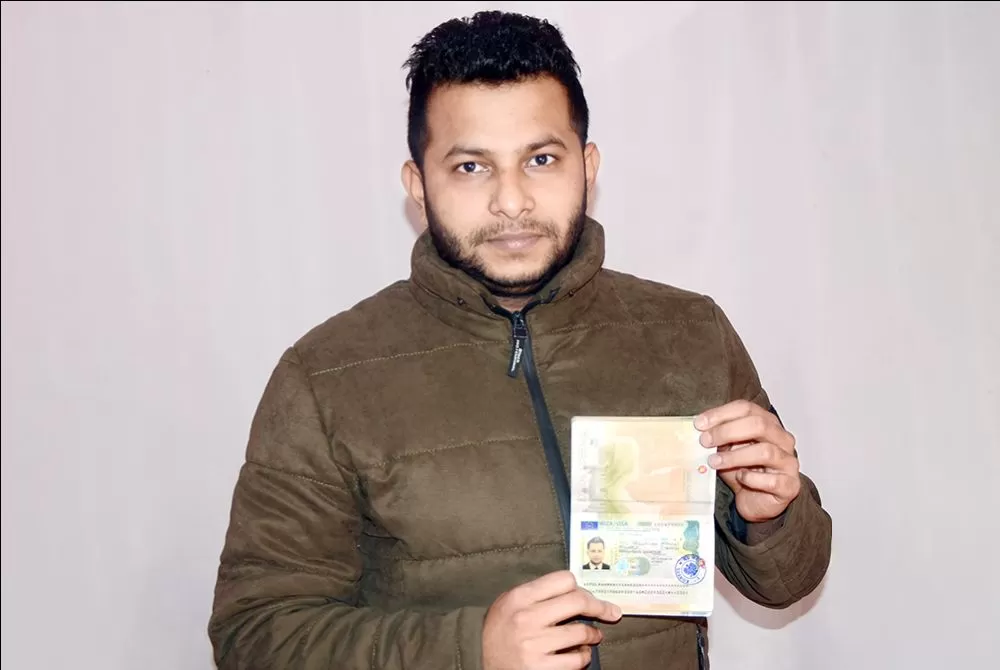
Global clients share how M2S Group helped them secure careers, work permits, and visas in Europe...


Why Choose M2S Group?
At M2S Group, we aim to help you become a true global citizen by providing exceptional support in your international career and immigration journey.
Read More



Get Started with M2S Group!
Our Platform
We connect institutions, employers, students, job seekers, and recruitment partners worldwide.

Employer
Are you recruiting skilled workers from the CIS, African, Asian regions, or other EU countries to work in Poland, Hungary, Lithuania, Slovakia, Estonia, Germany, and other EU nations? Partner with Moving2Europe.eu for efficient and reliable recruitment solutions.

Job seekers
Are you looking to work in Poland, Hungary, Lithuania, Slovakia, Estonia, Germany, or other EU countries? Could you let Moving2Europe. Can you connect with top employers and help with recruitment?

Recruitment Agency
Do you recruit prospective students and workers eager to study or work in Poland, Hungary, Lithuania, Slovakia, Estonia, Germany, or other EU countries? Join Moving2Europe.eu as a trusted Recruitment Partner and grow your network globally.
Do you have any questions?
We are here to help you explore opportunities to work and live in Europe. Our experts are ready to assist you with questions about job searching, obtaining a visa, recognising qualifications, and learning a European language. To learn more about contacting us, please click on one of the icons in the bar below.