We are a global platform connecting institutions, employers, students, job seekers, and recruitment partners.
Join Us Today:
Croatia has become one of Southern Europe’s fastest-growing destinations for foreign workers. With strong demand in construction, tourism, shipbuilding, manufacturing, logistics, and healthcare, the country actively recruits non-EU workers to support its expanding economy.
As a member of the European Union and the Schengen Area, Croatia offers foreign workers a stable legal framework, competitive wages, and clear pathways to long-term residence.
This guide explains everything you need to know in a clear, practical, and human tone.
Croatia offers foreign workers:
Step 1: Secure a job offer from a Croatian employer
Only legally registered Croatian employers can hire foreign nationals.
Step 2: Employer applies for your Work and Residence Permit
Applications are submitted to the Croatian Ministry of the Interior (MUP).
Step 3: Receive approval for work and residence
Once approved, the employer confirms visa submission.
Step 4: Book an appointment at the Croatian Embassy or VFS
Schedule your document submission and biometrics appointment.
Step 5: Submit documents and biometrics
All documents must be complete and accurate.
Step 6: Attend the visa interview (if required)
You may be asked about your employer, job role, and your stay in Croatia.
Step 7: Visa approval and travel to Croatia
After approval, you can enter Croatia and begin employment.
Non-EU nationals apply for a Type D (Long-Stay) Visa after receiving approval for a work and residence permit.
Most applications are submitted at the Croatian Embassy or Consulate in the applicant’s home country.
1. Work and Residence Permit
The primary permit allows foreigners to live and work in Croatia.
2. EU Blue Card
For highly skilled professionals, especially in IT, engineering, and technical fields.
3. Seasonal Work Permit
Issued for tourism, agriculture, hospitality, and seasonal services.
4. Posted Worker Permit
For employees temporarily posted to Croatia by a foreign company.
5. Long-Term Residence Permit
Available after continuous legal residence in Croatia.
Applicants must have:
Most applicants must submit:
The embassy may request additional documents.
Step 1: Find a registered Croatian employer
Could you make sure the employer is authorised to hire foreign workers?
Step 2: The Employer applies for your work and residence permit
Submitted to the Ministry of Interior (MUP).
Step 3: Receive approval
Required for visa submission.
Step 4: Book an embassy or VFS appointment
Schedule document submission and biometrics.
Step 5: Submit documents
Double-check accuracy and completeness.
Step 6: Attend interview (if required)
Could you explain your role, employer, and intentions clearly?
Step 7: Visa approval and travel
Once approved, travel to Croatia and start work.
Below is an updated list of Croatia’s most in-demand jobs with average monthly gross salary ranges.
|
Occupation |
Monthly Salary (EUR) |
Requirements |
Suitable For |
|---|---|---|---|
|
Construction Worker |
€1,200 – €1,800 |
Experience |
Labour & trades |
|
Mason / Carpenter |
€1,300 – €2,000 |
Trade skills |
Skilled workers |
|
Electrician |
€1,400 – €2,200 |
Certification |
Technicians |
|
Welder |
€1,500 – €2,300 |
Welding experience |
Technicians |
|
Machine Operator |
€1,300 – €2,000 |
Technical skills |
Semi-skilled |
|
Shipyard Worker |
€1,400 – €2,300 |
Experience |
Industrial |
|
Warehouse Worker |
€1,100 – €1,600 |
Physical fitness |
Entry-level |
|
Truck Driver (C/CE) |
€1,800 – €2,700 |
Valid licence |
Drivers |
|
Hotel Staff |
€1,000 – €1,500 |
Basic English |
Hospitality |
|
Chef / Cook |
€1,400 – €2,300 |
Experience |
Culinary |
|
Cleaner / Housekeeping |
€900 – €1,300 |
No experience |
Beginners |
|
Caregiver |
€1,000 – €1,500 |
Training |
Healthcare |
|
Nurse |
€1,500 – €2,400 |
Qualification |
Healthcare |
|
IT Support |
€1,600 – €2,500 |
IT background |
IT workers |
|
Software Developer |
€2,200 – €4,000 |
Programming |
Developers |
|
Mechanical Engineer |
€2,000 – €3,200 |
Engineering degree |
Engineers |
1. Construction & Skilled Trades
Infrastructure and housing projects drive strong demand.
2. Tourism & Hospitality
Hotels, resorts, and restaurants hire year-round.
3. Manufacturing & Shipbuilding
Shipyards and factories recruit skilled labour.
4. Healthcare
Shortages of nurses and caregivers persist.
5. Logistics & Transport
Truck drivers and warehouse staff are in high demand.
6. Information Technology
Tech sector growth fuels demand for developers and engineers.
Timelines vary depending on workload and document quality.
Typical expenses include:
Employers often assist with permit-related costs.
Croatia offers several official platforms for verified job searches and legal employment information.
Website: https://www.hzz.hr
Provides:
Website: https://eures.ec.europa.eu
Offers:
Ministry of Interior (MUP):
Includes:
Official Information:
https://mup.gov.hr/aliens-281621
Explains:
Ministry of Foreign and European Affairs:
Provides:
Official Directory:
https://mvep.gov.hr/representations
Always:
M2S Group Sp. z o.o. is a trusted EU-based immigration support company providing clear, transparent, and personalised assistance.
Our services include:
Whether you’re planning to work in Croatia or build a long-term future in Europe, our team ensures accurate, reliable, and tailored support at every stage.
1. What is a Croatian work visa?
A Croatia work visa is a long-stay (Type D) visa that allows foreign nationals to enter Croatia for employment after receiving the required work and residence authorisation.
2. Who needs a Croatia work visa?
All non-EU, non-EEA, and non-Swiss citizens must obtain a work visa and residence permit to work legally in Croatia.
3. What is the work permit in Croatia called?
Croatia issues a Residence and Work Permit that combines the right to live and work in a single document.
4. Who applies for the Croatia work permit—the employer or the worker?
The employer applies for the residence and work permit on behalf of the foreign worker.
5. Can I apply for a Croatia work visa without a job offer?
No. A confirmed job offer from a Croatian employer is mandatory.
6. What documents are required for a Croatia work visa?
Typical requirements include:
7. How long does Croatia’s work permit processing take?
Processing generally takes 30–60 days, depending on the police administration and sector.
8. How long does visa processing take at the Croatian embassy?
Visa processing usually takes 15–45 days after permit approval.
9. How long is a Croatian work visa valid?
Work visas and permits are usually issued for up to 1 year and are renewable.
10. Can I extend my stay in Croatia?
Yes. Residence and work permits can be renewed as long as employment continues.
11. Can I change employers in Croatia?
Yes, but a new residence and work permit are required for the new employer.
12. What is the Croatia Residence and Work Permit?
It is a single permit allowing a foreign national to live and work legally in Croatia.
13. Do I need biometrics for Croatia?
Yes. Biometrics are collected when applying for the residence card in Croatia.
14. Is a criminal record certificate required?
Yes. A police clearance certificate from your home country is mandatory.
15. Is health insurance required for Croatia?
Yes. Health insurance is required until you are enrolled in Croatia’s public health system.
16. Are medical tests required for Croatia work visas?
Medical tests are not always mandatory, but may be requested in some instances.
17. Do I need to speak Croatian to work in Croatia?
Basic Croatian is helpful but not mandatory for many sectors. English is commonly accepted in tourism and hospitality.
18. Which sectors hire the most foreign workers in Croatia?
High-demand sectors include:
19. Is Croatia a good destination for foreign workers?
Yes. Croatia offers strong labour demand, especially in seasonal industries, and EU-standard labour protections.
20. Can I bring my family to Croatia?
Yes. Family members can apply for family reunification after you receive your residence permit.
21. Can I work in other EU countries with a Croatian work visa?
No. Employment is restricted to Croatia only.
22. Can I travel within Schengen with a Croatian work visa?
Yes. Croatia is part of the Schengen Area, allowing short-term travel within member states.
23. What is the minimum wage in Croatia?
Croatia’s minimum wage is approximately €840–€900 gross per month, depending on annual adjustments.
24. Does Croatia pay overtime?
Yes. Overtime, night work, and public holidays must be compensated in accordance with Croatian labour law.
25. Do employers provide accommodation in Croatia?
Many employers—especially in tourism, construction, and agriculture—offer free or subsidised accommodation.
26. Are meals provided by Croatian employers?
Hospitality and seasonal employers often provide meals or meal allowances.
27. What happens if my employer cancels the job offer?
Your visa application may be cancelled unless another employer applies for a new permit.
28. Do Croatian authorities verify job offers?
Yes. Employers and employment contracts are verified during processing.
29. Are bank statements required for Croatia work visas?
Some embassies may request proof of financial means, depending on the application.
30. Can I apply without using an agent?
Yes. Applicants can apply directly through the official Croatian authorities and embassies.
31. What are the standard working hours in Croatia?
The standard workweek is 40 hours, with regulated overtime.
32. Does Croatia allow fixed-term contracts?
Yes. Fixed-term contracts are standard, especially for seasonal and project-based work.
33. Can I apply for permanent residence in Croatia?
Yes. After 5 years of continuous legal residence, you may apply for permanent residence.
34. Can international students in Croatia switch to a work permit?
Yes. Graduates may switch to employment-based residence permits.
35. Is there an age limit for Croatia work visas?
No official age limit exists, but employer preferences apply.
36. Can I work part-time on a Croatia work visa?
Only if your residence and work permit explicitly allow part-time employment.
37. How does Croatia assess work permit applications?
Authorities assess labour shortages, employer compliance, salary levels, and applicant suitability.
38. Are Croatia job offers guaranteed?
No. Applicants must verify employers' legitimacy to avoid fraudulent offers.
39. Which authority issues Croatia work permits?
The Croatian Ministry of the Interior (MUP) issues residence and work permits.
40. Can I start working immediately after arriving in Croatia?
Yes, once your residence card is issued and employment registration is completed.
41. What is the Croatia Residence Card?
It is a biometric ID card proving your legal residence and right to work.
42. Do I need to register my address in Croatia?
Yes. Address registration with local authorities is mandatory after arrival.
43. Can I work while my residence card is being processed?
In most cases, yes—once the permit approval is granted.
44. Are seasonal work permits available in Croatia?
Yes. Seasonal permits are widely used in tourism, agriculture, and hospitality.
45. Can I start a business on a Croatian work visa?
No. Business activities require a separate self-employment residence permit.
46. Who pays the Croatia work permit fees?
Employers usually pay the work permit fees, though arrangements may vary.
47. How long does the complete Croatia work visa process take?
The entire process typically takes 2–4 months, depending on documentation and workload.
48. Do documents need to be translated for Croatia?
Yes. Documents must be translated into Croatian by a certified translator.
49. Can I switch from seasonal work to long-term employment?
Yes, but you must secure a standard contract and apply for a new residence and work permit.
50. Is Croatia suitable for long-term settlement?
Yes. Croatia offers long-term employment options, EU residence benefits, and permanent residence pathways.
Global clients share how M2S Group helped them secure careers, work permits, and visas in Europe...
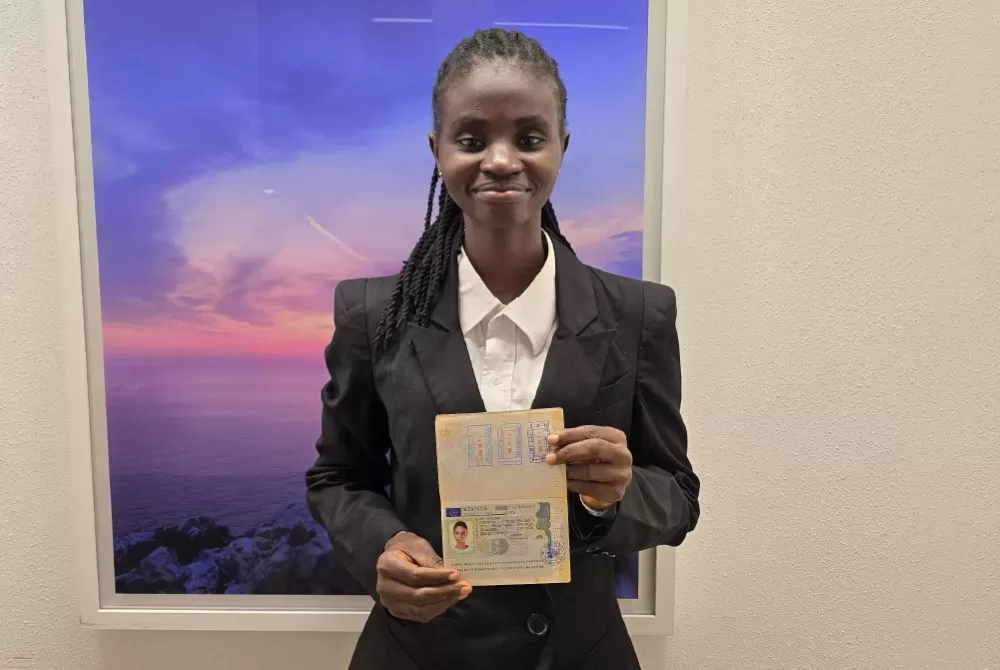
At M2S Group, we aim to help you become a true global citizen by providing exceptional support in your international career and immigration journey.
Read MoreWe connect institutions, employers, students, job seekers, and recruitment partners worldwide.


Are you recruiting skilled workers from the CIS, African, Asian regions, or other EU countries to work in Poland, Hungary, Lithuania, Slovakia, Estonia, Germany, and other EU nations? Partner with Moving2Europe.eu for efficient and reliable recruitment solutions.

Are you looking to work in Poland, Hungary, Lithuania, Slovakia, Estonia, Germany, or other EU countries? Could you let Moving2Europe. Can you connect with top employers and help with recruitment?

Do you recruit prospective students and workers eager to study or work in Poland, Hungary, Lithuania, Slovakia, Estonia, Germany, or other EU countries? Join Moving2Europe.eu as a trusted Recruitment Partner and grow your network globally.
We are here to help you explore opportunities to work and live in Europe. Our experts are ready to assist you with questions about job searching, obtaining a visa, recognising qualifications, and learning a European language. To learn more about contacting us, please click on one of the icons in the bar below.

No products in the cart.