We are a global platform connecting institutions, employers, students, job seekers, and recruitment partners.
Join Us Today:
Switzerland is one of Europe’s most stable and high-income countries, known for its strong economy, excellent working conditions, and world-class quality of life. With a constant demand for skilled professionals and essential workers, Switzerland continues to attract foreign talent from across Europe, Asia, Africa, and other regions.
Whether you are seeking high salaries, long-term stability, or international career growth, a Swiss work visa can open the door to a secure and rewarding future.
This guide explains everything you need to know in a clear, practical, and straightforward way.
Switzerland offers:
Step 1: Secure a job offer from a Swiss employer
You must have a confirmed job offer from a registered Swiss company.
Step 2: Employer applies for your work authorisation
The Swiss employer applies to the Cantonal Migration Office.
Step 3: Approval from cantonal and federal authorities
Both cantonal authorities and the State Secretariat for Migration (SEM) review the application.
Step 4: Receive work authorisation approval
Once approved, the decision is sent to the Swiss embassy or consulate.
Step 5: Book a visa appointment
Could you schedule an appointment at the Swiss Embassy or VFS centre in your home country?
Step 6: Submit documents and biometrics
Could you provide the required documents and biometric data?
Step 7: Visa issuance and travel to Switzerland
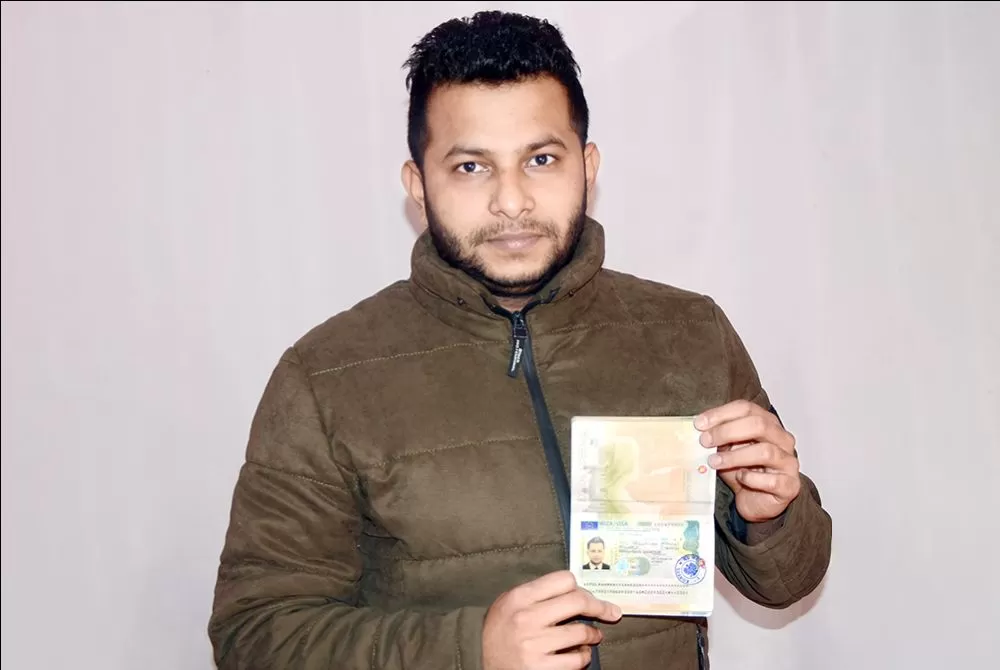
After approval, the visa is stamped in your passport, and you can travel.
A Swiss work visa allows non-EU/EFTA nationals to enter and work in Switzerland for a specific employer legally.
Most applicants apply from outside Switzerland through the Swiss embassy or consulate in their country of residence.
The employer always initiates the process by applying for work authorisation in Switzerland.
Switzerland issues different permits based on contract length and employment type:
1. L Permit (Short-Term Residence Permit)
2. B Permit (Residence Permit)
3. G Permit (Cross-Border Commuter Permit)
4. Seasonal or Temporary Permits
Non-EU nationals are subject to annual quotas.
You must meet the following requirements:
Applicants generally submit:
The embassy may request additional documents.
Step 1: Find a registered Swiss employer
Could you make sure the company is legally authorised to hire foreign workers?
Step 2: Employer submits work permit application
The application is filed at the Cantonal Migration Office.
Step 3: Approval by Swiss authorities
Reviewed at the cantonal and federal levels.
Step 4: Book a visa appointment
You can apply at the Swiss embassy or VFS in your country.
Step 5: Submit documents and biometrics
Could you make sure documents are accurate and complete?
Step 6: Attend a visa interview
Please feel free to ask about your job role, employer, and experience.
Step 7: Visa approval and travel
Once approved, you may enter Switzerland and begin work.
|
Occupation |
Monthly Salary (EUR) |
Requirements |
Suitable For |
|---|---|---|---|
|
Software Developer |
€6,000 – €9,000 |
IT degree & experience |
IT professionals |
|
IT Support Engineer |
€5,000 – €7,000 |
Technical background |
IT specialists |
|
Nurse |
€4,500 – €7,000 |
Nursing qualification |
Healthcare workers |
|
Caregiver |
€3,500 – €5,500 |
Training & experience |
Care professionals |
|
Mechanical Engineer |
€6,000 – €8,500 |
Engineering degree |
Engineers |
|
Electrician |
€4,500 – €6,500 |
Trade certification |
Skilled workers |
|
Construction Worker |
€4,000 – €6,000 |
Experience & fitness |
Labour workers |
|
Hotel Staff |
€3,500 – €5,000 |
Language skills preferred |
Hospitality workers |
|
Chef |
€4,000 – €6,500 |
Culinary experience |
Culinary professionals |
|
Finance Analyst |
€6,500 – €9,500 |
Finance degree |
Finance professionals |
|
Logistics Manager |
€5,500 – €8,000 |
Planning skills |
Office professionals |
1. Information Technology
Strong demand for software developers, cybersecurity experts, and IT engineers.
2. Healthcare
Nurses, caregivers, and medical professionals are in high demand.
3. Engineering & Manufacturing
Mechanical, electrical, and industrial engineers remain in demand.
4. Construction & Skilled Trades
Electricians, plumbers, and technicians are regularly hired.
5. Hospitality & Tourism
Hotels and restaurants seek trained staff year-round.
6. Finance & Banking
Switzerland remains a global financial hub.
Processing time varies by canton and embassy workload.
Typical costs include:
Employers usually cover work permit application fees.
Using official platforms ensures safety, legality, and protection from fraud.
Swiss Government Job Portal
Website: https://www.job-room.ch
Provides:
Website: https://eures.ec.europa.eu
Offers:
Swiss Government Work Permit Information
Website: https://www.sem.admin.ch
Includes:
Website: https://www.sem.admin.ch/sem/en/home/themen/aufenthalt.html
Explains:
Website: https://www.eda.admin.ch
Provides:
M2S Group Sp. z o.o. is a trusted European immigration support company offering transparent, ethical, and personalised guidance.
Our Services Include:
Whether you plan to work in Switzerland or pursue long-term European opportunities, our team ensures accurate, compliant, and reliable assistance at every step of your journey.
1. What is a Swiss work visa?
A Swiss work visa is a long-stay national (Type D) visa combined with a residence and work permit that allows non-EU nationals to live and work legally in Switzerland.
2. Who needs a Swiss work visa to work legally?
All citizens of non-EU, non-EFTA countries must obtain a Swiss work authorisation and visa before starting employment.
3. Is Switzerland part of the European Union?
No. Switzerland is not an EU member, but it is part of the Schengen Area and has free-movement agreements with EU/EFTA states.
4. What is the central work permit system in Switzerland?
Switzerland issues residence permits with gainful employment, regulated under a strict quota system for non-EU nationals.
5. Is a job offer mandatory for a Swiss work visa?
Yes. A confirmed job offer from a Swiss employer is mandatory before any application can begin.
6. Who applies for the work permit in Switzerland—the employer or the employee?
The employer must apply for work authorisation on behalf of the foreign worker.
7. What are the main types of Swiss work permits?
Standard permit categories include:
8. What is the L Permit in Switzerland?
The L Permit is a short-term residence permit, usually valid for up to 12 months, often used for temporary contracts.
9. What is the B Permit in Switzerland?
The B Permit allows long-term residence and employment, is usually issued for 1 year, and is renewable.
10. Are Switzerland's work permits quota-based?
Yes. Switzerland strictly limits the number of work permits issued each year to non-EU nationals.
11. What documents are required for a Swiss work visa?
Applicants generally need:
12. How long does Switzerland's work permit processing take?
Processing typically takes 8–12 weeks, depending on the canton and quota availability.
13. How long does visa processing take at the Swiss embassy?
Visa processing usually takes 10–30 days after permit approval.
14. How long is a Swiss work visa valid?
Visa validity depends on the permit type, usually aligned with the employment contract duration.
15. Can I extend my stay in Switzerland?
Yes, but extensions depend on continued employment and quota availability.
16. Can I change employers in Switzerland?
Yes, but a new work permit approval is required and subject to quotas.
17. What is the Swiss residence permit for employment?
It is a biometric residence card confirming your legal right to live and work in Switzerland.
18. Is biometric registration required for Swiss work visas?
Yes. Biometrics are collected during residence permit issuance.
19. Is a criminal background certificate required?
Yes. Applicants must provide a clean police clearance certificate.
20. Is health insurance mandatory in Switzerland?
Yes. Health insurance is compulsory and must be obtained shortly after arrival.
21. Are medical tests required for Switzerland work visas?
Medical examinations may be required depending on the canton and job role.
22. Do I need to speak German, French, or Italian to work in Switzerland?
Language requirements depend on the canton. English is widely accepted in many professional roles, but local-language skills are highly beneficial.
23. Which industries hire foreign workers in Switzerland?
High-demand sectors include:
24. Is Switzerland a good destination for foreign workers?
Yes. Switzerland offers very high salaries, excellent worker protections, and a strong economy.
25. Can I bring my family to Switzerland on a work visa?
Yes. Switzerland allows family reunification, subject to income and housing requirements.
26. Can my spouse work in Switzerland?
Yes. Spouses are generally allowed to work, but registration may be required.
27. Can I work in other EU countries with a Swiss work permit?
No. Employment rights are limited to Switzerland only.
28. Can I travel within Schengen with a Swiss work visa?
Yes. Switzerland is part of the Schengen Area.
29. What is the minimum wage in Switzerland?
Switzerland has no national minimum wage, but salaries are among the highest in Europe.
30. Does Switzerland pay overtime?
Yes. Overtime compensation is regulated by labour law and employment contracts.
31. Do Swiss employers provide accommodation?
Some employers assist with relocation, but the employee usually arranges housing.
32. Are meals or food allowances provided by employers?
This varies by employer. Some provide meal vouchers or subsidised canteens.
33. What happens if my employer terminates my contract?
Your residence permit may be withdrawn unless a new employer secures approval quickly.
34. Do Swiss authorities verify job offers?
Yes. Employers, contracts, and labour market tests are strictly verified.
35. Are bank statements required for Switzerland work visas?
Yes. Proof of financial stability may be required.
36. Can I apply for a Swiss work visa without an agent?
Yes, but applications are always employer-driven.
37. What are standard working hours in Switzerland?
The standard workweek is 40–45 hours, depending on the sector.
38. Does Switzerland allow fixed-term employment contracts?
Yes. Fixed-term contracts are standard, especially for project-based roles.
39. Can I apply for permanent residence in Switzerland?
Yes. After 5–10 years of legal residence, depending on nationality, you may apply for a C Permit.
40. Can international students in Switzerland switch to work permits?
Yes, but opportunities are limited and highly regulated.
41. Is there an age limit for Switzerland work visas?
There is no official age limit, but permits favour highly skilled professionals.
42. Which authority issues Swiss work permits?
Permits are issued by cantonal migration authorities, with federal approval.
43. Can I start working immediately after arriving in Switzerland?
Yes, once your residence permit is issued and registered.
44. Do I need to register my address in Switzerland?
Yes. Address registration is mandatory shortly after arrival.
45. Are seasonal work permits available in Switzerland?
Yes, but they are limited and mainly in agriculture and hospitality.
46. Can I start a business on a Swiss work visa?
No. Business activities require a self-employment or entrepreneur permit.
47. Who pays the Swiss work permit fees?
The employer usually pays fees, though arrangements may vary.
48. How long does the complete Switzerland work visa process take?
The complete process usually takes 2–4 months, depending on quotas and the canton.
49. Do documents need to be translated for Switzerland?
Yes. Documents must be translated into German, French, or Italian, depending on the canton.
50. Is Switzerland suitable for long-term settlement?
Yes, but mainly for highly skilled professionals, due to strict immigration limits and quotas.
Global clients share how M2S Group helped them secure careers, work permits, and visas in Europe...

At M2S Group, we aim to help you become a true global citizen by providing exceptional support in your international career and immigration journey.
Read MoreWe connect institutions, employers, students, job seekers, and recruitment partners worldwide.


Are you recruiting skilled workers from the CIS, African, Asian regions, or other EU countries to work in Poland, Hungary, Lithuania, Slovakia, Estonia, Germany, and other EU nations? Partner with Moving2Europe.eu for efficient and reliable recruitment solutions.

Are you looking to work in Poland, Hungary, Lithuania, Slovakia, Estonia, Germany, or other EU countries? Could you let Moving2Europe. Can you connect with top employers and help with recruitment?

Do you recruit prospective students and workers eager to study or work in Poland, Hungary, Lithuania, Slovakia, Estonia, Germany, or other EU countries? Join Moving2Europe.eu as a trusted Recruitment Partner and grow your network globally.
We are here to help you explore opportunities to work and live in Europe. Our experts are ready to assist you with questions about job searching, obtaining a visa, recognising qualifications, and learning a European language. To learn more about contacting us, please click on one of the icons in the bar below.

No products in the cart.