Get Started with M2S Group!
We are a global platform connecting institutions, employers, students, job seekers, and recruitment partners.
Join Us Today:
Why Apply for a Liechtenstein Work Visa?
- Among the highest wages in the world, with very low taxes
- One of the world’s most restrictive permit and quota systems
- A strictly limited annual quota, with permits partly drawn by lottery
- The cross-border commuter permit is the most common route
- A leading financial centre and innovative industrial economy
- Strong demand in finance, IT, engineering, and healthcare
- An EEA and Schengen country between Switzerland and Austria
Liechtenstein is one of the wealthiest countries in the world, with some of the highest wages in Europe, very low taxes, and a thriving financial and industrial economy. It is also one of the most difficult places to obtain a residence permit: it operates a strictly limited annual quota, with half of permits allocated by lottery. For most foreign workers, the practical route is the cross-border commuter permit, working in Liechtenstein while living in neighbouring Switzerland or Austria. This guide gives you an honest, complete picture of how it works.


Liechtenstein Work Visa for Foreigners
Liechtenstein, a tiny principality nestled between Switzerland and Austria, is one of the wealthiest and most stable countries in the world. It boasts some of the highest wages in Europe, very low taxes, a leading financial sector, and an innovative, export-driven industrial base that produces globally successful companies despite the country’s small size. It is also, by design, one of the hardest countries in Europe to move to: it operates one of the world’s most restrictive residence-permit quota systems, with much of the limited allocation decided by lottery. This guide gives you an honest, complete picture — the permit types and how they fit together, the quota and lottery, eligibility, the dominant cross-border commuter route, the documents, the fees, realistic salaries, the job market, the route to settlement, and recent changes — so you can plan around the reality of this uniquely rewarding but tightly controlled labour market.
Why Work in Liechtenstein?
Liechtenstein offers exceptional rewards for those who can secure a role. Wages are among the highest in the world — the median gross monthly wage is over CHF 7,000 — and personal taxes are very low, with a flat national income tax supplemented by a modest municipal rate, so take-home pay is excellent. The economy is a leading financial centre and home to globally successful industrial companies, with strong demand for skilled professionals in finance, IT, engineering, and healthcare. For those who gain entry, few places in the world combine such high pay with such low taxation.
The catch is access. Liechtenstein’s resident population cannot meet its own labour demand, and the overwhelming majority of vacancies are filled by cross-border commuters from Switzerland and Austria rather than by new residents. Residence permits are strictly capped and partly allocated by lottery, and third-country nationals are admitted only in exceptional cases for specialists and managers. For those who understand the system — and especially those open to commuting from across the nearby border — Liechtenstein is a uniquely rewarding place to work, provided expectations about residence are realistic.
It is essential to approach Liechtenstein with a clear understanding of this trade-off. The country is not a place where one finds a job and moves in; the residence quota is among the tightest anywhere, and even highly qualified EEA nationals frequently rely on the lottery or, far more commonly, on the cross-border commuter route. The honest reality is that the commuter permit is the practical path for the great majority, allowing access to Liechtenstein’s exceptional wages while living in the more accessible housing markets of the neighbouring Rhine Valley. For the right professional with the right expectations, the rewards are outstanding.
Benefits of Working in Liechtenstein
Here is what makes Liechtenstein appealing for foreign workers:
- Among the highest wages in the world
- Very low personal income tax
- A leading financial centre and innovative industrial economy
- Strong demand in finance, IT, engineering, and healthcare
- The cross-border commuter permit is an accessible route
- EEA and Schengen membership for easy regional travel
- A safe, stable, high-quality-of-life environment
- Globally successful employers despite the country’s small size
- A pathway to permanent settlement over time
Because the labour market is so quota-constrained, securing a role here is competitive — but the rewards for those who do are among the best in Europe. The combination of world-leading wages, very low taxes, and a stable, safe environment is genuinely exceptional. For cross-border commuters who can earn these wages while living in Switzerland or Austria, Liechtenstein offers one of the most financially attractive work arrangements on the continent.
Types of Liechtenstein Permits
Every foreign national, including EEA and Swiss citizens, needs a residence and work permit issued by the Migration and Passport Office before starting work; only Liechtenstein nationals are exempt. Choosing the right route — above all, commuter versus resident — is the single most important decision.
Cross-Border Commuter Permit (Permit G)
The most common and practical route. It allows workers residing in neighbouring Switzerland or Austria to work in Liechtenstein without having to live there. It is valid for one year and renewable, and it sidesteps the residence quota entirely — which is precisely why the majority of Liechtenstein’s workforce commutes across the border. For most foreign professionals, this is the realistic path to working in the principality.
Residence Permit for Employment (Permit B)
For those who wish to live in Liechtenstein while working. It is strictly capped: only around 56 permits a year are issued to EEA nationals in gainful employment — roughly half by government grant and half by lottery. It is renewed annually and can lead to settlement over time. Because the allocation is so small and partly random, securing one is genuinely difficult even for well-qualified candidates.
Short-Term Residence Permit (Permit L)
For shorter assignments, typically up to 12 months, including for non-EEA managers, specialists, and qualified workers brought in for specific roles. It suits project work and temporary specialist assignments rather than long-term settlement, and it is one of the limited routes through which third-country specialists may be admitted.
Settlement Permit (Permit C)
Permanent residence is available after at least 5 to 10 years of continuous legal residence, with integration requirements that include German-language proficiency and knowledge of Liechtenstein’s legal system and history. It represents the long-term goal for those who do secure residence, offering stable, settled status after a substantial period of genuine integration.
Liechtenstein Permit Eligibility Criteria
To be approved for a Liechtenstein work and residence permit, you generally need to satisfy the following, each examined closely given the tight system:
- A confirmed job offer from a Liechtenstein employer
- For the residence permit, success in the quota and, for half of the permits, the lottery
- Proof that no suitable Liechtenstein, EEA, or Swiss candidate was available (for third-country and many roles)
- Relevant qualifications and professional experience
- A valid passport and a clean criminal record
- Proof of accommodation in Liechtenstein (or commuter status)
- Comprehensive health insurance
The defining feature of the system is its restrictiveness. Third-country nationals are admitted for employment only in exceptional cases — specifically for specialists, managers, and highly qualified professionals for whom no suitable EEA candidate can be found — so the residence route is effectively closed to most non-EEA general workers. For EEA nationals, the quota and lottery are the gatekeepers to residence, while the commuter permit offers an alternative that bypasses them. Understanding which category you genuinely fall into, and setting expectations accordingly, is the foundation of any realistic plan for Liechtenstein.
Documents Required for a Liechtenstein Work Visa
The core documents you should prepare in advance include:
- Valid passport
- A German-language employment contract
- Proof of qualifications and professional experience
- A criminal record certificate
- Comprehensive health insurance confirmation
- Proof of accommodation in Liechtenstein, or evidence of commuter residence
- The employer’s documentation, including recruitment evidence
Employment relationships and contracts follow Liechtenstein’s civil code, which closely mirrors Swiss law, and the contract is in German, so a clear understanding of its terms is important. For roles that require it, the employer must provide evidence of recruitment efforts showing no suitable EEA or Swiss candidate was available. As elsewhere, a complete and correctly prepared file — with the German contract, qualifications, and health insurance in order — is what allows the authorities to decide efficiently, whether for a commuter permit or a quota-bound residence permit.
How to Apply for a Liechtenstein Work Visa: Step-by-Step Process
The process is employer-led and runs through the Migration and Passport Office and the Office of Economic Affairs, and following the sequence is essential given the quota timing.
Step 1: Secure a job offer. The employer confirms the role and prepares a German-language contract, demonstrating recruitment efforts where required.
Step 2: Choose the route. Decide between a cross-border commuter permit (if you will live in Switzerland or Austria) and a residence permit (subject to the quota and lottery).
Step 3: Application and quota. The employer submits the permit application to the authorities at least 14 days before the planned start; for residence permits, the application enters the quota and for half of the permits, the lottery draw.
Step 4: Decision. Decisions for EEA and Swiss nationals are usually taken within about four weeks; third-country applications take around three months.
Step 5: Register and begin. Once approved, register with the Migration and Passport Office and, if you are a commuter, maintain your residence abroad while working in Liechtenstein.
Liechtenstein Work Visa Processing Time
Processing depends on the route and the quota:
- EEA and Swiss nationals: usually around four weeks for a complete application
- Third-country nationals: usually around three months
- The lottery-draw step can add several weeks to the timeline
- Lotteries for residence permits are held twice a year
Because the quota is limited and the lotteries are held only twice a year, timing your application around the draw schedule is essential for the residence route. The timing of the draw can significantly affect when you can start. A cross-border commuter permit is generally faster and not subject to the quota, which is another reason it is the practical choice for most. As always, a complete application submitted in good time — at least 14 days before the planned start — is what keeps the process on track.
Liechtenstein Work Visa Fees & Costs
Liechtenstein fees are modest relative to its wages:
- Residence permit issuance: around CHF 1,060 if approved (a small fee applies if not)
- Lottery participation fees: a preliminary and a final draw fee
- Document translation and preparation: variable
- Health insurance: required, at Swiss-level costs
Liechtenstein has the highest cost of living in Europe, so budget accordingly — though its very high wages more than compensate. The official permit fees are small relative to the salaries on offer, and the larger ongoing considerations are the Swiss-level cost of living and health insurance. For cross-border commuters, living in the somewhat more affordable neighbouring regions of Switzerland or Austria while earning wages in Liechtenstein can be especially advantageous financially, which is part of why the commuter model is so prevalent.
Job Market in Liechtenstein for Foreign Workers
Finance, industry, IT, and healthcare lead Liechtenstein’s demand. Despite its tiny size, the country hosts a leading financial centre and globally successful industrial firms, concentrated in Vaduz and the industrial communes. Here is where the opportunities are:
| Sector | In-Demand Roles | Main Hiring Areas | Demand Level |
|---|---|---|---|
| Finance & Banking | Wealth Managers, Compliance, Fund Specialists | Vaduz | Very High |
| Industry & Manufacturing | Engineers, Precision Technicians | Schaan, Triesen | High |
| Information Technology | Software Developers, IT Specialists | Vaduz, Schaan | High |
| Healthcare | Doctors, Nurses, Specialists | Nationwide | Medium-High |
| Professional Services | Lawyers, Auditors, Consultants | Vaduz | Medium-High |
| Engineering | Mechanical, Electrical Engineers | Schaan, Balzers | High |
Vaduz, the capital, is the heart of the financial sector, with private banks, wealth managers, and fund administrators driving strong demand for finance and compliance specialists. The industrial communes of Schaan, Triesen, and Balzers host world-class manufacturing and engineering companies that need engineers and precision technicians, while IT demand spans both sectors. Healthcare and professional services add further roles. Crucially, the great majority of these positions are filled by cross-border commuters, so matching your profile to a sector in demand — and being open to commuting — is the realistic path to working in Liechtenstein.
Top In-Demand Jobs in Liechtenstein for Foreigners
If you fit one of these roles, your chances of working in Liechtenstein improve:
- Wealth Manager and Compliance Specialist
- Fund and Banking Professional
- Software Developer and IT Specialist
- Mechanical and Electrical Engineer
- Precision Manufacturing Technician
- Doctor and Registered Nurse
- Auditor and Consultant
- Lawyer and Professional-Services Specialist
The finance sector and innovative industrial companies drive the highest demand for qualified specialists, which is often met by cross-border commuters from Switzerland and Austria. If you combine recognised qualifications with skills in wealth management, compliance, engineering, or precision manufacturing, you are best placed, because these are the areas where Liechtenstein’s world-class employers most actively recruit. For the highly specialised, even the limited third-country specialist routes may open, but for most, a finance or engineering role accessed via the commuter permit is the realistic goal.
Average Salary of Workers in Liechtenstein
Liechtenstein has some of the highest wages in the world. It uses the Swiss franc (CHF). Here is a realistic snapshot of monthly and annual gross salaries:
| Job Role | Monthly Salary (CHF) | Approx. Annual Salary (CHF) | Experience Level |
|---|---|---|---|
| Software Developer | 7,000 – 11,000 | 84,000 – 132,000 | Mid to Senior |
| Senior Developer / Architect | 9,000 – 14,000 | 108,000 – 168,000 | Senior |
| Wealth Manager / Banker | 8,000 – 14,000 | 96,000 – 168,000 | Mid to Senior |
| Compliance / Audit Specialist | 7,500 – 12,000 | 90,000 – 144,000 | Mid to Senior |
| Mechanical / Electrical Engineer | 7,000 – 11,000 | 84,000 – 132,000 | Mid Level |
| Precision Technician | 6,000 – 9,000 | 72,000 – 108,000 | Skilled Trade |
| Doctor | 10,000 – 16,000 | 120,000 – 192,000 | All Levels |
| Nurse | 6,000 – 8,500 | 72,000 – 102,000 | All Levels |
| Accountant | 6,500 – 10,000 | 78,000 – 120,000 | Mid Level |
| Lawyer / Consultant | 8,000 – 13,000 | 96,000 – 156,000 | Mid to Senior |
Note: Liechtenstein uses the Swiss franc (CHF); 1 franc is roughly 1.05 euros. The median gross monthly wage is over CHF 7,000 — among the highest in the world. Personal income tax is very low (a flat national rate plus a modest municipal rate), so take-home pay is excellent, though the cost of living is the highest in Europe. Cross-border commuters living in Switzerland or Austria can combine these wages with somewhat lower living costs across the border.
Taxes and Cost of Living in Liechtenstein
Liechtenstein has one of the most favourable personal tax systems in the world. Income is taxed at a low, flat national rate, supplemented by a modest municipal surcharge, resulting in effective rates far below those in most of Europe, and take-home pay on the country’s already-high salaries is exceptional. Social security contributions apply to the Swiss model. For cross-border commuters, taxation can involve both Liechtenstein and the country of residence under the relevant arrangements, so it is worth confirming your specific position. Still, in general, the tax environment is a major part of the principality’s appeal.
The cost of living is the highest in Europe, closely tracking neighbouring Switzerland, with expensive housing being the most significant factor — and housing in Liechtenstein itself is both costly and scarce given the country's small size This is one reason the cross-border commuter model is so prevalent: commuters can access Liechtenstein’s wages while living in the somewhat more affordable, more readily available housing markets of the Swiss and Austrian Rhine Valley. Groceries, services, and everyday costs are at Swiss levels. For those earning the country’s very high salaries, the high costs are more than offset, but housing availability and price are the central practical considerations. Always confirm current tax rates and the cross-border arrangements before relying on them.
Dependent and Family Benefits for Liechtenstein Permit Holders
Holders of a Liechtenstein residence permit can be joined by family, subject to the quota system:
- Family reunification for spouses and children under 21
- Permits aligned with the main applicant’s status
- Access to excellent healthcare and schooling
- A safe, high-quality-of-life environment
- Each family memberrequiresg a separate application
Each family member requires a separate application, and family reunification is also subject to the country’s strict quotas, so it is an additional consideration in an already constrained system. For those who do secure residence, the principality offers an excellent environment for families, with high-quality healthcare and schooling and a famously safe, stable setting. For cross-border commuters, however, the family lives in the country of residence rather than in Liechtenstein, which is the more common arrangement given the quota constraints on residence permits.
Pathway to Permanent Residency in Liechtenstein
Liechtenstein offers a route to settlement, though it is demanding:
- Residence permits are renewed annually
- After five to ten years of continuous legal residence, you can apply for a settlement permit (Permit C)
- Settlement requires German language proficiency and integration
- Knowledge of Liechtenstein’s legal system, history, and customs is required
- Continuous, valid residence throughout is essential
Given the quota system, reaching permanent residence is a long-term commitment that rewards genuine integration. The path requires first securing one of the scarce residence permits, then maintaining continuous residence for five to ten years while meeting German-language and integration requirements, including knowledge of the country’s legal system, history, and customs. For the small number who achieve it, the settlement permit offers stable, lasting status. Still, the journey is necessarily long and demanding given how tightly residence is controlled from the outset.
Latest Liechtenstein Permit Rule Changes
Liechtenstein’s system remains tightly controlled, so working within current rules matters. The key points:
- The work-permit quota for employed EEA nationals was maintained for 2026, with permits drawn partly by lottery.
- Around 56 residence permits a year go to EEA nationals in gainful employment, half by government grant and half by lottery.
- The cross-border commuter permit remains the dominant route, with most vacancies filled by commuters from Switzerland and Austria.
- Third-country nationals are admitted for employment only in exceptional, specialist cases.
- Social security and tax rates were confirmed at January 2026 levels.
- Lotteries for residence permits continue to be held twice a year.
The Migration and Passport Office and the Office of Economic Affairs administer these rules. Because the quota is fixed and the lottery draws are scheduled, always confirm the current quota and draw schedule before applying, and consider the cross-border commuter route, which avoids the residence quota entirely and is the realistic path for most foreign professionals.
Common Reasons for a Liechtenstein Work Visa Rejection
Most rejections or barriers arise for a recognisable set of reasons:
- The annual residence quota is being exhausted
- Not being drawn in the lottery for a residence permit
- A standard role not justifying a third-country specialist permit
- The employer is not demonstrating that no suitable EEA candidate was available
- An application submitted less than 14 days before the planned start
- Incomplete documentation or no confirmed accommodation
A good immigration consultant will often steer eligible candidates toward the cross-border commuter route, which avoids the residence quota entirely and is the realistic path for the great majority. In Liechtenstein, most barriers are structural rather than documentary — whether the quota is full or not drawn in the lottery — so the most valuable guidance is honest advice about realistic options. For those open to commuting, the path is far clearer; for those set on residence, patience with the quota and lottery is essential.
How moving2europe.EU Can Help You
Liechtenstein is uniquely rewarding but uniquely restrictive, and choosing the right route is everything. At moving2europe.eu, we help foreign nationals navigate the process honestly and effectively. Here is what we bring to the table:
- An honest assessment of your realistic options
- Guidance on the cross-border commuter route versus the residence quota and lottery
- Document preparation and German-contract review
- Liaison with Liechtenstein employers in finance, industry, IT, and healthcare
- Permit applications and quota timing are managed end to end
- Family reunification guidance within the quota
- Realistic planning around the twice-yearly lottery draws
- Transparent fees and real human support throughout
Whether you are targeting a Vaduz finance role or an engineering position with an industrial leader, we will give you a clear, realistic plan for working in Liechtenstein — including, where it makes sense, the cross-border commuter route that the majority of the workforce relies on.
Start Your Journey to Liechtenstein Today
Wherever you are in the process, moving2europe.eu is ready to help you take the next step toward working in Liechtenstein. Choose the path that fits you:
- Job seekers — browse opportunities and begin your application on our Work in Europe page.
- Employers — hiring international talent for Liechtenstein? Register as an employer to connect with skilled, pre-screened candidates.
- Recruitment partners — run a recruitment agency? Register as a recruitment partner to join our growing network.
Take the first step toward your new career in Liechtenstein — get in touch with moving2europe.Eu today.
Ready to Work in Liechtenstein?
Please tell us your situation. Our team will give you an honest assessment for working in Liechtenstein, guide you between the cross-border commuter route and the residence quota and lottery, prepare your documents, and coordinate the application from start to finish.
Conclusion
Liechtenstein offers some of the highest wages in the world, very low taxes, and a thriving financial and industrial economy — but it is one of the most restrictive countries in Europe to move to, with a strictly limited quota and a partial lottery for residence permits. For most foreign workers, the realistic route is the cross-border commuter permit, which allows them to work in Liechtenstein while living in Switzerland or Austria. Understand the system, choose the right route, and Liechtenstein can be uniquely rewarding. And if you want an honest assessment and a hand along the way, moving2europe.eu is here to help.
Looking for inspiration
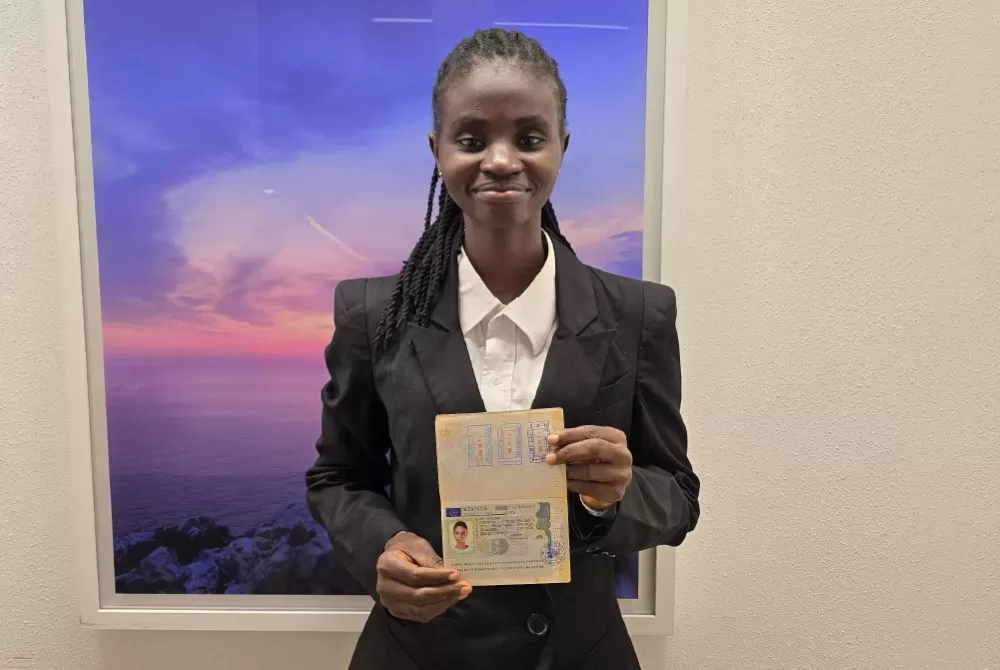
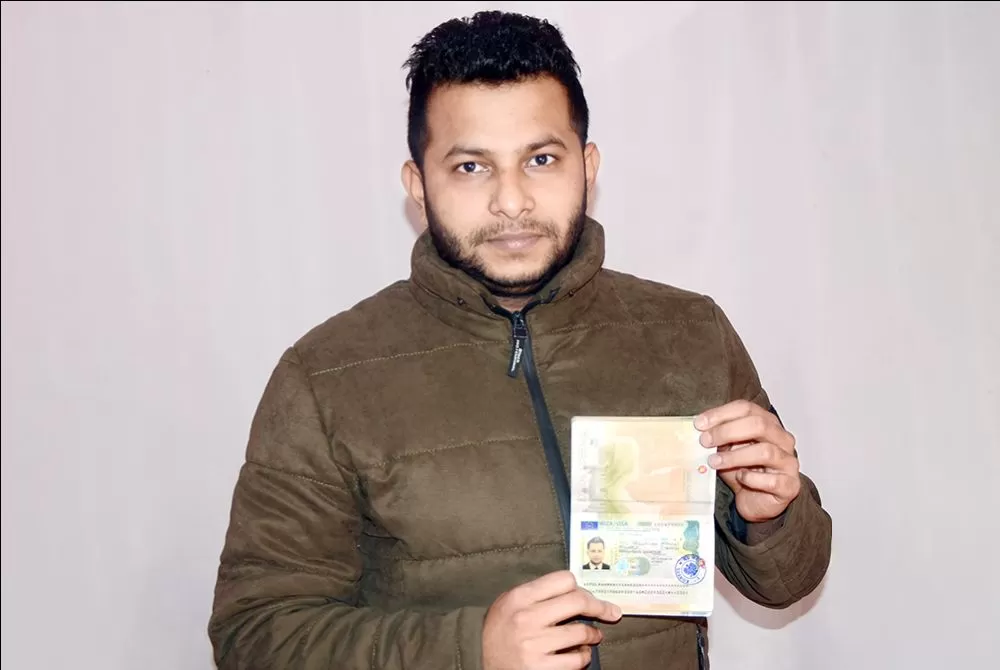
Global clients share how M2S Group helped them secure careers, work permits, and visas in Europe...

Why Choose M2S Group?
At M2S Group, we aim to help you become a true global citizen by providing exceptional support in your international career and immigration journey.
Read More


Get Started with M2S Group!
Our Platform
We connect institutions, employers, students, job seekers, and recruitment partners worldwide.

Employer
Are you recruiting skilled workers from the CIS, African, Asian regions, or other EU countries to work in Poland, Hungary, Lithuania, Slovakia, Estonia, Germany, and other EU nations? Partner with Moving2Europe.eu for efficient and reliable recruitment solutions.

Job seekers
Are you looking to work in Poland, Hungary, Lithuania, Slovakia, Estonia, Germany, or other EU countries? Could you let Moving2Europe. Can you connect with top employers and help with recruitment?

Recruitment Agency
Do you recruit prospective students and workers eager to study or work in Poland, Hungary, Lithuania, Slovakia, Estonia, Germany, or other EU countries? Join Moving2Europe.eu as a trusted Recruitment Partner and grow your network globally.
Do you have any questions?
We are here to help you explore opportunities to work and live in Europe. Our experts are ready to assist you with questions about job searching, obtaining a visa, recognising qualifications, and learning a European language. To learn more about contacting us, please click on one of the icons in the bar below.