Get Started with M2S Group!
We are a global platform connecting institutions, employers, students, job seekers, and recruitment partners.
Join Us Today:
Why Apply for a Lithuania Work Visa?
- A booming fintech and tech hub, with English as the working language
- An EU Blue Card with one of the lower thresholds in the Union
- A 110-occupation shortage list with quota overrides and faster processing
- A fully digital application system via MIGRIS
- Strong demand in IT, construction, manufacturing, and healthcare
- EU, Schengen, and NATO membership with a lower cost of living
- Pathway to permanent residence after five years
Lithuania, the largest of the Baltic states, has transformed into one of Europe’s most dynamic economies — a booming hub for fintech, cybersecurity, and life sciences, home to global names and fast-growing startups in Vilnius. For non-EU professionals, it offers an EU Blue Card with one of the lower salary thresholds in the Union, a generous 110-occupation shortage list, and a fully digital application system. With EU, Schengen, and NATO membership and a lower cost of living than the West, Lithuania is an accessible and increasingly attractive destination.


Lithuania Work Visa for Foreigners
Lithuania, the largest of the three Baltic states, has rapidly become one of Europe’s most dynamic economies. Once seen simply as a calm Baltic crossroads, it is now a booming hub for fintech, cybersecurity, logistics, and advanced manufacturing, with global companies and home-grown success stories clustered in Vilnius and Kaunas. For non-EU nationals, Lithuania offers a clear, increasingly digital regulatory framework led by the EU Blue Card and the employment-based temporary residence permit, supported by a generous shortage-occupation list and a fully online application system. With membership in membership in the euro, Schengen, and NATO, a lower cost of living than in Western Europe, and a welcoming stance toward international talent, Lithuania is an accessible and rewarding Baltic base. This guide explains everything you need to know — the permit types and which one suits you, the 2026 salary thresholds and eligibility, the documents to prepare, the fees, the processing times, realistic salaries, the sectors that actually hire foreigners, the route to permanent residence, and recent changes.
Why Apply for a Lithuanian Work Visa?
Lithuania combines opportunity, affordability, and efficiency. Its technology sector is thriving — fintech, cybersecurity, and e-commerce lead the ecosystem, with English the working language in most technology companies — and talent shortages have widened across construction, manufacturing, healthcare, and renewable energy. The government actively welcomes international talent, and recent reforms have streamlined the process and expanded the list of in-demand professions, making it easier than ever for skilled foreigners to enter the country.
The EU Blue Card is particularly attractive here, with a relatively accessible salary threshold, a three-year validity period, and the ability to change employers after 12 months. A generous shortage-occupation list offers lower salary thresholds, quota overrides, and faster processing, and the whole system is now largely digital through the MIGRIS portal. As an EU, Schengen, and NATO member with a lower cost of living than Western Europe, Lithuania is an accessible and rewarding base for skilled professionals — particularly in technology, where the combination of a thriving sector and English-speaking workplaces removes the usual barriers.
There is also a strong entrepreneurial and contracting dimension. Lithuania offers an attractive individual business activity regime with low tax rates, which is ideal for contractors, freelancers, and remote professionals who want to operate independently. Combined with Vilnius’s reputation as one of the fastest-growing fintech hubs in Europe and Kaunas’s strength in manufacturing and technology, this makes Lithuania appealing not only to employees but to independent specialists and founders. The country has deliberately positioned itself as open, digital, and business-friendly, and for the right professional, that openness translates into genuine opportunity.
Benefits of Working in Lithuania
Here is what makes Lithuania appealingtor foreign workers:
- A booming fintech and technology hub, with English widely used at work
- An EU Blue Card with one of the lower thresholds in the Union
- A 110-occupation shortage list with quota overrides and faster processing
- A fully digital application system via MIGRIS
- The ability to change employers after twelve months on a Blue Card
- Strong demand in IT, construction, manufacturing, and healthcare
- EU, Schengen, and NATO membership
- An attractive low-tax individual business activity regime
- A pathway to permanent residence after five years
Lithuania also offers an attractive individual business activity regime with low tax rates, ideal for contractors and remote professionals who want flexibility. The combination of a thriving, English-speaking technology sector, an accessible Blue Card, a generous shortage list, and a fully digital process makes Lithuania one of the more welcoming and efficient EU countries for skilled foreign workers — a reputation it has earned through deliberate reform and a genuine openness to international talent.
Types of Lithuanian Work Permits
Lithuania’s system is run by the Migration Department (residence permits and Blue Cards) and the Employment Service (work permits and quotas), with applications submitted digitally via MIGRIS. Choosing the right route from the outset shapes the threshold, the quota position, and the speed of the process.
EU Blue Card
For highly qualified professionals with a higher education diploma or five years of relevant experience (three years for IT specialists within the last seven). For 2026, the salary must be at least 1.5 times the national average (around €3,600 per month), or 1.2 times the national average (around €2,900 per month) for occupations on the shortage list. It has no labour-market test, is valid for three years, and allows employer changes after twelve months — making it the strongest route for qualifying professionals.
Employment-Based Temporary Residence Permit
The standard route for non-EU nationals with a job offer. It generally requires a labour-market test and falls under the annual quota (24,706 places for 2026), though shortage occupations and higher salaries can override the quota. It is typically valid for up to one to three years and is the route for skilled roles that do not meet the Blue Card’s qualification or salary criteria.
National Work Permit
Issued by the Employment Service for specific categories such as seasonal workers, and used alongside a national visa for certain roles. Shortage occupations are exempt from the labour-market test, which speeds things up considerably. It covers situations the residence-permit routes do not, particularly temporary and seasonal work.
Other Routes
Lithuania also offers a Startup Visa for innovative founders, intra-corporate transfer permits, and the individual business activity route, popular with remote workers and contractors. These broaden options beyond standard employment for entrepreneurs, transferees, and the self-employed, expanding access for specific groups and reflecting Lithuania’s business-friendly stance.
Lithuania Work Visa Eligibility Criteria
To be approved for a Lithuanian work and residence permit, you generally need to satisfy the following, each checked against your route:
- A job offer from a Lithuanian employer and a valid contract
- For the EU Blue Card, a higher qualification (or experience) and a salary meeting the threshold are required
- For the standard route, a salary at least equal to the national average, or lower if on the shortage list
- A positive labour-market test, unless exempt (shortage occupations and Blue Card roles)
- A valid passport and a clean criminal record
- Proof of health insurance and accommodation
- No overdue tax liabilities for you or your employer
The most valuable thing to establish early is whether your occupation is on the shortage list, because shortage occupations benefit from lower salary thresholds, quota overrides, and exemption from the labour-market test — making them by far the fastest and most accessible route. A practical Lithuanian-specific requirement is that neither you nor your employer may have overdue tax liabilities, a compliance check that is easy to overlook. Confirming the right route, the shortage-list status, and the salary threshold at the outset is the foundation of a successful, fast application.
Documents Required for a Lithuanian Work Visa
The core documents you should prepare in advance include:
- Valid passport
- Employment contract or binding job offer meeting the salary threshold
- Proof of qualifications and experience
- The employer’s mediation letter confirming your suitability
- A criminal record certificate, if you have convictions (or an affirmation)
- Proof of health insurance
- A commitment to declare your place of residence in Lithuania
Foreign documents must be legalised or apostilled and, where required, translated into Lithuanian, and applications are submitted digitally via MIGRIS, which streamlines the process considerably. The employer’s mediation letter, confirming your suitability for the role, is an important element of the file. Because the system is digital, a complete set of correctly apostilled and translated documents uploaded to MIGRIS enables the Migration Department to decide efficiently, so preparing the legalised documents in advance is the best way to keep the timeline short.
How to Apply for a Lithuanian Work Visa: Step-by-Step Process
The process is employer-supported and largely digital, and following the sequence keeps it efficient.
Step 1: Secure a job offer. Find a job with a Lithuanian employer and confirm whether the role is on the shortage list, which determines the threshold and speed.
Step 2: Employer steps. The employer applies for a work permit with the Employment Service (where needed) or provides a mediation letter to the Migration Department.
Step 3: Apply via MIGRIS. Complete the application online via MIGRIS, uploading digital copies of your documents, then book a biometrics appointment.
Step 4: Biometrics and decision. Provide your biometric data; decisions typically take from 15 days to two months, depending on the procedure.
Step 5: Collect your permit. Once approved, collect your temporary residence permit (Blue Card), declare your address in Lithuania, and then begin work.
Lithuania Work Visa Processing Time
Processing is reasonably fast, especially via the digital system:
- Standard procedure: around 15 days to two months
- Urgent procedure: as fast as 15 days for a higher fee
- Shortage-occupation roles can skip the labour-market test, shortening timelines
- From mid-2026, paper submission is being phased out in favour of e-documents
A complete digital application with apostilled documents and a clearly documented salary is the most important factor for a smooth process. The urgent procedure can deliver a decision in as little as 15 days for a higher fee, and shortage-occupation roles are even faster because they skip the labour market test. As Lithuania completes its move to a fully digital system from mid-2026, the process is becoming quicker and simpler. Still, the fundamentals remain the same: a complete, properly prepared file keeps the timeline on the shorter end.
Lithuania Work Visa Fees & Costs
Lithuanian fees are moderate, and the administrative costs are among the lowest in the EU:
- Temporary residence permit / Blue Card: €160 (general) or €320 (fast track)
- Work permit: per the applicable schedule
- Apostille and Lithuanian translation: variable by document and country
- Health insurance: required for the permit duration
Lithuania offers exceptionally low administrative costs overall, and the euro simplifies finances. The €160 general fee for a residence permit or Blue Card is modest, with the €320 fast-track option available when speed matters. For most applicants, the notable additional expenses are the apostille,a the Lithuaniantranslation of document , and thealthinsurance, rather than the government fees themselves. Combined with a lower cost of living thanin Western Europe, the overall cost of relocating to Lithuania is very reasonable, which adds to its appeal for skilled workers and contractors alike.
Job Market in Lithuania for Foreign Workers
Lithuania’s demand is led by IT and fintech, construction, manufacturing, and healthcare, with life sciences, logistics, and renewable energy adding further opportunities. Vilnius and Kaunas anchor the technology scene, while demand for construction and manufacturing is nationwide. Here is where the opportunities are:
| Sector | In-Demand Roles | Main Hiring Cities | Demand Level |
|---|---|---|---|
| IT & Fintech | Software Developers, Cybersecurity, Data Specialists | Vilnius, Kaunas | Very High |
| Construction & Engineering | Civil Engineers, Builders, Welders, Electricians | Vilnius, Nationwide | Very High |
| Manufacturing | Technicians, Production Specialists | Nationwide | High |
| Healthcare | Doctors, Nurses, Specialists | Vilnius, Kaunas | High |
| Life Sciences & Biotech | Scientists, Engineers, Specialists | Vilnius | Medium-High |
| Logistics & Transport | Drivers, Logistics Specialists | Vilnius, Klaipeda | High |
| Renewable Energy | Engineers, Technical Specialists | Nationwide | Medium-High |
Vilnius is the centre of the booming fintech and cybersecurity scene, one of the fastest-growing in Europe, with Kaunas a strong second hub for technology and manufacturing. Construction and engineering demand is acute and nationwide, with welders, electricians, and civil engineers especially sought after, and Klaipeda’s port drives logistics demand. Life sciences and renewable energy are growing fields. Many of these roles appear on Lithuania’s 110-occupation shortage list, which offers the fastest route to employment. Matching your profile to a sector in demand — ideally a shortage occupation — gives you both strong employer interest and the smoothest, quickest process.
Top In-Demand Jobs in Lithuania for Foreigners
If you fit one of these roles, your chances of getting a Lithuanian work permit go up significantly:
- Software Developer and Cybersecurity Specialist
- Fintech and Data Specialist
- Civil Engineer and Construction Specialist
- Welder, Electrician, and Skilled Tradesperson
- Manufacturing and Production Technician
- Doctor and Registered Nurse
- Biotech and Life Sciences Specialist
- Heavy-Goods Driver and Logistics Specialist
Many of these are on Lithuania’s 110-occupation shortage list, which offers lower salary thresholds, quota overrides, and faster processing — a significant advantage. If you combine recognised qualifications with skills in software, cybersecurity, construction trades, or healthcare, you are particularly well placed, because these are precisely the areas where Lithuania faces the most acute shortages and where the shortage-list benefits make hiring international workers fastest and easiest for employers.
Average Salary of Skilled Workers in Lithuania
Salaries are solid for the Baltic region, and Lithuania uses the euro. Here is a realistic snapshot of monthly and annual gross salaries:
| Job Role | Monthly Salary (EUR) | Approx. Annual Salary (EUR) | Experience Level |
|---|---|---|---|
| Software Developer | 2,500 – 5,000 | 30,000 – 60,000 | Mid to Senior |
| Senior Developer / Architect | 4,000 – 6,500 | 48,000 – 78,000 | Senior |
| DevOps / Cybersecurity Specialist | 3,000 – 5,500 | 36,000 – 66,000 | Mid to Senior |
| Fintech Specialist | 2,800 – 5,000 | 33,600 – 60,000 | Mid to Senior |
| Civil Engineer | 1,800 – 3,200 | 21,600 – 38,400 | Mid Level |
| Mechanical / Electrical Engineer | 1,800 – 3,200 | 21,600 – 38,400 | Mid Level |
| Welder / Skilled Tradesperson | 1,500 – 2,800 | 18,000 – 33,600 | Skilled Trade |
| Construction Worker | 1,500 – 2,500 | 18,000 – 30,000 | Skilled Trade |
| Doctor | 2,500 – 4,500 | 30,000 – 54,000 | All Levels |
| Nurse | 1,400 – 2,200 | 16,800 – 26,400 | All Levels |
| Biotech / Life Sciences Specialist | 2,200 – 4,000 | 26,400 – 48,000 | Mid to Senior |
Note: Lithuania uses the euro. For 2026, the EU Blue Card threshold is around €3,600 per month (1.5 times the national average), or around €2,900 for shortage occupations (1.2 times). The flat 20% income tax and a lower cost of living than Western Europe mean take-home pay goes further, and the individual business activity route offers tax rates as low as 5–15% for contractors.
Taxes and Cost of Living in Lithuania
Lithuania applies a flat personal income tax of 20% on most employment income, which keeps the calculation simple and take-home pay reasonable, alongside social insurance contributions. A particularly attractive feature for contractors and the self-employed is the individual business activity regime, under which effective tax rates can fall as low as 5 to 15% depending on income and circumstances — one of the most favourable arrangements in the EU for independent professionals. Because the rates and the individual-activity thresholds matter, it is worth confirming your specific position, especially if you plan to work as a contractor rather than an employee.
The cost of living is lower than in Western Europe, which means salaries — particularly the strong pay in IT and fintech — stretch comfortably. Rents in Vilnius are reasonable by Western European standards and lower again in Kaunas and smaller cities; groceries, dining, and public transport are affordable; and the compact, well-connected cities keep everyday costs manageable. For a software developer or fintech specialist earning a solid Vilnius salary, the combination of the flat 20% tax (or the even lower individual-activity rates) and a lower cost of living delivers a good standard of living, with the added benefits of EU membership and easy travel. Always confirm current tax rates and thresholds before relying on them.
Dependent Visa Benefits for Lithuania Work Permit Holders
Lithuania allows family reunification for work-permit and EU Blue Card holders:
- Residence permits for spouses and minor children
- The right to work for family members
- Faster family decisions — within 30 days for Blue Card holders
- Access to healthcare and schooling
- A shared pathway to permanent residence
Family members of Blue Card holders andd of those earning at least 1.2 times the average wagenowow receive decisions within 30 days, down from 90 days— , a significant improvement that makes relocating with a family faster and more predictable. The right of family members to work, combined with access to healthcare and schooling and a lower cost of living, makes Lithuania attractive to families as well as individual professionals. The compact, safe cities and EU membership make relocating a household to Lithuania practical once your own permit is in place.
Pathway to Permanent Residency (PR) in Lithuania
Lithuania offers a clear route to long-term settlement:
- Work and EU Blue Card permits are renewed in line with continued employment
- After five years of continuous legal residence, you can apply for permanent residence
- A Lithuanian language test is required for permanent residence
- EU Blue Card holders benefit from cumulated time across EU countries
- Continuous, valid residence throughout is essential to qualifying
Maintaining continuous residence and valid status is essential to qualifying for permanent settlement. The main additional requirement is the Lithuanian language test at the permanent residence stage, so it is worth beginning to learn the language early, even though many technology roles operate in English. For EU Blue Card holders, time spent in other EU countries cabe accumulateddd toward the five-year requirement, and steady renewal alongside continued employment naturallyleads to permanent residence and the lasting security it provides within the EU.
Latest Lithuania Work Permit Rule Changes
Lithuania recently reformed and modernised its system, so working under the current rules matters. The key points:
- The shortage occupation list expanded to 110 occupations for 2026, across construction, manufacturing, IT, and healthcare.
- The 2026 quota was set at 24,706 places, with shortage occupations and higher salaries able to override it.
- From mid-2026, the system will go fully digital, phasing out paper submissions in favour of e-documents.
- Family reunification became faster, with 30-day decisions for Blue Card holders and higher earners.
- The EU Blue Card retains its three-year validity and its employer can change after twelve months.
- For IT specialists, three years of relevant experience within the last seven can substitute for a degree.
The Migration Department and the Employment Service administer these rules. Because the shortage list expands and the quota and thresholds are set annually, always confirm the current thresholds and the latest shortage-occupation list before applying — particularly to check whether your role qualifies for the lower shortage thresholds and quota override, which can significantly ease and speed the process.
Common Reasons for a Lithuanian Work Visa Rejection
Most rejections happen for a recognisable set of reasons:
- A salary below the applicable threshold
- The quota bisexhausted for a non-shortage role
- Overdue tax liabilities for the applicant or employer
- An employer lacking a required licence for regulated activities
- Documents not apostilled or translated into Lithuanian
- An incomplete MIGRIS application
A good immigration consultant confirms the right route, checks eligibility on the shortage list, and ensures a complete digital application before submission, which is where most problems are prevented. In Lithuania, recurring pitfalls include the quota being full for non-shortage roles and overdue tax liabilities for applicants or employers. Confirming whether your occupation is on the shortage list (which overrides the quota), ensuring tax compliance, and uploading a complete, apostilled file to MIGRIS are the surest ways to a clean, fast approval.
How moving2europe.EU Can Help You
Lithuania’s digital system and shortage list make it accessible, but choosing the right route still requires care. At moving2europe.eu, we help foreign nationals navigate the process from start to finish. Here is what we bring to the table:
- End-to-end guidance, from route selection to landing in Lithuania
- The right route identified — EU Blue Card, standard permit, or shortage occupation
- Apostille and full document preparation
- Liaison with Lithuanian employers in IT, fintech, construction, and healthcare
- MIGRIS applications and biometrics managed end to end
- Family reunification is handled alongside your application
- Updates on the latest thresholds, quota, and shortage-occupation list
- Transparent fees and real human support throughout
Whether you are heading to a Vilnius fintech firm, a construction project, or a healthcare role, we can help you make the move to Lithuania smoothly — with the right route, shortage-list benefits where applicable, and a complete, apostilled MIGRIS application.
Start Your Journey to Lithuania Today
Wherever you are in the process, moving2europe.eu is ready to help you take the next step toward working in Lithuania. Choose the path that fits you:
- Job seekers — browse opportunities and begin your application on our Work in Europe page.
- Employers — hiring international talent for Lithuania? Register as an employer to connect with skilled, pre-screened candidates.
- Recruitment partners — run a recruitment agency? Register as a recruitment partner to join our growing network.
Take the first step toward your new career in Lithuania — get in touch with moving2europe.eEutoday.
Lithuania
Moving2Europe helps job seekers find rewarding employment opportunities across Lithuania. We connect skilled and qualified workers with trusted Lithuanian employers in IT and fintech, construction, manufacturing, healthcare, and logistics, supporting candidates from South Asia, East Asia, Sub-Saharan Africa, the Middle East, Latin America, Europe, and North America.
Our work placement services extend across Lithuania, including Vilnius, Kaunas, and Klaipėda.
We guide candidates through every stage of the journey — from the EU Blue Card, standard permit, or shortage-occupation route and the apostille of documents to the MIGRIS application, biometrics, residence permit, and onboarding. Whether you’re a software developer, a civil engineer, or a healthcare professional, we help you secure stable, well-matched work that meets Lithuanian standards and supports your long-term goals.
Ready to Work in Lithuania?
Please tell us your situation. Our team will identify the right route — EU Blue Card, standard permit, or shortage occupation — handle the apostille, prepare your documents, and coordinate the MIGRIS application from start to finish — so you arrive in Lithuania ready to start.
Conclusion
Lithuania is an accessible, dynamic entry point into the European Union — an EU, Schengen, and NATO member with a booming fintech and tech scene, an EU Blue Card with one of the lower thresholds in the Union, a generous 110-occupation shortage list, and a fully digital application system. With a lower cost of living than Western Europe and a flat 20% tax, it offers strong value for skilled professionals. Line up the right job, check the shortage list, apostille your documents, and Lithuania becomes very achievable. And if you want a hand along the way, moving2europe.eu is here to help.
Looking for inspiration
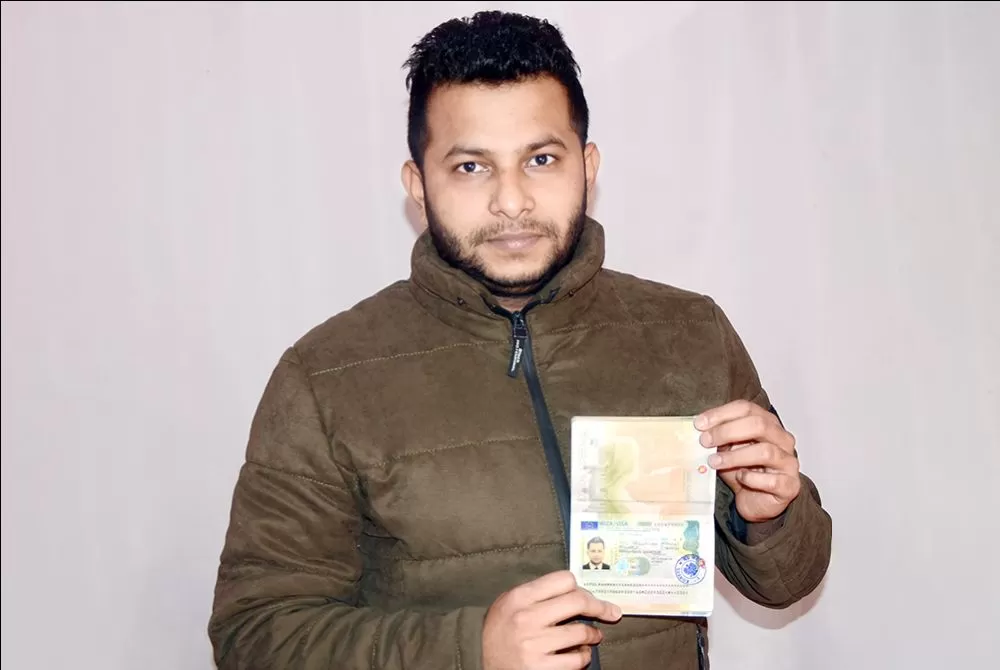
Global clients share how M2S Group helped them secure careers, work permits, and visas in Europe...


Why Choose M2S Group?
At M2S Group, we aim to help you become a true global citizen by providing exceptional support in your international career and immigration journey.
Read More



Get Started with M2S Group!
Our Platform
We connect institutions, employers, students, job seekers, and recruitment partners worldwide.

Employer
Are you recruiting skilled workers from the CIS, African, Asian regions, or other EU countries to work in Poland, Hungary, Lithuania, Slovakia, Estonia, Germany, and other EU nations? Partner with Moving2Europe.eu for efficient and reliable recruitment solutions.

Job seekers
Are you looking to work in Poland, Hungary, Lithuania, Slovakia, Estonia, Germany, or other EU countries? Could you let Moving2Europe. Can you connect with top employers and help with recruitment?

Recruitment Agency
Do you recruit prospective students and workers eager to study or work in Poland, Hungary, Lithuania, Slovakia, Estonia, Germany, or other EU countries? Join Moving2Europe.eu as a trusted Recruitment Partner and grow your network globally.
Do you have any questions?
We are here to help you explore opportunities to work and live in Europe. Our experts are ready to assist you with questions about job searching, obtaining a visa, recognising qualifications, and learning a European language. To learn more about contacting us, please click on one of the icons in the bar below.