Get Started with M2S Group!
We are a global platform connecting institutions, employers, students, job seekers, and recruitment partners.
Join Us Today:
Get in touch with us!
Jobs in the Netherlands – Work Permit, Visa, Salary & Hiring Guide
The Netherlands is one of the founding member states of the European Union and one of the world's most open, innovative, and internationally oriented economies, situated in Northwestern Europe at the mouths of the Rhine, Maas, and Scheldt rivers. Home to over 18 million people, the Netherlands is a global hub for technology, logistics, agriculture, financial services, energy, life sciences, and creative industries — and consistently ranks among the best countries in the world for quality of life, digital infrastructure, and business competitiveness.
The Netherlands faces well-documented and structural labour shortages across IT, healthcare, education, engineering, and construction. According to EURES Netherlands, the sectors with the highest vacancy rates include human health and social work, education, IT and technology, and engineering — sectors experiencing shortages irrespective of whether the economy is thriving or contracting. The Netherlands' unemployment rate is approximately 3.9% — among the very lowest in the European Union — reflecting one of the tightest labour markets in Europe.
According to the Central Bureau for Statistics (CBS), the average gross monthly salary in the Netherlands is approximately €3,900. The median gross annual salary is approximately €48,000 per year according to the Central Planning Bureau. The Netherlands switched from a monthly to an hourly minimum wage system in January of the most recently reported period — the statutory gross hourly minimum wage for workers aged 21 and older is €14.71, adjusted twice yearly. All employees in the Netherlands also receive a mandatory 8% holiday allowance — vakantiegeld — paid annually in May. Income tax is progressive with three brackets reaching a top rate of 49.5%.
The Highly Skilled Migrant Scheme — the most commonly used work permit route — requires a minimum gross monthly salary of €5,688 for applicants aged 30 and over, and €4,171 for those under 30, as of the most recent adjustment. Only an IND-recognised sponsor employer may apply for the Highly Skilled Migrant permit.
This guide covers everything you need to know about jobs in the Netherlands — including 40 verified shortage occupations with salary data, and a complete, accurate guide to the Highly Skilled Migrant Scheme, Single Permit (GVVA), EU Blue Card, Orientation Year Permit, MVV provisional residence permit, and IND application process based exclusively on official Dutch government sources. Whether you are a job seeker, an employer, or a recruitment agency, Moving2Europe.eu is here to connect you with verified opportunities across the Netherlands and the wider European region.
Europe Job Market Overview
Europe is experiencing structural and sustained labour shortages driven by ageing populations, demographic change, and rapid economic transformation. The Netherlands stands at the forefront of this challenge — a high-wage, high-productivity knowledge economy with an unemployment rate consistently among the EU's lowest and vacancy rates significantly above the EU average in its most important sectors.
The Immigration and Naturalisation Service manages the Netherlands' immigration framework for third-country workers(Immigratie en Naturalisatiedienst, IND) at ind.nl. Work permit decisions involving a labour market assessment are made in coordination with the Employee Insurance Agency (UWV) at uwv.nl. The Ministry of Foreign Affairs publishes entry visa information at netherlandsworldwide.nl. The official employer-facing business portal is at business.gov.nl.
Key policy developments from the most recently reported period include the announcement of planned further tightening of the Highly Skilled Migrant income thresholds — proposed increases above standard annual indexation from a future date — stricter screening and enforcement of recognised sponsor obligations, a phased reduction of the 30% tax ruling for skilled foreign workers beginning from 30%, and a new requirement for employers to obtain eHerkenning level 3 verification before submitting applications on the IND Business Portal.
For international job seekers, the Netherlands offers access to one of Europe's most innovative and internationally-oriented labour markets, near-universal English proficiency in professional environments, excellent living standards, Schengen Area freedom of movement, and a strong tradition of welcoming and integrating international professionals. For employers, the Highly Skilled Migrant Scheme provides one of Europe's most practical and employer-friendly fast-track routes to international talent. For recruitment agencies, the Netherlands represents one of the most consistently active and premium international hiring markets in Continental Europe.
Jobs in the Netherlands – Market Overview
World-class logistics and port operations drive the Netherlands' economy — the Port of Rotterdam is Europe's largest — a globally significant agriculture and food technology sector, advanced manufacturing, financial services, a world-leading technology and semiconductor industry, a major pharmaceutical and life sciences sector, and public healthcare and education systems under sustained demographic pressure.
Key industries actively hiring international workers include:
Information Technology and Technology: The Netherlands is home to one of Europe's most significant technology ecosystems, including a globally recognised semiconductor and chip manufacturing hub. Software developers, data scientists, cybersecurity specialists, cloud engineers, DevOps engineers, and AI specialists are in acute shortage. IT and technology are consistently cited by EURES Netherlands as one of the two sectors with the sharpest ongoing vacancy shortfall. Many Dutch technology companies operate entirely in English.
Healthcare and Social Care: Human health and social work consistently recordthe highest vacancy rate of any sector in the Netherlands. Nurses, healthcare assistants, physiotherapists, occupational therapists, GPs, and medical specialists are in permanent and well-documented shortage across all Dutch regions. Regulated healthcare professionals must obtain recognition from the Dutch healthcare authority — BIG register.
Engineering and Technology: The Netherlands' advanced manufacturing, semiconductor, energy, and infrastructure sectors geconsistently generateemand for mechanical eelectrical ecivil eprand ocess engineers, anas well asroject managers. The semiconductor sector — particularly around Eindhoven — is generating unprecedented demand for highly qualified engineering professionals.
Education: Teacher shortages — particularly in primary education, STEM subjects, and special needs education — are amongthe two most acute vacancy shortfalls in the Dutch labour market,,,, according to EURES. Teachers in the Netherlands must hold Dutch teaching qualifications or have them recognised.
Agriculture and Food Technology: The Netherlands is the world's second-largest food exporter by value. Agricultural workers, greenhouse operatives, food processing workers, and agricultural technicians are in demand year-round across the country's intensive agricultural regions.
Logistics and Transport: The Netherlands' position as Europe's primary logistics and distribution hub generates consistent demand for truck drivers, warehouse operatives, logistics managers, and supply chain coordinators.
Financial Services and Fintech: Amsterdam and The Hague host major financial institutions, insurance companies, and pension funds, as well as a growing fintech sector. Financial analysts, compliance officers, risk managers, and actuaries are in consistent demand.
Top Cities for Jobs in Netherlands
Jobs in Amsterdam and the Randstad
Amsterdam is the Netherlands' financial, technology, and creative capital and the dominant employment hub for international professionals, paying average salaries approximately 15–20% above the national average. The Randstad — the metropolitan area encompassing Amsterdam, Rotterdam, The Hague, and Utrecht — is home to the majority of the country's IT companies, financial institutions, multinational headquarters, and major employers.
IT professionals in Amsterdam earn €5,000–€10,000 or more gross per month at senior levels. Finance and consulting professionals earn €5,000–€9,000. Engineers earn €4,500–€8,000. The city has the largest international professional community in the Netherlands and operates almost entirely in English across professional environments.
Jobs in Eindhoven and Brainport
Eindhoven — in the Brainport Noord-Brabant region — is the Netherlands' technology and innovation capital, home to one of Europe's most significant high-tech manufacturing and semiconductor ecosystems. The region generates exceptional demand for chip design engineers, semiconductor process engineers, embedded systems developers, mechatronics engineers, and hardware engineers. Salaries in Eindhoven's technology sector are among the highest in the country.
Jobs in Rotterdam, The Hague, Utrecht, and Other Cities
Rotterdam is Europe's largest port and a major centre for logistics, trade, energy, and engineering. The Hague is the seat of the Dutch government and a hub for employment in legal, diplomatic, and international organisations. Utrecht is a growing technology and life sciences hub with a significant healthcare and research sector. Other cities — including Groningen, Maastricht, Nijmegen, and Tilburg — offer employment across healthcare, manufacturing, education, and services.
Job Opportunities in the Netherlands
Blue-Collar Jobs in Demand in the Netherlands
The following 20 blue-collar roles represent the Netherlands' most critical shortage occupations in skilled and trades sectors, based on verified data from CBS, EURES Netherlands, and UWV vacancy data. All 20 have documented labour shortfalls across Dutch regions.
| Job Title | Skills / Qualifications Required | Average Monthly Salary (€) | Top Hiring Locations |
|---|---|---|---|
| Electrician | Recognised vocational electrical qualification, installation and safety certification | €2,800 – €4,200 | Amsterdam, Rotterdam, Utrecht, Eindhoven |
| Plumber / Heating Engineer | Recognised vocational plumbing and heating qualification, installation experience | €2,700 – €4,000 | Amsterdam, Rotterdam, Utrecht |
| Bricklayer / Mason | Recognised vocational masonry qualification or minimum 3 years of site experience | €2,600 – €3,900 | Amsterdam, Rotterdam, Utrecht |
| Carpenter / Joiner | Recognised vocational carpentry qualification, construction or joinery experience | €2,600 – €3,800 | Amsterdam, Rotterdam |
| Roofer | Recognised roofing qualification, ability to work safely at height | €2,600 – €3,800 | Amsterdam, Rotterdam, Utrecht |
| Painter and Decorator | Recognised vocational painting qualification or minimum 2 years documented experience | €2,500 – €3,700 | Amsterdam, Rotterdam, Utrecht |
| HVAC / Heating and Ventilation Specialist | Recognised vocational HVAC qualification, installation and commissioning experience | €2,900 – €4,400 | Amsterdam, Rotterdam, Utrecht, Eindhoven |
| Scaffolder | Scaffolding certification, physical fitness, and construction site experience | €2,600 – €3,800 | Amsterdam, Rotterdam |
| Welder (MIG/TIG/MAG/MMA) | Recognised welding qualification, minimum 2 years experience | €2,700 – €4,000 | Rotterdam, Eindhoven, industrial regions |
| Truck Driver (Category C/CE) | Category C/CE licence, ADR certificate preferred, clean driving record | €2,800 – €4,200 | Amsterdam, Rotterdam, all regions |
| Forklift Operator / Warehouse Operative | Valid forklift licence, warehouse or logistics operations experience | €2,500 – €3,600 | Rotterdam, Amsterdam, Eindhoven |
| Agricultural / Greenhouse Worker | Physical fitness, greenhouse or crop production experience, and seasonal availability | €2,200 – €3,200 | Westland, Aalsmeer, Noord-Holland, Brabant |
| Construction Labourer | Physical fitness, basic construction site awareness, and safety training | €2,400 – €3,500 | Amsterdam, Rotterdam, Utrecht |
| Healthcare Assistant / Home Care Worker | MBO-2 care qualification or minimum 2 years care experience, Dutch preferred | €2,400 – €3,400 | All regions, particularly North, East, and West |
| Chef / Cook | Recognised culinary qualification or minimum 3 years professional kitchen experience | €2,400 – €3,600 | Amsterdam, Rotterdam, Utrecht |
| Bus / Tram Driver | Category D or tram operator licence, passenger transport experience | €2,700 – €3,900 | Amsterdam, Rotterdam, Utrecht, The Hague |
| Industrial Mechanic / Machine Fitter | Recognised vocational qualification, manufacturing plant maintenance experience | €2,800 – €4,200 | Eindhoven, Rotterdam, and industrial regions |
| Food Processing Worker | Physical stamina, food production line experience, and food hygiene awareness | €2,300 – €3,400 | Noord-Brabant, Gelderland, Overijssel |
| CNC Machinist / Precision Mechanic | Recognised vocational machining qualification, CNC operation experience | €2,900 – €4,400 | Eindhoven, Rotterdam, Twente |
| Security Officer | Security officer certification (beveiliger), clean criminal record | €2,400 – €3,400 | Amsterdam, Rotterdam, Utrecht, The Hague |
Register as a Truck Driver → Browse Welder Opportunities →
White-Collar Jobs in Demand in the Netherlands
The following 20 white-collar roles represent the Netherlands' most critical shortage occupations in professional and highly skilled sectors, based on verified data from CBS, EURES Netherlands, and IND Highly Skilled Migrant application data.
| Job Title | Skills / Qualifications Required | Average Monthly Salary (€) | Top Hiring Locations |
|---|---|---|---|
| Software Developer / Engineer | Degree or equivalent, proficiency in Python, Java, C++, JavaScript, or Go | €4,500 – €8,500+ | Amsterdam, Eindhoven, Utrecht, Rotterdam |
| Semiconductor / Chip Design Engineer | Degree in electrical or computer engineering, chip design or EDA tools experience | €5,000 – €10,000+ | Eindhoven, Nijmegen, Delft |
| Embedded Systems Engineer | Degree in electrical or computer engineering, embedded C/C++ and RTOS experience | €4,500 – €8,500 | Eindhoven, Delft, Rotterdam |
| Cybersecurity Specialist | IT security degree or certification, threat detection and protection experience | €5,000 – €9,000 | Amsterdam, Eindhoven, The Hague |
| Data Scientist / AI Engineer | Degree in IT, mathematics, or statistics, proficiency in Python and ML frameworks | €5,000 – €9,500 | Amsterdam, Eindhoven, Utrecht |
| Cloud / DevOps Engineer | Cloud platform experience (AWS/Azure/GCP), CI/CD pipelines, automation skills | €4,800 – €9,000 | Amsterdam, Eindhoven, Utrecht |
| Mechanical Engineer | Degree in mechanical engineering, manufacturing, ASML, or precision engineering experience | €4,500 – €8,000 | Eindhoven, Delft, Rotterdam |
| Electrical Engineer | Degree in electrical engineering, power systems, semiconductor, or automation experience | €4,500 – €8,000 | Eindhoven, Delft, Amsterdam |
| Civil / Structural Engineer | Degree in civil engineering, infrastructure or building project experience | €4,000 – €7,500 | Amsterdam, Rotterdam, Utrecht |
| Doctor / Medical Specialist | Medical degree, valid specialisation certificate, BIG-register registration | €5,500 – €12,000+ | All regions, particularly in rural areas |
| Registered Nurse | Recognised nursing degree, valid BIG-register registration, and clinical experience | €3,000 – €4,800 | All regions have a consistent nationwide shortage |
| Physiotherapist | Physiotherapy degree, valid BIG-register registration, and rehabilitation experience | €3,200 – €5,000 | All regions |
| Financial Analyst / Controller | Degree in finance or accounting, ERP and financial analysis experience | €4,000 – €7,500 | Amsterdam, Rotterdam, The Hague |
| Risk Manager / Compliance Officer | Degree in finance or law, financial regulatory knowledge, and Dutch market experience | €5,000 – €9,000 | Amsterdam, The Hague |
| Project Manager (Technology / Engineering) | PMP or Agile certification, minimum 3 years of project management experience | €5,000 – €9,000 | Amsterdam, Eindhoven, Utrecht |
| Supply Chain / Logistics Manager | Degree in logistics or business, international supply chain experience | €4,000 – €7,500 | Rotterdam, Amsterdam, Eindhoven |
| Teacher (Primary / Secondary / STEM) | Recognised Dutch teaching qualification or equivalent recognition, and Dutch proficiency | €3,000 – €5,000 | All regions have a persistent nationwide shortage |
| Pharmacist | Pharmacy degree, valid BIG-register registration | €4,000 – €6,500 | All regions |
| Process / Chemical Engineer | Degree in chemical, process, or industrial engineering, refinery or chemical plant experience | €4,500 – €8,000 | Rotterdam, Zeeland, Noord-Brabant |
| Renewable Energy Engineer | Degree in energy, electrical, or environmental engineering, with offshore or solar experience | €4,500 – €8,500 | Amsterdam, Rotterdam, Groningen |
Register as a Healthcare Worker → Explore All Opportunities →
Salary in the Netherlands
The Netherlands offers some of the highest wages in the European Union, with a comprehensive social protection system, a mandatory 8% annual holiday allowance, and strong collective labour agreements covering most sectors. Salaries vary significantly by sector, region, and experience,with Amsterdam, Eindhoven, and The Hague paying above the national average and rural provinces below.
According to CBS, the average gross monthly salary in the Netherlands is approximately €3,900. The Central Planning Bureau plreports aedian gross annual salary atofpproximately €48,000 pThe minimum wage is based on an hourly rate — €14.71 per hour for workers aged 21 and over as of the most recent January adjustment — with equal pay guaranteed regardless of contractual working week length. All employees receive a mandatory 8% holiday allowance, paid in May.
The Highly Skilled Migrant Scheme requires a minimum gross monthly salary of €5,688 for those aged 30 and over, and €4,171 for those under 30 ,both excluding holiday allowance. The EU Blue Card requires a minimum annual salary of €5,688 per month, with a reduced threshold for recent graduates.
| Sector | Role | Average Monthly Salary (€ gross) |
|---|---|---|
| Information Technology | Software Developer | €4,500 – €8,500+ |
| Semiconductor | Chip Design / Semiconductor Engineer | €5,000 – €10,000+ |
| Healthcare | Registered Nurse | €3,000 – €4,800 |
| Healthcare | Doctor / Medical Specialist | €5,500 – €12,000+ |
| Engineering | Mechanical / Electrical Engineer | €4,500 – €8,000 |
| Financial Services | Risk / Compliance Officer | €5,000 – €9,000 |
| Construction and Trades | Electrician | €2,800 – €4,200 |
| Transport and Logistics | Truck Driver (C/CE) | €2,800 – €4,200 |
| Agriculture | Greenhouse / Agricultural Worker | €2,200 – €3,200 |
| Energy | Renewable Energy Engineer | €4,500 – €8,500 |
Work Permit Process in Nethe therlands
The Immigration and Naturalisation Service manages the Netherlands' work authorisation system for non-EU nationals (IND) at ind.nl. LaThe Employee Insurance Agency conducts labour market assessments(UWV) at uwv.nl for the Single Permit route. The official employer guidance portal is at business.gov.nl. The Ministry of Foreign Affairs publishes visa and entry information at netherlandsworldwide.nl. The Netherlands is a full member of the EU and the Schengen Area. EU, EEA, and Swiss citizens may work freely in the Netherlands without any permit.
Types of Work Authorisation for Non-EU Workers
- Highly Skilled Migrant Scheme (Kennismigrant): The most commonly used work permit route for non-EU professioEmployerquires the employer to be an IND-recognised sponsor. No labour market test required. Minimum gross monthly salary (excluding holiday allowance): €5,688 for workers aged 30+, €4,171 for workers under 30, and a reduced threshold for recent graduates applying within three years of graduation. IND aims to decide within two weeks of a complete application. Family members receive the right to work without additional permits.
- Single Permit (GVVA — Gecombineerde Vergunning voor Verblijf en Arbeid): Combined work and residence permit for employment not covered by the Highly Skilled Migrant Scheme. Requires a UWV labourEmployertest — the employer must demonstrate that no suitable Dutch or EU candidate was available. Processing takes approximately 90 days. Valid for the duration of the employment contract, up to a maximum of five years.
- EU Blue Card: For highly qualified professionals with a recognised university degree and a minimum gross monthly salary of €5,688. No labour market test required. Processed by IND. Provides EU mobility rights after 18 months.
- Orientation Year Permit (Zoekjaar): For recent graduates of Dutch universities or top global universities to remain in the Netherlands for up to one year to search for work. Reduced salary thresholds apply when transitioning to a Highly Skilled Migrant permit from this route.
- Intra-Company Transfer (ICT) Permit: For managers and specialists temporarily transferred within multinational company groups. Must have worked for the transferring company for at least three months and be working outside the EU before transfer.
- Seasonal Work Permit (TWV): For short-term employment in agriculture, horticulture, and hospitality. Maximum 24 weeks per year.
IND Recognised Sponsor
For the Highly Skilled Migrant Scheme andEmployer Card, the employer must be registered as an IND-recognised sponsor. Becoming a recognised sponsor requires registration with the IND, proof of financial stability, compliance with Dutch immigration law, and — as of the most recent update — verification through eHerkenning at level 3 or higher. Recognised sponsors must: provide correct information to IND, keep business records, fulfil duty of care to employees, ensure salary meets the threshold at all times, and notify IND of any changes within four weeks.
Step-by-Step Work Permit Process (Highly Skilled Migrant)
Step 1 – Employer Becomes an IND Recognised Sponsor Before hiring under the Highly Skilled MEmployercheme, the employer must be registered as an IND-recognised sponsor. The Public Register of Recognised Sponsors is published on the IND website at ind.nl.
Step 2 – Employer Applies for the Residence Permit Through the IND Business Portal. The recognised sponsor employer submits the Highly Skilled Migrant residence permit application through the IND Business Portal. Applications require the employment contract, salary confirmation meeting the applicable threshold, and proof of the applicant's qualifications. IND aims to decide within two weeks of a complete application.
Step 3 – MVV Provisional Residence Permit (where required) Depending on the applicant's nationality, a provisional residence permit — machtiging tot voorlopig verblijf, MVV — may be required as an entry visa. This is combined with the residence permit application in most cases and collected from the Dutch embassy or consulate in the worker's home country. Some nationalities are MVV-exempt. Check the IND nationality tool at ind.nl to confirm.
Step 4 – Positive Decision and Collection of Residence Permit IND issues a positive decision letter — kennisgeving. In some cases, the employee may begin work immediately when the positive decision letter explicitly states this. The employee collects the physical residence permit card at an IND desk.
Step 5 – Travel to the Netherlands and Register With the Municipality The employee travels to the Netherlands — either on the MVV or visa-free — and registers with the local municipality within five days to receive a BSN — burgerservicenummer — the Dutch national identification number required for employment, tax, healthcare, and banking.
Step 6 – Register for Healthcare and Tax Register for Dutch health insurance — zorgverzekering — which is mandatory for all residents and workers. Register with the Dutch Tax Authority( Belastingdiens)t.
Employers ready to begin the international hiring process can register here →
Work Visa Process in the Netherlands
The MVV — machtiging tot voorlopig verblijf — is the provisional residence permit that functions as the entry visa for non-EU nationals who require one to enter the Netherlands for stays of more than 90 days. It is usually combined with the residence permit application. Some nationalities are MVV-exempt. The Dutch Ministry of Foreign Affairs publishes all visa and MVV information at netherlandsworldwide.nl and IND at ind.nl.
Step 1 – Confirm MVV Requirements for Your Nationality. Use the IND nationality checker at ind.nl to confirm whether your nationality requires an MVV to enter the Netherlands for employment. Nationals of the United States, Australia, Canada, Japan, South Korea, New Zealand, and several other countries are MVV-exempt.
Step 2 – Employer Submits the Combined MVV and Residence Permit Applicatio.n For most Highly Skilled Migrant applications, the MVV and residence permit are applied for together through the IND Business Portal by the recognised sponsor employer.
Step 3 – Collect the MVV at the Dutch Embassy or Consula.te If an MVV is required, after IND approv,al the applicant collects the MVV sticker from the Dutch embassy or consulate in their home country. The MVV is valid for 90 days and allows entry to the Netherlands.
Step 4 – Travel to the Netherlands and Register Within Five .Days Travel to the Netherlands on the MVV. Register with the local municipality within five days to receive the BSN.
Step 5 – Collect the Residence Permit. Card After registration, collect the physical residence permit card at the designated IND desk.
Embassy Guidance
Use the Official IND Website for All Permit Information: All residence permit and immigration information for foreign nationals is published by the Immigration and Naturalisation ServEmployernd.nl. All empapplications for loyer Highly Skilled Migrant and EU Bluevisasations are submitted through the IND Business Portal.
Use the Official Business.gov.nl Portal for Employer Guidance: The official Dutch government employer portal at business.gov.nl provides complete guidance on recognised sponsor requirements, the Highly Skilled Migrant process, Single Permit process, and all employment-related permit categories.
Only a Recognised Sponsor Employer Can Apply for the Highly Skilled Migrant Permit: The employee cannot apply independently for the Highly Skilled MEmployerermit. The employer must be a registered IND recognised sponsor. Check the Public Register of Recognised Sponsors at ind.nl before initiating the process.
IND Aims to Decide Within Two Weeks for Highly Skilled Migrant Applications: For complete applications submitted by recognised sponsors, IND targets a decision within two weeks. This is significantly faster than the Single Permit route, which takes approximately 90 days.
Register with the Municipality Within Five Days of Arrival: BSN registration must be completed within five days of arriving in the Netherlands. The BSN is required for employment, healthcare, banking, and tax coEmployer.
Changing Employer Requires a New Application: The Highly Skilled Migrant permit cannot be transferred between employEmployern changingEmployerr, the new employer must be a recognised sponsor and must apply for a new permit before the worker commences with them.
The 30% Ruling May Apply for Relocated International Workers: Eligible internationally recruited employees may benefit from a tax ruling allowing 30% of their salary to be treated as a tax-free expense reimbursement — the 30% ruling. This ruling is being phased from 30% downward over time. Confirm current eligibility and percentage with the Dutch Tax Authority at belastingdienst.nl.
Required Documents
The following documents are required for a Highly Skilled Migrant residence permit application in the Netherlands, based on official requirements from IND at ind.nl and business.gov.nl.
| # | Document | Details |
|---|---|---|
| 1 | Valid Passport | Must be valid for the full duration of the intended stay. |
| 2 | Employment Contract | Confirming role, salary meeting the applicable Highly Skilled Migrant threshold (excluding holiday allowance), working hours, and conditions. |
| 3 | IND Recognised SponsoEmployermation | The employer must be a registered IND recognised sponsor. Reference the Public Register of Recognised Sponsors. |
| 4 | Proof of Professional Qualifications | Degree certificates, vocational qualifications, or professional licences. Must be legalised or apostilled and accompanied by a certified translation where not in Dutch or English. |
| 5 | Passport-Sized Photographs | Meeting IND photograph specifications. |
| 6 | ApplicatiEmployer | aid by the employer by direct debit after submission. Not refunded if refused. |
| 7 | MVV (where required) | For nationalities requiring an entry visa. Combined with the residence permit application and collected from the Dutch embassy after IND approval. |
| 8 | Police Clearance Certificate (Single Permit) | Required for the Single Permit (GVVA) route. Less commonly required for Highly Skilled Migrant applications. |
| 9 | Healthcare Registration | Dutch health insurance is mandatory for all residents and must be arranged within four months of arriving. |
Always verify current document requirements at ind.nl and business.gov.nl before submitting.
How to Avoid Rejection
Employer Is Not a Recognised IND Sponsor: The Highly Skilled Migrant permit can only be applied for by an IND-recognisEmployeror. If the employer is not listed in the Public Register of Recognised Sponsors, the application will be refused. Check the register at ind.nl before proceeding.
Salary Does Not Meet the Applicable Threshold: The gross monthly salary — excluding holiday allowance and vacation pay — must meet the Highly Skilled Migrant threshold. For workers aged 30+, the threshold is €5,688. For workers under 30, it is €4,171. Variable bonuses and holiday allowance do not count. The salary must be in the employment contract.
Failure to Register With the Municipality Within Five Days: BSN registration must be completed within five days of arriving in the Netherlands. Failure to register delays healthcare registration, tax compliance, and access to banking, and creates a compliance gap.
Changing Employer Without Prior IND Approval: The employee must not begin working for a new emplEmployeril the new employer — who must also be a recognised sponsor — has applied for and received IND approval. Beginning work early is a legal violation.
Employer Fails to Notify IND of Changes Within Four Weeks: Recognised sponsors must notify IND of any changes to the employee's situation — such as salary changes, role changes, employment termination, or address changes — within four weeks. Failure to notify carries compliance penalties and can affect sponsor recognition status.
Qualification Documents Not Apostilled or Translated: Foreign qualification documents that are not in Dutch or English must be accompanied by a certified translation. Documents must be legalised or apostilled. Unauthenticated documents lead to delays and rejection.
BIG Register Not Obtained for Regulated Healthcare Professions: Doctors, nurses, pharmacists, physiotherapists, and other regulated healthcare professionals must be registered in the Dutch BIG register — at bigregister.nl — before they may practise in the Netherlands.
Hiring Foreign Workers in the Netherlands
The Netherlands urgently needs international workers across IT, healthcare, engineering, education, construction, and logistics. With one of Europe's most practically designed fast-track permit schemes and an employer-driven process that targets a two-week decision for recognised sponsors, Dutch employers who build structured international hiring pipelines gain a decisive competitive advantage.
Why Hire International Workers in the Netherlands? The Highly Skilled Migrant Scheme requires no labour market test, is processed in as little as two weeks, and grants family members the right to work immediately. The Netherlands' near-universal English proficiency in professional environments makes international integration practical and swift.
How to Begin the Hiring Process
Step 1 – Register as an Employer on Moving2Europe.eu Create your employer profile, specify your sector, required roles, and workforce needs. Register as an Employer →
Step 2 – Register as an IND Recognised Sponsor. Apply to the IND to become a recognised sponsor through the IND Business Portal. Obtain eHerkenning level 3 or higher before beginning the application process.
Step 3 – Confirm the Salary Threshold Is Me...t Ensure the employment contract specifies a gross monthly salathat meetseetsng the applicable Highly Skilled Migrant thr,ho, — excluding holiday allowance.
Step 4 – Submit the Application Through the IND Business Porta.l Submit the Highly Skilled Migrant residence permit application. Include the employment contract and any required qualification documentation.
Step 5 – Notify IND of the Positive Decision and Support Arrival Formaliti.es After the positive decision, assist the worker with MVV collection if required, municipality registration within five days, BSN receipt, and healthcare registration.
How Job Seekers Can Apply
Step 1 – Confirm MVV Requirements and Eligibility Use the IND nationality checker at ind.nl to confirm whether an MVV is required and confirm the applicable salary threshold for your age group and situation.
Step 2 – Confirm Your Employer Is a Recognised IND Spon.sor Check the Public Register of Recognised Sponsors at ind.nl before accepting a position.
Step 3 – Register on Moving2Europe.eu
- Register as a Truck Driver →
- Register as a Welder →
- Register as a Healthcare Worker →
- Explore All Opportunities →
Step 4 – Apply for Available Positions Browse verified job listings and apply to positions that match your qualifications and experience.
Step 5 – Your Employer Submits the Permit Application ThroIND. IND Once you have a confirmed employment contract meeting the salaEmployerhold, your employer submits the Highly Skilled Migrant application through the IND Business Portal.
Step 6 – Collect MVV if Required and Travel to the Nether.lands If an MVV is required, collect it from the Dutch embassy in your home country after IND approval. Travel to the Netherlands.
Step 7 – Regwithr With the Municipality Within Five Days and CoBSN.ct BSN Register your residential address and receive your BSN. Register for Dutch health insurance.
Recruitment Agencies & Partnerships
Moving2Europe.eu collaborates with international recruitment agencies, workforce supply companies, and staffing partners to build a consistent, reliable pipeline of pre-screened, work-ready candidates for employers across the Netherlands and the wider European region.
For agencies with access to IT, semiconductor, engineering, healthcare, and logistics professionals, a partnership with Moving2Europe.eu provides direct access to a growing network of verified Dutch employers — some of the highest-paying in Continental Europe — actively seeking international talent.
Why Partner with Moving2Europe.eu?
- Access to a verified network of Dutch employers actively hiring across all major shortage sectors
- A structured, transparent matching process aligned with the IND Highly Skilled Migrant and Single Permit requirements
- Compliance support across the Highly Skilled Migrant Scheme, EU Blue Card, and Single Permit routes
- Long-term business development opportunities in one of Europe's most active and premium international hiring markets
- A trusted, professional platform built on transparency and accountability
Register as a Recruitment Partner →
Declaration
Moving2Europe.eu provides informationono jobs, work permits, visas, and international hiring strictly for guidance purposey. We do not guarantee job placement, work permit approval, or visa issuance under any circumstances.
All applications, hiring decisions, and approvals are subject to individual employer requirements, applicable immigration laws, and the final decision of the respective country's embassy or government authorities.
Users are strongly advised to independently verify all information, ensure the accuracy of their documents, and follow official procedures before submitting any application.
Who can apply for jobs in Netherlands as a foreign worker?
Who is eligible to work in the Netherlands and what the IND permit requirements mean for non-EU nationals. Non-EU and non-EEA nationals can work in the Netherlands provided they hold a valid residence permit with work authorisation issued by the IND. EU, EEA, and Swiss citizens may work freely in the Netherlands without any permit. The most common route for skilled professionals is the Highly Skilled Migrant Scheme, which requires the employer to be an IND-recognised sponsor and the salary to meet the applicable monthly threshold. The Single Permit route applies to employment outside the Highly Skilled Migrant Scheme and requires a UWV labour market test.- Who can apply for jobs in Montenegro as a foreign worker?
-
Who is eligible to work in Montenegro and what the permit requirements mean for non-Montenegrin nationals.
All foreign nationals who wish to work in Montenegro must hold a valid Employment Permit issued by the Employment Agency and a Temporary Residence and Work Permit issued by the Ministry of Interior. There is no exemption for EU citizens — all foreign nationals require permits to work legally. Montenegro is not an EU member state and EU freedom of movement does not apply. Many nationalities may enter Montenegro visa-free for stays of up to 90 days, but a Type D visa and Temporary Residence and Work Permit are required for employment regardless of visa-free entry rights.
- What is the Temporary Residence and Work Permit in Montenegro?
-
Montenegro's combined work and residence permit and how the two-step application process works.
The Temporary Residence and Work Permit is Montenegro's combined authorisation granting the right to reside and work in Montenegro for a specific employer in a specific role. The process has two steps: the employer first obtains an Employment Permit from the Employment Agency of Montenegro, and then the worker applies for the Temporary Residence and Work Permit at the Ministry of Interior or local police directorate. The Ministry of Interior must decide within 20 days of receiving a complete application. The permit is generally issued for up to one year and is renewable provided employment conditions continue to be met.
- What is the annual work permit quota in Montenegro?
-
How Montenegro's quota system works and what it means for employers planning international hires.
The Government of Montenegro sets an annual quota for work permits based on labour market conditions and migration policy. The quota is proposed by the Ministry of Labour and agreed upon in consultation with the Social Council. Employers must apply within the available annual quota. If the quota is exhausted for a given sector, no further permits can be approved until the next annual allocation. Quota-exempt categories include professional athletes, minority language teachers, cross-border workers from neighbouring countries, and workers on government-recognised development projects.
- What is the Digital Nomad Visa in Montenegro?
-
Montenegro's remote work visa and what it allows and prohibits.
Montenegro offers a Digital Nomad Visa that allows remote workers employed by or providing services to companies registered outside Montenegro to reside in the country for up to two years — an initial Temporary Residence Permit for up to two years, renewable for a further two years. The visa does not authorise employment with Montenegrin companies or any local income-generating activity within Montenegro. Minimum income requirements apply — confirm current thresholds at mup.gov.me and gov.me/mfa before applying.
- How long does it take to get a work permit in Montenegro?
-
Processing timelines for the Employment Permit and Temporary Residence and Work Permit applications.
The Employment Agency of Montenegro typically processes employment permit applications within 20 days. The Ministry of Interior is legally required to decide on the Temporary Residence and Work Permit within 20 days of receiving a complete application. If a Type D visa is required, the Montenegrin embassy typically processes it within two to four weeks. Workers should plan for a total timeline of approximately six to eight weeks from initiation to receipt of the combined permit. Begin renewal preparations at least 30 days before the permit expires.
- What are the most in-demand jobs in Montenegro for foreign workers?
-
Which roles and sectors are actively recruiting international workers in Montenegro right now.
Construction is the largest sector for foreign worker employment in Montenegro, generating demand for welders, electricians, plumbers, bricklayers, carpenters, crane operators, roofers, tilers, and scaffolders across major coastal development projects. Tourism and hospitality generate enormous seasonal demand for chefs, waiters, hotel staff, bartenders, and housekeeping workers from April to October. IT generates consistent demand for software developers, system administrators, and cybersecurity specialists. Healthcare needs doctors, nurses, and physiotherapists. Full details with salary ranges and hiring locations are in the shortage occupation tables above.
- What is the average salary in Montenegro?
-
Verified salary data from the Statistical Office of Montenegro — MONSTAT — across key sectors.
According to MONSTAT, the average gross monthly salary in November of the most recently reported period reached €1,214, representing year-on-year growth of approximately 12%. The financial and insurance activities sector leads at an average gross of €2,053 per month. The information and communications sector also pays significantly above average. Manufacturing averages approximately €992 per month and administrative services €1,008. The dual minimum wage is €670 net per month for positions requiring up to a high school diploma and €800 net for university-level roles. Montenegro uses the euro as its currency.
- Do I need to speak Montenegrin to work in Montenegro?
-
What language requirements apply and where English is used.
Montenegrin is the official language and is required for most public-facing, healthcare, education, and government roles. Serbian, Bosnian, Croatian, and Albanian are also officially recognised languages — all mutually intelligible with Montenegrin. English is widely used in tourism, IT, and international business environments — particularly along the Adriatic coast and in Podgorica. Many construction and trades roles accept basic communication in any South Slavic language. Learning basic Montenegrin or Serbian significantly improves day-to-day integration and long-term prospects.
- Can my family join me if I work in Montenegro?
-
Family reunification options for Temporary Residence and Work Permit holders in Montenegro.
Yes. Foreign workers holding a valid Temporary Residence and Work Permit in Montenegro may apply for family reunification for their spouse and children under 18. The sponsor must provide proof of sufficient income, valid accommodation, and health insurance for the family members. Separate applications and documents are required for each family member. Family reunification residence permits are issued by the Ministry of Interior at mup.gov.me. Confirm current requirements before applying.
- How does Moving2Europe.eu help job seekers find work in Montenegro?
-
How Moving2Europe.eu connects international candidates with verified Montenegrin employers.
Moving2Europe.eu connects international job seekers with verified Montenegrin employers across construction, tourism, IT, healthcare, and agriculture. Job seekers register their professional profiles, browse verified employer-sponsored opportunities, and receive structured guidance throughout the Employment Permit, Type D visa, and Temporary Residence and Work Permit process.
- How can employers in Montenegro use Moving2Europe.eu to hire international workers?
-
How Montenegrin employers can access pre-screened international candidates efficiently and compliantly.
Employers register on the platform, define their specific role requirements, and are matched with pre-screened international candidates. Moving2Europe.eu supports employers throughout the recruitment process and facilitates connections with immigration professionals familiar with Montenegro's Employment Agency and Ministry of Interior permit requirements.
- What documents are required for a Montenegrin work permit application?
-
A complete checklist of all documents needed to apply successfully under Montenegro's current rules.
Required documents include a valid passport, employment contract or offer confirming role and salary at or above the minimum wage, employer registration documents, proof of professional qualifications, police clearance certificate, proof of accommodation in Montenegro, health insurance, medical certificate, passport photographs, and Employment Agency employment permit approval. After arrival, address registration must be completed within 24 hours and the labour contract registered with the Employment Agency within 15 days of commencement. Always verify current requirements at mup.gov.me and zzzcg.me.
- Can recruitment agencies partner with Moving2Europe.eu for Montenegro placements?
-
How agencies can collaborate with Moving2Europe.eu to place international workers in Montenegro.
Yes. Recruitment agencies and manpower supply companies can register as official partners through the Moving2Europe.eu partner portal. Partners gain access to verified Montenegrin employer opportunities across all major shortage sectors and receive compliance support aligned with Montenegro's Employment Permit and Temporary Residence and Work Permit requirements. Register as a Recruitment Partner →
- What is the minimum wage in Montenegro and how does the dual-tier system work?
-
Montenegro's two-tier minimum wage and what it means for employment contracts and work permit applications.
Montenegro introduced a dual minimum wage structure: €670 net per month for positions requiring up to a high school diploma, and €800 net per month for roles requiring a university degree or higher education qualifications. The minimum wage is reviewed every six months by the government and must be at least 30% of the average salary in the preceding semester according to MONSTAT data. Income tax is flat at 13% for most earners and 15% for income above €720 per month, with a non-taxable threshold of €700 gross under the Europe Now programme. Montenegro uses the euro as its official currency despite not being an EU or Eurozone member.
- How do I avoid having my Montenegrin work permit application rejected?
-
The most common reasons for rejection and the steps you can take to protect your application.
Confirm with the Employment Agency that the annual quota has not been exhausted before initiating the application. Ensure the employer is legally registered, tax-compliant, and authorised to hire foreign workers. Register your residential address with the local police within 24 hours of arriving in Montenegro. Ensure the employer registers your employment with the Employment Agency within 15 days of commencement. Confirm the employment contract specifies salary meeting the applicable minimum wage tier. Do not change employer without first obtaining a new Employment Permit and Temporary Residence and Work Permit.
Looking for inspiration
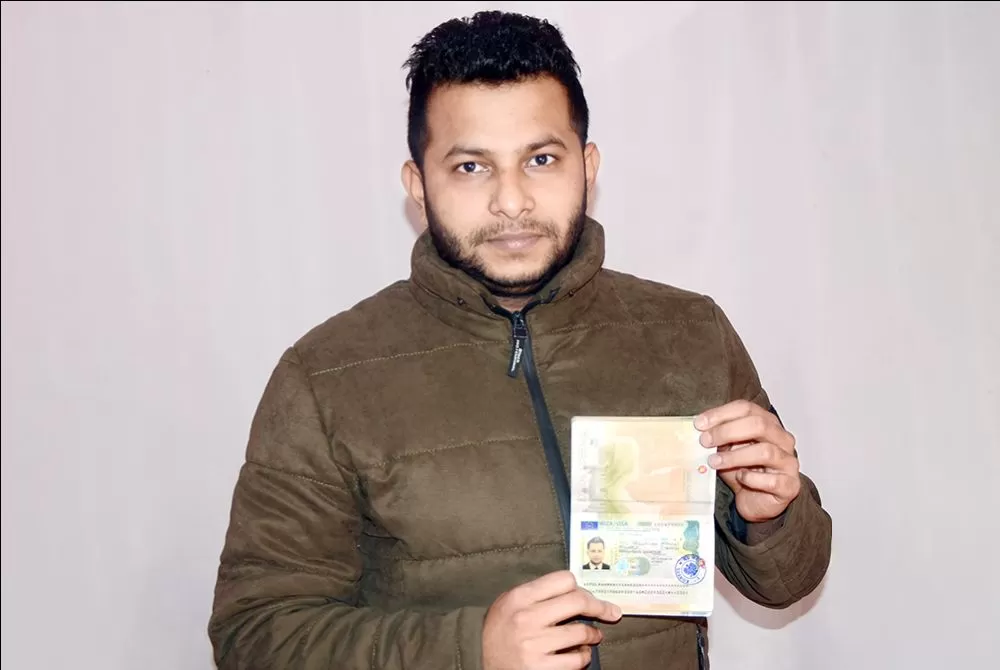
Global clients share how M2S Group helped them secure careers, work permits, and visas in Europe...


Why Choose M2S Group?
At M2S Group, we aim to help you become a true global citizen by providing exceptional support in your international career and immigration journey.
Read More



Get Started with M2S Group!
Our Platform
We connect institutions, employers, students, job seekers, and recruitment partners worldwide.

Employer
Are you recruiting skilled workers from the CIS, African, Asian regions, or other EU countries to work in Poland, Hungary, Lithuania, Slovakia, Estonia, Germany, and other EU nations? Partner with Moving2Europe.eu for efficient and reliable recruitment solutions.

Job seekers
Are you looking to work in Poland, Hungary, Lithuania, Slovakia, Estonia, Germany, or other EU countries? Could you let Moving2Europe. Can you connect with top employers and help with recruitment?

Recruitment Agency
Do you recruit prospective students and workers eager to study or work in Poland, Hungary, Lithuania, Slovakia, Estonia, Germany, or other EU countries? Join Moving2Europe.eu as a trusted Recruitment Partner and grow your network globally.
Do you have any questions?
We are here to help you explore opportunities to work and live in Europe. Our experts are ready to assist you with questions about job searching, obtaining a visa, recognising qualifications, and learning a European language. To learn more about contacting us, please click on one of the icons in the bar below.

Popular Features
Testimonials
Company
Essentials
Useful Links
Our Group
Copyright © 2026 Moving2Europe. All Rights Reserved.