Get Started with M2S Group!
We are a global platform connecting institutions, employers, students, job seekers, and recruitment partners.
Join Us Today:
Jobs in Poland – Work Permit, Visa, Salary & Hiring Guide
Poland is one of Central Europe's most dynamic economies and one of the most sought-after destinations for international workers across Europe. With an unemployment rate consistently among the lowest in the European Union, a booming technology sector, a world-class logistics infrastructure, a surging construction industry, and a healthcare system under sustained pressure from an ageing population, Poland generates massive and continuous demand for both skilled and semi-skilled foreign professionals.
According to Statistics Poland, the average gross monthly wage in the enterprise sector currently stands at approximately PLN 9,200 — and it continues to rise. Poland's new immigration framework, built on the Act of 20 March 2025, which came into force on 1 June 2025, has introduced a faster, fully digital permit system specifically designed to make international hiring more accessible. The labour market test has been abolished, and shortage occupations now receive priority processing.
This guide covers everything you need to know about jobs in Poland — including 40 verified shortage occupations, accurate salary data, and the fully updated, step-by-step work permit and visa process. Whether you are a job seeker, an employer, or a recruitment agency, Moving2Europe.eu is here to connect you with verified opportunities across Poland and the wider European market.
Europe Job Market Overview
Europe is facing a structural and sustained labour shortage that spans both Western and Eastern regions of the continent. Ageing populations, declining birth rates, and continued economic expansion have created workforce gaps that domestic workers alone cannot bridge. Governments across the European Union are actively investing in international recruitment frameworks, expanding shortage occupation lists, and digitising immigration systems to attract skilled and semi-skilled workers from abroad.
Poland sits at the heart of this shift. With over 1.67 million foreign citizens currently employed legally in the country — a figure that continues to grow annually — Poland has become one of Europe's most important destinations for international workers. The Polish government's Migration Strategy specifically prioritises labour migration in sectors facing labour shortages and has introduced sweeping digital reforms to support faster, more compliant hiring of foreign nationals.
For international job seekers, this creates a genuine, well-supported pathway into one of Europe's fastest-growing economies. For employers, it means access to a motivated global talent pool ready to fill critical roles immediately. For recruitment agencies, it represents a large, long-term business opportunity driven by structural market demand.
Jobs in Poland – Market Overview
Poland's economy is the sixth largest in the European Union and continues to outperform the EU average in GDP growth. The country is home to a strong industrial base, one of Europe's most important logistics corridors, a rapidly expanding technology sector, and a healthcare system that consistently struggles to keep pace with demographic pressures.
According to the Central Statistical Office of Poland, there were over 95,700 job vacancies in the country as of mid-year, with the highest demand concentrated in industrial processing, construction, logistics, and services. Industrial workers and craftspeople accounted for approximately 44.9% of all vacancies — making Poland's blue-collar shortage one of the most acute in the region.
Key industries actively hiring international workers in Poland include:
Construction and Infrastructure: Poland is experiencing a sustained construction boom driven by EU-funded infrastructure projects, residential development, and commercial expansion. Construction is the single most active hiring sector in the country, with 25% of firms actively increasing headcount.
Transport, Logistics, and Warehousing: Poland is a critical European logistics hub, positioned between Eastern and Western markets. The growth of e-commerce, cross-border freight, and global supply chains has pushed demand for truck drivers, warehouse operatives, forklift operators, and logistics coordinators to record levels.
Manufacturing and Industry: Poland is a major European manufacturing centre for the automotive, electronics, food processing, chemicals, and machinery sectors. Continuous growth, combined with the emigration of young Poles to Western Europe, has left thousands of production roles unfilled each year.
Information Technology: Poland is one of Europe's leading destinations for IT outsourcing. Warsaw, Kraków, and Wrocław are major technology hubs with global companies actively establishing and expanding development centres, cybersecurity teams, and shared service operations.
Healthcare and Social Care: Poland's ageing population, combined with significant emigration of Polish doctors and nurses to Western Europe, has created a sustained and acute shortage of healthcare professionals across the entire country.
Agriculture and Food Processing: Seasonal and permanent roles in farming, food packing, and agri-food production are available across rural and semi-rural regions, particularly in the Greater Poland and Mazovia areas.
Hospitality and Tourism: Poland's tourism sector — particularly in Warsaw, Kraków, Wrocław, and Gdańsk — continues to grow strongly, generating consistent demand for hospitality, food service, and accommodation workers.
Top Cities for Jobs in Poland
Jobs in Warsaw
Warsaw is Poland's capital and its economic powerhouse. The city is home to the country's highest concentration of multinational corporations, financial institutions, technology companies, government bodies, and international shared service centres. Average gross salaries in Warsaw are among the highest in the country, and the city offers the widest range of employment opportunities for both blue-collar and white-collar international workers.
IT professionals in Warsaw earn PLN 11,000–25,000 per month. Construction supervisors and skilled tradespeople earn PLN 5,500–9,000. Healthcare professionals earn PLN 5,500–12,000 depending on their specialisation and experience. The city has a well-established expatriate community and excellent public infrastructure, making the transition for international workers relatively straightforward.
Jobs in Kraków
Kraków is Poland's second-largest city and one of Central Europe's most important technology and business service hubs. Major global companies, including financial institutions, IT firms, and business process outsourcing centres, operate large, active operations in the city. Kraków offers strong employment across IT, finance, engineering, customer service, and healthcare. Average gross salaries in Kraków are comparable to those in Warsaw in many professional sectors, and the city's lower cost of living makes it financially attractive for international workers.
Jobs in Wrocław and Gdańsk
Wrocław is a dynamic industrial and technology hub in southwestern Poland, with strong employment in manufacturing, automotive, electronics, IT, and logistics. Gdańsk, on the Baltic Sea, is Poland's primary maritime and logistics hub with major demand in port operations, warehousing, transport, and shipbuilding. Both cities offer growing and well-paying opportunities for international workers across blue-collar and white-collar sectors.
Job Opportunities in Poland
Blue-Collar Jobs in Demand in Poland
The following 20 blue-collar roles represent Poland's most critical shortage occupations based on data from Statistics Poland and the Central Statistical Office. All 20 are actively recruited by Polish employers and qualify for priority processing under Poland's current immigration framework.
| Job Title | Skills / Qualifications Required | Average Monthly Salary (PLN) | Top Hiring Cities |
|---|---|---|---|
| Truck Driver (Category C/CE) | Category C/CE driving licence, ADR certificate preferred, clean driving record. | PLN 5,500 – 8,500 | Warsaw, Łódź, Poznań, Wrocław |
| Welder (MIG/TIG/MAG) | Certified welding qualification, minimum 2 years of hands-on experience | PLN 5,000 – 8,000 | Wrocław, Katowice, Gdańsk, Warsaw |
| Construction Labourer | Physical fitness, basic site experience, and the ability to follow safety procedures | PLN 4,500 – 6,500 | Warsaw, Kraków, Wrocław, Poznań |
| Electrician | Vocational electrical qualification, installation and wiring experience, safety certification | PLN 5,500 – 9,000 | Warsaw, Kraków, Wrocław, Gdańsk |
| Plumber / Pipefitter | Vocational plumbing qualification, minimum 2 years of experience | PLN 5,000 – 8,500 | Warsaw, Wrocław, Kraków |
| Factory / Production Line Worker | Basic technical aptitude, physical stamina, and the ability to follow production instructions | PLN 4,500 – 6,500 | Łódź, Katowice, Wrocław, Poznań |
| Warehouse Operative | Physical fitness, forklift licence preferred, attention to detail | PLN 4,500 – 6,500 | Warsaw, Łódź, Wrocław, Poznań |
| Forklift Operator | Valid forklift operator licence (UDT certification), warehouse experience | PLN 5,000 – 7,000 | Łódź, Warsaw, Wrocław, Gdańsk |
| Caregiver / Senior Care Worker | Caregiving certificate or minimum 2 years of home care experience | PLN 4,500 – 6,500 | Warsaw, Kraków, Wrocław, Gdańsk |
| Scaffolder | Scaffolding certification, physical fitness, and construction site experience | PLN 5,000 – 7,500 | Warsaw, Wrocław, Kraków, Gdańsk |
| Bricklayer / Mason | Vocational qualification or minimum 3 years of site experience | PLN 5,000 – 7,500 | Warsaw, Kraków, Wrocław |
| Carpenter | Vocational carpentry qualification, hand and power tool skills | PLN 4,800 – 7,500 | Warsaw, Kraków, Wrocław, Poznań |
| Roofer | Roofing and waterproofing experience, ability to work safely at height | PLN 4,800 – 7,500 | Warsaw, Kraków, Wrocław |
| Agricultural Worker | Physical fitness, seasonal harvest or crop experience, and basic equipment operation | PLN 3,500 – 5,500 | Mazovia, Greater Poland, Łódź region |
| Food Processing Worker | Food hygiene awareness, physical stamina, and production line experience | PLN 4,200 – 6,000 | Łódź, Poznań, Wrocław |
| Bus / Coach Driver | Category D driving licence, clean driving record, passenger transport experience | PLN 5,000 – 7,500 | Warsaw, Kraków, Wrocław, Gdańsk |
| Hotel Housekeeper / Room Attendant | Attention to detail, knowledge of hygiene standards, basic Polish or English | PLN 4,200 – 5,500 | Warsaw, Kraków, Wrocław, Gdańsk |
| Painter and Decorator | Vocational training or a minimum of 2 years of decorating experience | PLN 4,800 – 7,000 | Warsaw, Kraków, Wrocław |
| Vehicle Mechanic / Technician | Vocational automotive qualification, diagnostic tool experience | PLN 5,000 – 8,000 | Warsaw, Kraków, Wrocław, Gdańsk |
| Sanitation / Waste Management Worker | Physical fitness, the ability to operate relevant vehicles and equipment | PLN 4,200 – 5,800 | Warsaw, Kraków, Gdańsk, Wrocław |
Register as a Truck Driver → Browse Welder Opportunities →
White-Collar Jobs in Demand in Poland
The following 20 white-collar roles represent Poland's most critical shortage occupations in professional and skilled sectors. These positions are actively recruited by employers across Poland's major cities and qualify for priority processing of permits under Poland's National Deficit List framework.
| Job Title | Skills / Qualifications Required | Average Monthly Salary (PLN) | Top Hiring Cities |
|---|---|---|---|
| Software Developer / Engineer | Degree or equivalent experience, proficiency in Python, Java, C#, or .NET | PLN 11,000 – 25,000 | Warsaw, Kraków, Wrocław |
| DevOps Engineer | Cloud platform experience (AWS/Azure/GCP), CI/CD pipelines, infrastructure-as-code skills | PLN 13,000 – 28,000 | Warsaw, Kraków, Wrocław |
| Cybersecurity Specialist | IT security qualification or degree, threat detection and system protection experience | PLN 12,000 – 25,000 | Warsaw, Kraków |
| Data Analyst / Data Scientist | Degree in statistics, mathematics, or IT, proficiency in SQL, Python, and Power BI | PLN 9,000 – 18,000 | Warsaw, Kraków, Wrocław, Gdańsk |
| Civil Engineer | Degree in civil engineering, minimum 3 years of project experience, and AutoCAD skills | PLN 7,000 – 13,000 | Warsaw, Wrocław, Kraków, Gdańsk |
| Mechanical Engineer | Degree in mechanical engineering, CAD/CAM skills, and manufacturing or industrial experience | PLN 7,000 – 13,000 | Wrocław, Katowice, Warsaw, Poznań |
| Electrical Engineer | Degree in electrical engineering, power systems or embedded technology experience | PLN 7,500 – 14,000 | Warsaw, Wrocław, Gdańsk, Kraków |
| Doctor / Medical Specialist | Medical degree, valid specialisation certificate, Polish or EU-recognised professional licence | PLN 12,000 – 30,000+ | Warsaw, Kraków, Wrocław, Gdańsk |
| Registered Nurse | Recognised nursing degree or diploma, valid professional registration, and clinical experience | PLN 5,500 – 9,000 | Warsaw, Kraków, Wrocław, Gdańsk |
| Pharmacist | Pharmacy degree, valid registration, knowledge of Polish pharmaceutical regulations | PLN 7,000 – 12,000 | Warsaw, Kraków, Wrocław |
| Physiotherapist | Physiotherapy degree, valid professional registration, and clinical rehabilitation experience | PLN 5,500 – 9,000 | Warsaw, Kraków, Wrocław |
| Financial Analyst / Accountant | Degree in finance or accounting, experience with IFRS, SAP, or ERP systems | PLN 7,000 – 14,000 | Warsaw, Kraków, Wrocław |
| Project Manager (IT / Construction) | PMP, PRINCE2, or Agile certification, minimum 3 years of project management experience | PLN 9,000 – 18,000 | Warsaw, Kraków, Wrocław |
| Supply Chain / Logistics Manager | Degree in logistics or business, procurement and supply chain coordination experience | PLN 7,000 – 13,000 | Warsaw, Łódź, Wrocław, Poznań |
| Human Resources Manager | Degree in HR or business administration, knowledge of Polish labour law | PLN 7,000 – 13,000 | Warsaw, Kraków, Wrocław |
| Marketing Manager | Degree in marketing or business, digital marketing skills, and campaign management experience | PLN 7,000 – 14,000 | Warsaw, Kraków, Wrocław |
| Customer Service Team Leader | Excellent communication skills, team management experience, and English or German fluency | PLN 6,500 – 10,000 | Warsaw, Kraków, Wrocław, Gdańsk |
| Renewable Energy Engineer | Degree in energy, electrical, or environmental engineering, with solar or wind project experience | PLN 8,000 – 15,000 | Warsaw, Wrocław, Gdańsk |
| STEM Teacher / Educator | Recognised teaching qualification, subject expertise, English or Polish proficiency | PLN 5,000 – 8,500 | Warsaw, Kraków, Wrocław, Gdańsk |
| Product Manager (Technology) | Agile methodology experience, product lifecycle management, and strong analytical skills | PLN 10,000 – 22,000 | Warsaw, Kraków, Wrocław |
Register as a Healthcare Worker → Explore All Opportunities →
Salary in Poland
Poland offers salaries significantly lower than those in Western Europe but growing rapidly year on year, supported by one of the tightest labour markets on the continent. The average gross monthly wage in the enterprise sector is currently approximately PLN 9,200 — around €2,150 — reflecting consistent annual growth driven by labour shortages and wage inflation.
The minimum gross monthly wage in Poland is PLN 4,666, with a minimum hourly rate of PLN 30.50, as set by the Ministry of Family, Labour and Social Policy.
| Sector | Role | Average Monthly Salary (PLN) |
|---|---|---|
| Transport and Logistics | Truck Driver (C/CE) | PLN 5,500 – 8,500 |
| Transport and Logistics | Warehouse Operative / Forklift Operator | PLN 4,500 – 7,000 |
| Transport and Logistics | Logistics Coordinator | PLN 6,000 – 10,000 |
| Construction and Trades | General Construction Worker | PLN 4,500 – 6,500 |
| Construction and Trades | Electrician / Plumber | PLN 5,500 – 9,000 |
| Construction and Trades | Welder | PLN 5,000 – 8,000 |
| Construction and Trades | Construction Supervisor | PLN 7,000 – 11,000 |
| Healthcare | Caregiver | PLN 4,500 – 6,500 |
| Healthcare | Registered Nurse | PLN 5,500 – 9,000 |
| Healthcare | Doctor / Specialist | PLN 12,000 – 30,000+ |
| IT and Technology | Junior Developer | PLN 8,000 – 12,000 |
| IT and Technology | Senior Software Engineer | PLN 15,000 – 28,000+ |
| Manufacturing | Machine Operator / Production Worker | PLN 4,500 – 6,500 |
| Manufacturing | Production Supervisor | PLN 6,500 – 10,000 |
| Engineering | Civil / Mechanical Engineer | PLN 7,000 – 14,000 |
Salaries in Warsaw and Kraków consistently exceed the national average. At the same time, regional cities such as Łódź, Rzeszów, and Bydgoszcz offer lower nominal wages with a proportionally lower cost of living.
Work Permit Process in Poland
Poland's work permit system was significantly reformed by the Act of 20 March 2025 on the Conditions of Admissibility of Entrusting Foreigners with Work within the Territory of the Republic of Poland, which came into force on 1 June 2025. This legislation introduced the most important changes to Polish immigration law in over 20 years, and both employers and foreign workers must fully understand the updated requirements.
Key Changes Under the Current Act
The traditional Labour Market Test has been abolished. Employers no longer need to prove that no Polish worker is available before hiring a foreign national. In its place, a Protected Occupations List system has been introduced. Local Voivodeship authorities may designate specific roles as restricted for foreign workers in areas of high local unemployment. All work permit proceedings must now be submitted through the official online portal at praca.gov.pl.
Types of Work Permits in Poland
- Type A: Standard employment permit for foreign nationals working for a specific Polish employer under a contract. This is the most common permit. Valid for up to three years.
- Type B: For foreign nationals serving on the management board of a registered Polish company with more than 25 employees. Valid for up to five years.
- Type C: For foreign nationals posted to Poland by a foreign employer to provide export services.
- Type D: For foreign nationals posted to Poland by a foreign employer for other purposes, for more than 30 days within six months.
- Seasonal Work Permit: For employment in agriculture and hospitality for up to nine months per calendar year.
- EU Blue Card: For highly qualified professionals earning at least 150% of the national average gross salary, offering enhanced mobility rights across EU member states.
Step-by-Step Work Permit Process
Step 1 – Secure a Confirmed Job Offer The process begins with a formal, signed employment contract from a legally registered Polish employer. The employer is responsible for initiating the work permit application. EU, EEA, and Swiss citizens do not require a work permit and may work freely in Poland.
Step 2 – Employer Creates an Account on praca.gov.pl. All work permit applications must be submitted through the official government portal at praca.gov.pl. The employer must create a verified account on the portal before submitting any application.
Step 3 – Submit the Type A Work Permit Application.n The employer submits the application to the relevant Voivodeship Office through praca.gov.pl. The application must include a copy of the signed employment contract, the employer's company registration details, proof of no outstanding tax or social insurance debts, the worker's educational and professional qualifications, and a digital copy of all completed pages of the worker's valid passport. A certified translation by a sworn Polish translator must accompany all documents not in Polish.
Step 4 – Processing by the Voivodeship Office: The Voivodeship Office reviews the application. The official statutory processing time is one month for standard cases and up to two months for complex cases. Applications for shortage occupations on the National Deficit List receive priority and accelerated processing.
Step 5 – Work Permit Decision Issued Once approved, the permit decision is issued electronically through praca.gov.pl. The employer must notify the Voivodeship Office within 15 business days if the worker does not start, or within seven days if the worker begins but terminates early.
Step 6 – Worker Applies for a National Type D Visa. With the approved work permit decision, the worker applies for a Polish national Type D long-stay work visa at the Polish embassy or consulate in their home country.
Employers ready to begin the international hiring process can register here →
Work Visa Process in Poland
Foreign nationals who require a visa to enter Poland for employment purposes must apply for a national long-stay Type D visa at the Polish embassy or consulate in their home country. A full visa is available only on the Polish Ministry of Foreign Affairs website at gov.pl/web/mfa.
Step 1 – Confirm Whether You Require a Visa. EU, EEA, and Swiss citizens do not require a visa to work in Poland. Visit gov.pl to check the visa requirements applicable to your nationality. Note that under the current Act, certain visa types — including visas for family visits, non-university education, and medical treatment — no longer qualify for work permit applications.
Step 2 – Gather All Required Documents. Prepare your complete application file before booking your embassy appointment. Ensure your passport is valid, all documents are translated into Polish where required, and your work permit decision is confirmed.
Step 3 – Book an Appointment at the Polish Embassy or Consulate.e Contact the Polish embassy or consulate in your home country to book a visa appointment. Appointment availability varies by country, so book as early as possible once your work permit is approved.
Step 4 – Submit Your Application and Attend the Appointment. nt Attend your appointment with all required documents. The consular officer will review your file and may ask questions to verify the purpose of your stay and the authenticity of your employment.
Step 5 – Biometrics Collection Polish visa applications require the submission of biometric data — fingerprints and a photograph — at the embassy or an authorised visa application centre.
Step 6 – Wait for the Visa Decision Processing time for a Polish national Type D work visa is typically two to four weeks from the date of submission. Processing times may vary depending on the embassy's workload and the applicant's nationality.
Step 7 – Travel to Poland and Register Your Residence. Once you arrive in Poland, register your place of residence with the local municipal office within 30 days. If you intend to stay for more than three months, apply for a Temporary Residence Permit with the relevant Voivodeship Office through praca.gov.pl.
Embassy Guidance
Verify Requirements at gov.pl First: Before preparing any documents, visit the official Polish government portal at gov.pl and the Ministry of Foreign Affairs website at gov.pl/web/mfa to confirm visa requirements, embassy locations, and documentation requirements specific to your nationality.
Use praca.gov.pl for All Work Permit Applications: From 1 June 2025, all work permit applications and related communications must be submitted through praca.gov.pl. Applications outside this system are not accepted.
Book Your Embassy Appointment Early: Embassy appointments in high-volume countries fill up weeks in advance. Book your appointment as soon as your work permit decision is confirmed.
Submit a Complete File at the First Attempt: Missing documents will delay your application and may result in rejection. Prepare a thorough checklist and verify every item before your appointment.
Ensure All Documents Are Translated Into Polish: Documents not in Polish must be accompanied by a certified translation by a sworn Polish translator. This is a legal requirement, not optional.
Upload Your Employment Contract Before Starting Work: Under the current Act, the employer must upload the signed employment contract to praca.gov.pl before the worker begins employment. Failure to do so carries a fine of PLN 1,000–3,000. Confirm with your employer that this has been completed before your start date.
Register Your Residence Within 30 Days of Arrival: Failure to register residence or apply for a Temporary Residence Permit within the required period is a legal violation that can affect your work permit and future applications.
Required Documents
The following documents are required for a Polish Type A work permit application and a national Type D work visa, based on the Act of 20 March 2025 and the Regulation of the Minister of Family, Labour and Social Policy.
| # | Document | Details |
|---|---|---|
| 1 | Valid Passport | Digital copy of all completed pages. Must be valid for the full intended period of employment. |
| 2 | Signed Employment Contract | Uploaded by the employer to praca.gov.pl before work begins. Must specify role, salary, working hours, and employment duration. |
| 3 | Employer Company Registration Documents | Confirming legal registration and no outstanding tax or social insurance (ZUS) debts. |
| 4 | Work Permit Decision | Official decision issued by the Voivodeship Office via praca.gov.pl and required for the visa application. |
| 5 | Completed Visa Application Form | Accurately filled out and signed. Available from the Polish embassy or at gov.pl. |
| 6 | Proof of Qualifications | Educational certificates, professional licences, or vocational qualifications. Must include a certified Polish translation if not in Polish. |
| 7 | Passport-Sized Photographs | Meeting the Polish embassy's current photograph specifications. |
| 8 | Proof of Accommodation | Confirmed rental agreement or confirmed address in Poland. |
| 9 | Proof of Health Insurance | Valid health insurance covering the stay period until ZUS contributions commence. |
| 10 | Bank Statements | Recent statements demonstrating financial stability during your transition. |
| 11 | Criminal Background Check | Issued by the relevant authority in your home country, apostilled or certified as required. |
| 12 | Medical Certificate | Required for roles in healthcare and food handling. |
Always verify the current requirements on gov.pl and at the Polish embassy in your country before submitting your application.
How to Avoid Rejection
Submitting an Incomplete Application: Under the current Act, applications with missing documents will not be processed. Ensure all documentation is complete and correctly uploaded to praca.gov.pl before submission.
Failure to Upload the Employment Contract: The employer must upload the signed contract to praca.gov.pl before the worker begins employment. Failure to do so carries a fine of PLN 1,000–3,000.
Documents Not Translated Into Polish: All documents not in Polish must be accompanied by a certified translation by a sworn Polish translator. Non-compliant documents will delay or invalidate the application.
Role is on the Protected Occupations List: If the position appears on a locally published Protected Occupations List, the permit may be refused. Verify with the relevant Voivodeship Office before proceeding.
Inconsistencies Between Documents: Any mismatch between the application form, employment contract, and supporting documents will raise concerns. Review all documents for full consistency before submission.
Employer Has Outstanding Tax or Social Insurance Debts: Polish employers with outstanding ZUS or tax debts cannot legally hire foreign workers under the current Act. Confirm your employer's compliance before proceeding.
Applying for a Non-Eligible Visa Type: Foreign nationals in Poland on visas issued for family visits, certain education categories, medical treatment, or Schengen visas from other countries may not apply for a work permit. Confirm your current immigration status before applying.
Previous Immigration Violations: Overstays, visa breaches, or deportation records in any country will negatively affect your application. Maintain a clean and compliant immigration history.
Hiring Foreign Workers in Poland
Poland's labour market is among the most active in Central Europe for international recruitment. With documented shortages across construction, logistics, manufacturing, healthcare, and IT, employers who invest in international hiring gain a real and lasting competitive advantage.
Why Hire International Workers in Poland? The domestic labour pool for specific roles has effectively been exhausted in many sectors. Young Polish workers are increasingly seeking opportunities in Western Europe, further widening the skills gap. International workers bring relevant experience, strong professional commitment, and a genuine willingness to integrate. Poland's reformed immigration framework has been specifically designed to make this process faster and more straightforward.
How to Begin the Hiring Process
Step 1 – Register as an Employer on Moving2Europe.eu Create your employer profile, specify your sector, required roles, and workforce needs. Register as an Employer →
Step 2 – Create an Account on praca.gov.pl. All work permit applications must be submitted through the official government portal at praca.gov.pl. Create your employer account and familiarise yourself with the digital submission process.
Step 3 – Confirm the Role Is Not on a Protected Occupations List.t Check with the relevant Voivodeship Office to confirm that the role is not on a locally published Protected Occupations List before proceeding.
Step 4 – Select Your Candidate and Issue a Formal Employment Contract. Review candidate shortlists, conduct interviews, and issue a signed employment contract. This contract must be uploaded to praca.gov.pl before the worker's first day of employment.
Step 5 – Submit the Type A Work Permit Application via praca.gov.pl. Submit the complete application through the official portal. Applications for shortage occupations receive priority processing.
Step 6 – Maintain Your Legal Obligations Once employment begins, report any non-starts within 14 days and any early terminations within seven days. Report changes to job title, working hours, or contract type within 15 business days.
Step 7 – Support Arrival Registration. Assist your new employee with accommodation, ensure they register their residence within 30 days of arrival, and apply for a Temporary Residence Permit if their stay will exceed 3 months.
How Job Seekers Can Apply
Step 1 – Confirm Your Eligibility Review the job requirements for your target role. Check whether your nationality requires a visa at gov.pl and verify that your current immigration status qualifies you to apply for a work permit under the current Act.
Step 2 – Prepare Your Documents:s Gather your passport, qualification certificates, employment references, criminal background check, and health insurance. Ensure all documents are current, valid, and, where required, nd translated into Polied.
Step 3 – Register on Moving2Europe.eu
- Register as a Truck Driver →
- Register as a Welder →
- Register as a Healthcare Worker →
- Explore All Opportunities →
Step 4 – Apply for Available Positions Browse verified job listings and apply to positions that match your qualifications. Ensure every application is complete, accurate, and honest.
Step 5 – Engage Promptly with Employers: Respond to employer communications quickly and professionally. Be prepared for remote interviews or skills assessments.
Step 6 – Your Employer Submits the Work Permit Application Once you receive a confirmed, signed employment contract, your employer submits the Type A work permit application on your behalf through praca.gov.pl.
Step 7 – Apply for Your Type D Visa. With the approved work permit decision, apply for your Polish national Type D work visa at the Polish embassy or consulate in your home country.
Step 8 – Travel to Poland and Register Within 30 Days.s Upon arrival, register your residence at the local municipal office and apply for a Temporary Residence Permit at the Voivodeship Office if your stay will exceed three months.
Recruitment Agencies & Partnerships
Moving2Europe.eu collaborates with international recruitment agencies, workforce supply companies, and staffing partners to build a consistent, reliable pipeline of pre-screened, work-ready candidates for employers across Poland and the wider European region.
For agencies operating in Asia, Africa, the Middle East, or Eastern Europe, a partnership with Moving2Europe.eu provides direct access to a growing network of verified Polish employers actively seeking international talent across multiple high-demand sectors.
Why Partner with Moving2Europe.eu?
- Access to a verified network of Polish and European employers actively hiring across construction, logistics, IT, healthcare, and manufacturing
- A structured, transparent matching process that significantly reduces time-to-placement
- Compliance support aligned with Poland's updated legal and immigration requirements
- Long-term business development opportunities as demand for international workers in Poland continues to grow.
- A trusted, professional platform built on transparency and accountability
Register as a Recruitment Partner →
Declaration
Moving2Europe.eu provides information on jobs, work permits, visas, and international hiring for guidance purposes only. We do not guarantee job placement, work permit approval, or visa issuance under any circumstances.
All applications, hiring decisions, and approvals are subject to individual employer requirements, applicable immigration laws, and the final decision of the respective country's embassy or government authorities.
Users are strongly advised to independently verify all information, ensure the accuracy of their documents, and follow official procedures before submitting any application.
Who can apply for jobs in Poland as a foreign worker?
Find out who is eligible to work in Poland and what the updated permit requirements mean for non-EU nationals. Non-EU and non-EEA nationals can apply for jobs in Poland provided they have a signed employment contract with a registered Polish employer, meet the qualifications for the role, and obtain the necessary work permit and a national Type D visa. EU, EEA, and Swiss citizens may work freely in Poland without any permit.- Who can apply for jobs in Poland as a foreign worker?
-
Find out who is eligible to work in Poland and what the updated permit requirements mean for non-EU nationals.
Non-EU and non-EEA nationals can apply for jobs in Poland provided they have a signed employment contract with a registered Polish employer, meet the qualifications for the role, and obtain the necessary work permit and a national Type D visa. EU, EEA, and Swiss citizens may work freely in Poland without any permit. Poland's Act of 20 March 2025 introduced a fully digital permit process and abolished the previous Labour Market Test requirement.
- What changed in Poland's work permit system recently?
-
Understand the most important updates to Poland's immigration law that every employer and worker must know.
The Act of 20 March 2025, which entered into force on 1 June 2025, introduced three major changes. First, the Labour Market Test was abolished and replaced by a Protected Occupations List system. Second, all work permit applications must now be submitted digitally through the official government portal at praca.gov.pl. Third, employers must upload a signed employment contract before a foreign worker begins employment, with fines of PLN 1,000–3,000 for non-compliance.
- How long does it take to process a work permit in Poland?
-
Get a clear timeline so you can plan your application and relocation without delays.
The statutory processing time is one month for standard cases and up to two months for complex cases. In practice, processing at major Voivodeship Offices may take three to six months. Applications for roles on Poland's National Deficit List receive priority and accelerated processing. Submitting a complete application through praca.gov.pl at the first attempt is the most effective way to avoid delays.
- What type of visa do I need to work in Poland?
-
Learn about Poland's national Type D long-stay work visa and how to apply for it correctly.
Foreign nationals who require a visa must apply for a national long-stay Type D work visa at the Polish embassy or consulate in their home country, after receiving a work permit decision from the Voivodeship Office. Full visa information for all nationalities is available at gov.pl/web/mfa.
- What are the most in-demand jobs in Poland for foreign workers?
-
Discover which roles and sectors are actively recruiting international workers in Poland right now.
The highest-demand roles currently include truck drivers, welders, construction workers, warehouse and logistics operatives, caregivers, registered nurses, doctors, software developers, electricians, forklift operators, and mechanical and civil engineers. Full details are in the shortage occupation tables above.
- What is the average salary in Poland?
-
See verified salary figures from Statistics Poland across all key sectors.
The average gross monthly wage in the enterprise sector is currently approximately PLN 9,200 — around €2,150 — according to Statistics Poland. The minimum gross monthly wage is PLN 4,666. IT professionals earn PLN 11,000–28,000 per month, construction workers earn PLN 4,500–9,000, and healthcare professionals earn PLN 5,500–30,000+, depending on specialisation and experience.
- Do I need to speak Polish to work in Poland?
-
Find out which roles require Polish language skills and where English is widely accepted.
Polish is required for most healthcare, customer-facing, and public sector roles. English is widely accepted in IT, finance, international customer service, and shared service centre positions — particularly in Warsaw, Kraków, and Wrocław. Many manufacturing and logistics roles require at least a basic level of Polish for safety and operational communication.
- Can my family join me if I work in Poland?
-
Learn about family reunification options for legally employed foreign workers in Poland.
Yes. Family members of foreign workers who hold a valid Temporary Residence Permit may apply for dependent residence permits to join them in Poland. Spouses who wish to work must obtain their own separate work authorisation. Applications are submitted through the relevant Voivodeship Office.
- How does Moving2Europe.eu help job seekers find work in Poland?
-
See how Moving2Europe.eu connects international candidates with verified Polish employers.
Moving2Europe.eu connects international job seekers with verified Polish employers across multiple sectors. Job seekers register their professional profiles, browse verified opportunities, and receive structured guidance throughout the application, work permit, and visa process.
- How can employers in Poland use Moving2Europe.eu to hire international workers?
-
Find out how Polish employers can efficiently and compliantly access pre-screened international candidates.
Employers register on the platform, define their specific role requirements, and are matched with pre-screened international candidates. Moving2Europe.eu supports employers throughout the recruitment process and facilitates connections with immigration professionals who are familiar with Poland's current permit requirements.
- What documents are required for a Polish work permit and visa application?
-
Get a complete checklist of documents needed to apply successfully under Poland's current rules.
Required documents include a valid passport (digital copy of all completed pages), a signed employment contract uploaded to praca.gov.pl, employer company registration documents, work permit decision from the Voivodeship Office, proof of qualifications with certified Polish translations, passport photographs, proof of accommodation, health insurance, bank statements, and a criminal background check. A certified sworn translation must accompany all documents not in Polish.
- Can recruitment agencies partner with Moving2Europe.eu for placements in Poland?
-
Find out how agencies can collaborate with Moving2Europe.eu to place international workers in Poland.
Yes. Recruitment agencies and workforce supply companies can register as official partners through the Moving2Europe.eu partner portal. Partners gain access to verified Polish employer opportunities and compliance support aligned with Poland's current immigration framework. Register as a Recruitment Partner →
- What is the minimum wage in Poland?
-
Check the current minimum wage and understand how it compares to average sector earnings in Poland.
The minimum gross monthly wage in Poland is PLN 4,666, with a minimum hourly rate of PLN 30.50, as set by the Ministry of Family, Labour and Social Policy. Most international hires for skilled or semi-skilled roles earn significantly above this level, with salaries determined by the employment contract and sector standards.
- How do I avoid having my Polish work permit or visa application rejected?
-
Learn the most common reasons for rejection and the concrete steps you can take to prevent them.
Submit a complete, fully consistent application through the official portal at praca.gov.pl. Ensure that a sworn Polish translator translates all documents; your employment contract is uploaded before your start date; your employer has no outstanding ZUS or tax debts; and the role is not on a local Protected Occupations List. Maintain a clean immigration history and confirm that your current visa type is eligible for a work permit application under the current Act.
Looking for inspiration
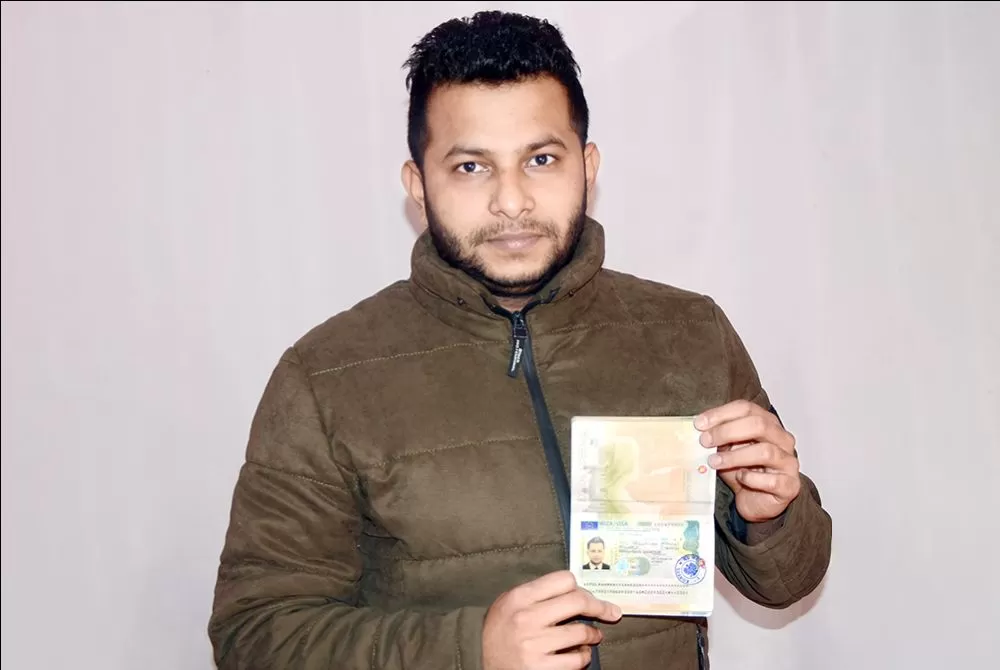
Global clients share how M2S Group helped them secure careers, work permits, and visas in Europe...


Why Choose M2S Group?
At M2S Group, we aim to help you become a true global citizen by providing exceptional support in your international career and immigration journey.
Read More



Get Started with M2S Group!
Our Platform
We connect institutions, employers, students, job seekers, and recruitment partners worldwide.

Employer
Are you recruiting skilled workers from the CIS, African, Asian regions, or other EU countries to work in Poland, Hungary, Lithuania, Slovakia, Estonia, Germany, and other EU nations? Partner with Moving2Europe.eu for efficient and reliable recruitment solutions.

Job seekers
Are you looking to work in Poland, Hungary, Lithuania, Slovakia, Estonia, Germany, or other EU countries? Could you let Moving2Europe. Can you connect with top employers and help with recruitment?

Recruitment Agency
Do you recruit prospective students and workers eager to study or work in Poland, Hungary, Lithuania, Slovakia, Estonia, Germany, or other EU countries? Join Moving2Europe.eu as a trusted Recruitment Partner and grow your network globally.
Do you have any questions?
We are here to help you explore opportunities to work and live in Europe. Our experts are ready to assist you with questions about job searching, obtaining a visa, recognising qualifications, and learning a European language. To learn more about contacting us, please click on one of the icons in the bar below.

Popular Features
Testimonials
Company
Essentials
Useful Links
Our Group
Copyright © 2026 Moving2Europe. All Rights Reserved.